
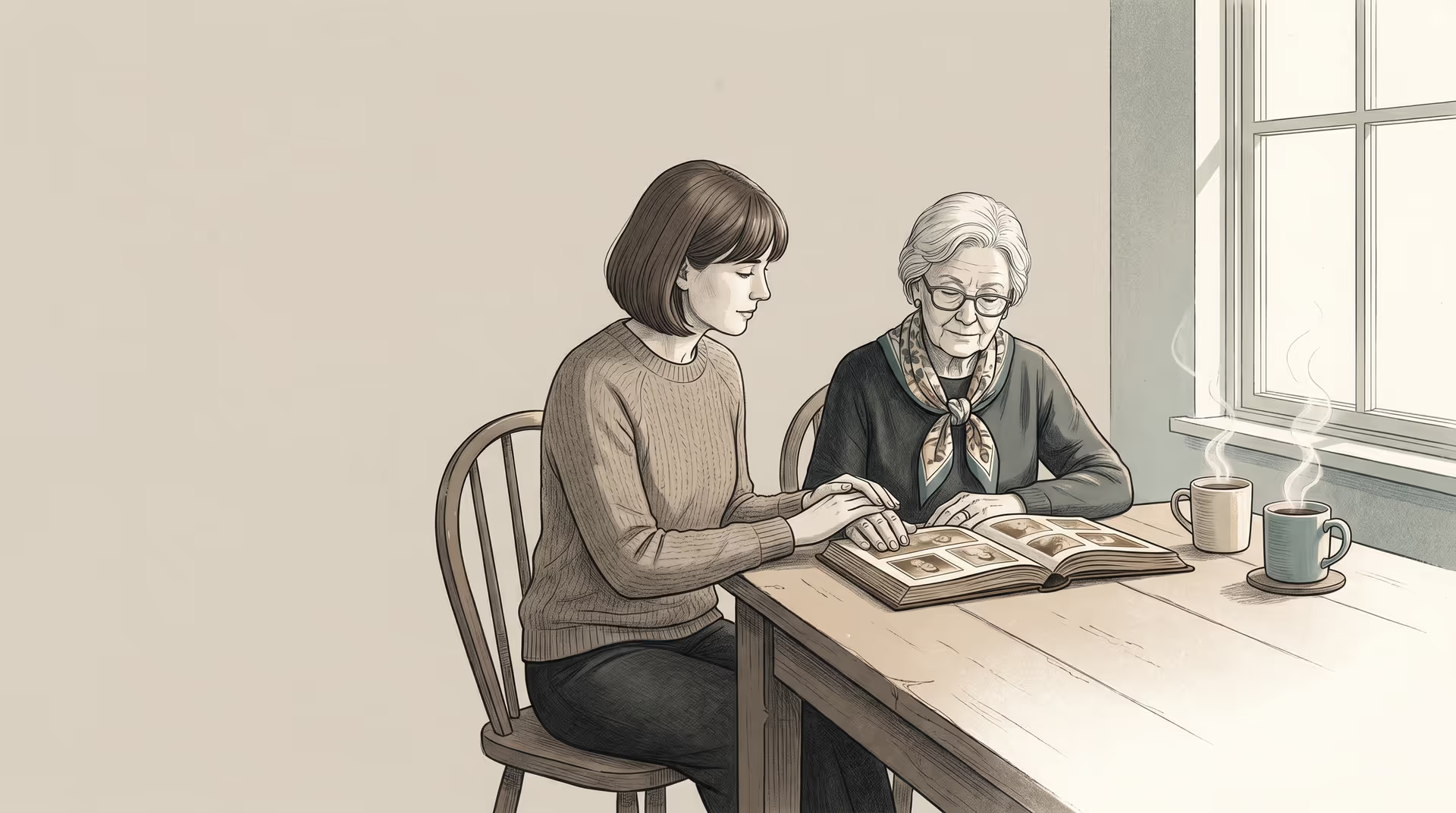
Few words carry more weight than dementia. When a parent repeats the same question or gets lost on a familiar drive, families often feel the floor shift beneath them. Understanding what dementia is (and how it tends to unfold) won't make the worry disappear, but it can replace fear of the unknown with a clear-eyed sense of what to expect and what to do next.
This guide is an educational explainer, not medical advice. Only a physician can diagnose dementia and identify its cause. If you're noticing changes in yourself or someone you love, treat what follows as a way to ask better questions at the doctor's office.
What dementia actually is
Dementia is an umbrella term, not a single disease. It describes a loss of memory, thinking, reasoning, and language serious enough to interfere with daily life. According to the National Institute on Aging, dementia results from changes in certain brain regions that cause neurons and their connections to stop working properly (NIA: What Is Dementia?).
Two distinctions matter. First, dementia is not a normal part of aging: occasional forgetfulness is common, but progressive decline that disrupts independence is not. Second, dementia is different from mild cognitive impairment (MCI), a noticeable but milder change in memory or thinking that doesn't yet derail everyday tasks. Some people with MCI go on to develop dementia; many do not.
Common causes and types
Several different brain diseases can cause dementia, and a person can have more than one at once (called mixed dementia). The four most common types each have a distinct signature (NIA: Understanding Different Types of Dementia):
- Alzheimer's disease: the most common cause, accounting for the majority of cases. It's linked to abnormal buildups of proteins (amyloid plaques and tau tangles) and usually begins with short-term memory loss. (NIA: Signs of Alzheimer's)
- Vascular dementia: caused by conditions that damage blood vessels or interrupt blood flow to the brain, often after one or more strokes. It can impair thinking and planning as much as memory. (NIA: Vascular Dementia)
- Lewy body dementia: caused by abnormal deposits of the protein alpha-synuclein. Early clues often include vivid visual hallucinations, sleep disturbances, and Parkinson's-like movement changes. (NIA: Lewy Body Dementia)
- Frontotemporal dementia: affects the frontal and temporal lobes and tends to strike younger, often between ages 45 and 64. The first signs are frequently changes in personality, behavior, or language rather than memory. (NIA: Frontotemporal Disorders)
Knowing the type matters because each follows its own path and responds to different care strategies, which is exactly why a professional diagnosis is worth pursuing early.
The three stages, and what care each one calls for
Clinicians describe dementia as progressing through early (mild), middle (moderate), and late (severe) stages. The pace varies widely from person to person and depends on the type of dementia and overall health. The table below pairs each stage with the symptoms families typically see and the level of care it tends to require.
| Stage | Typical symptoms | What care looks like |
|---|---|---|
| Early (mild) | Forgetting recent conversations, repeating questions, misplacing items, trouble with finances or planning, getting lost in new places, subtle word-finding pauses | Lives largely independently; benefits from reminders, written routines, simplified finances, and a safety check on driving |
| Middle (moderate) | Increasing memory gaps, confusion about time and place, difficulty dressing or bathing, mood and personality changes, wandering, disrupted sleep | Needs daily hands-on help with personal care, supervision for safety, and structured routines; often the point families consider memory care |
| Late (severe) | Limited or lost speech, no longer recognizing loved ones, inability to walk or sit unassisted, trouble swallowing, full dependence for daily activities | Requires around-the-clock care, help with feeding and mobility, comfort-focused support, and often skilled or hospice involvement |
This is the dementia journey at a glance, meant to show the general arc rather than predict timing. Many people spend years in the early stage, while others move more quickly. Use the stages to anticipate needs as they emerge.
Early warning signs to watch for
The Alzheimer's Association's "10 warning signs" and the NIA both point to patterns that go beyond ordinary forgetfulness. Consider noting them down before a doctor's visit:
- Memory loss that disrupts daily life, especially forgetting recently learned information
- Trouble following a plan, managing a budget, or solving familiar problems
- Difficulty completing routine tasks (driving to a known place, organizing a grocery list)
- Confusion about time, dates, or location
- New problems finding words in speech or writing
- Misplacing things and being unable to retrace steps
- Withdrawal from work or social activities
- Noticeable shifts in mood, judgment, or personality
A single off day isn't cause for alarm. A pattern that's worsening over months is the signal worth acting on. For a broader look at decline that goes beyond memory, our guide on signs your aging parent needs help can help you take stock.
When to see a doctor
Don't wait for certainty. Alzheimers.gov advises talking with a doctor about serious memory problems or other symptoms of dementia, because a proper diagnosis is the first step toward the right treatment and planning (Alzheimers.gov: What Is Dementia?). An early evaluation can also rule out reversible look-alikes (thyroid problems, vitamin deficiencies, medication side effects, depression, or infections) that can mimic dementia and are treatable.
Start with the primary care physician, who may refer you to a neurologist, geriatrician, or geriatric psychiatrist. Bring a written list of symptoms, a timeline of when they started, and a current medication list.
A Mirador note on planning ahead
The kindest thing families do is plan during the early stage, while the person can still share their wishes. That's the window to organize finances, sort out legal documents, and learn what daily care will look like as needs grow. If you're newly facing a diagnosis, our explainer on what memory care is and our practical daily routines for dementia guide are good next reads: the first helps you understand a key care option, the second helps you build calm, predictable days now.
Frequently asked questions
Is dementia the same as Alzheimer's disease? No. Dementia is the umbrella term for the symptoms; Alzheimer's is the most common disease that causes them. All Alzheimer's is dementia, but not all dementia is Alzheimer's.
How fast does dementia progress? It varies enormously by type and individual. Some people remain in the early stage for years; others decline more rapidly. There's no fixed timeline, which is why anticipating needs matters more than predicting dates.
Can dementia be cured or reversed? Most dementias are progressive and cannot be cured, though some treatments may ease symptoms or slow decline. Importantly, conditions that mimic dementia, like thyroid issues or medication side effects, can sometimes be reversed, which is one more reason to see a doctor early.
Is forgetfulness always a sign of dementia? No. Occasionally misplacing keys or forgetting a name is normal aging. The concern is a worsening pattern of memory and thinking changes that interferes with everyday independence.
