
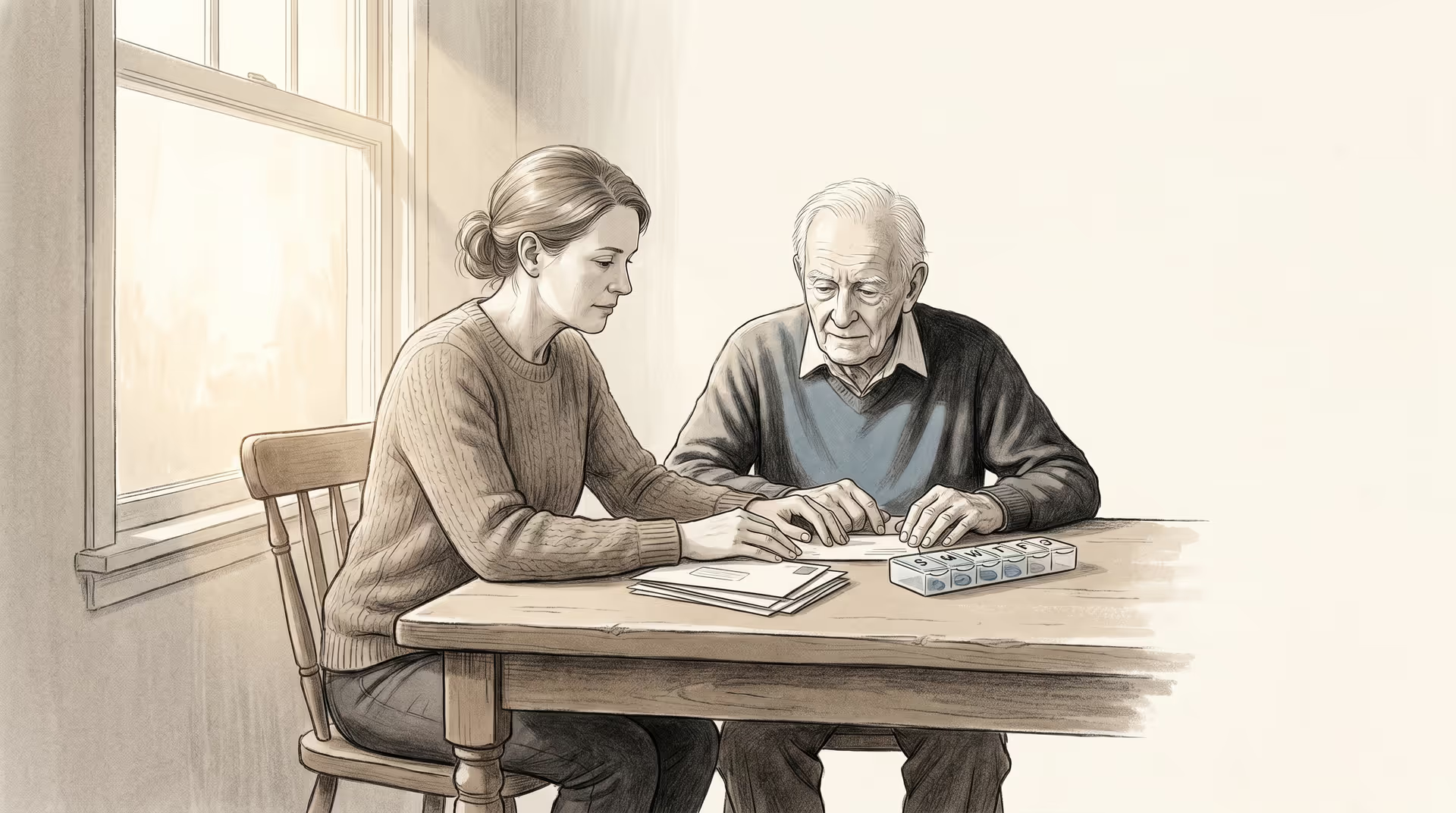
The hardest part of caring for an aging parent is often the beginning: that uneasy stretch when something feels off, but nothing is obviously wrong. A parent who has always been capable doesn't decline all at once. The shift is usually quiet: a stack of unopened mail, a half-empty refrigerator, a story repeated twice in one phone call. Individually, these moments are easy to explain away. Together, they add up to a pattern.
This guide organizes the warning signs the way they show up in real life, by area of daily living, grouping related signs together. That structure matters, because where the signs cluster tells you what kind of help your parent needs. Trouble that's concentrated in the kitchen and the pillbox points somewhere different than trouble that's concentrated in mood and memory. Use the checklist below as a working tool to guide what you look for.
A categorized checklist of warning signs
Print this, or keep it open the next time you visit. Note what you observe, not what your parent reports. People minimize their own struggles, especially to their children.
| Area | What to look for |
|---|---|
| Home & household | Piles of unopened mail, clutter or dishes that used to be tidy, spoiled food, scorched pots, dead plants, a yard or home in unusual disrepair, utilities shut off |
| Hygiene & appearance | Body odor, unwashed hair, dirty or weather-inappropriate clothing, untreated dental issues, a once-groomed parent who no longer keeps up appearances |
| Medications | Pill bottles with the wrong counts, expired prescriptions, multiples of the same drug, missed refills, confusion about what to take when |
| Finances | Unpaid or late bills, bounced checks, unusual purchases, new "charities" or sweepstakes mail, susceptibility to scam calls, money unaccounted for |
| Mobility & safety | New bruises, a hesitant or shuffling gait, holding onto furniture to walk, fear of falling, difficulty rising from a chair, trouble on stairs |
| Memory & cognition | Repeating questions, missing appointments, getting lost on familiar routes, trouble following a conversation, struggling with once-easy tasks |
| Mood & social life | Withdrawal from friends, dropped hobbies, new irritability, sadness, anxiety, or apathy; sleeping far more or far less than usual |
| Weight & nutrition | Noticeable weight loss, loose clothing, an empty or expired fridge, skipped meals, reliance on snacks instead of cooking |
How to read the pattern
A single sign rarely means a crisis. What counts is how many areas are affected and how fast.
When the difficulties cluster in the physical and practical columns (household upkeep, mobility, hygiene, nutrition) your parent may simply need more hands-on support: help with shopping, cleaning, transportation, and the everyday tasks geriatric professionals call activities of daily living. Many people in this situation thrive with in-home help or a move to assisted living, where caregivers handle these tasks but your parent keeps their independence.
When the difficulties cluster in the cognitive and emotional columns (memory, judgment, mood, repeated confusion) the conversation changes. Persistent forgetfulness and disorientation can signal cognitive decline that goes beyond ordinary aging. The Alzheimer's Association has a clear list of the 10 early warning signs of Alzheimer's that's worth reviewing, and any consistent pattern deserves a medical evaluation.
A few signs carry extra weight on their own. Medication mistakes and falls are both immediate safety risks (the CDC notes that falls are the leading cause of injury among older adults) and either one can turn a slow decline into a hospital stay overnight.
What to do next
Noticing is only the first step. Here's a calm, ordered way to move forward.
-
Document what you see. Keep a simple running log of what you observe and when. Patterns are far more persuasive (to your parent, to siblings, and to doctors) than a single alarming moment.
-
Start with the doctor. Many warning signs have treatable causes. A urinary tract infection can mimic confusion, an unsteady gait sometimes traces back to a medication interaction, and what looks like dementia occasionally turns out to be depression. A thorough medical visit sorts the reversible from the chronic.
-
Talk with your parent, gently and early. This conversation goes better as a shared concern than an intervention. Our guide on how to talk to your parents about senior living walks through the language and timing that keep the door open.
-
Map the support options. Help ranges from a few hours of in-home care a week to assisted living or memory care. When you're ready to compare what's out there, how to start your senior living search lays out the first practical steps.
-
Tap free, unbiased resources. Your local Area Agency on Aging offers no-cost guidance on care options, benefits, and in-home services. The federal Eldercare Locator connects you to the agency in your parent's community.
Every parent's needs are different
Two parents can show the same number of warning signs and need completely different things. One may be physically frail but sharp and content, needing only help with cooking and transportation. Another may be physically strong but increasingly forgetful, needing the structure and supervision of memory care. There is no single threshold that says "now."
That's why the categorized checklist matters more than any countdown of "10 signs." It points you toward the kind of support your parent needs (practical, medical, cognitive, or some blend) rather than just confirming that the moment has arrived. At Mirador, we built our search tools around that reality: helping families match a real person's needs to the right level of care with confidence.
Frequently asked questions
How many warning signs mean it's time to act? There's no magic number. Pay attention to clustering and speed: several signs in one area, or a noticeable change over a few months, warrants a doctor's visit and a family conversation, even if your parent insists they're fine.
What if my parent refuses help? Refusal is common and rarely the final word. Lead with their goals ("I want you to stay in your home safely") before voicing your fears, introduce small changes first, and consider letting a trusted doctor or friend raise concerns. Most parents come around when they feel respected and included.
Could these signs be something other than aging? Yes, and that's good news. Infections, dehydration, medication side effects, thyroid problems, and depression can all mimic decline and are often reversible. Never assume a new symptom is "just getting old" until a clinician has looked into it.
Is it always time for senior living? Not at all. Many families start with in-home help, home modifications, or adult day programs and never need a move. The warning signs tell you your parent needs support; they don't dictate where that support has to come from.
