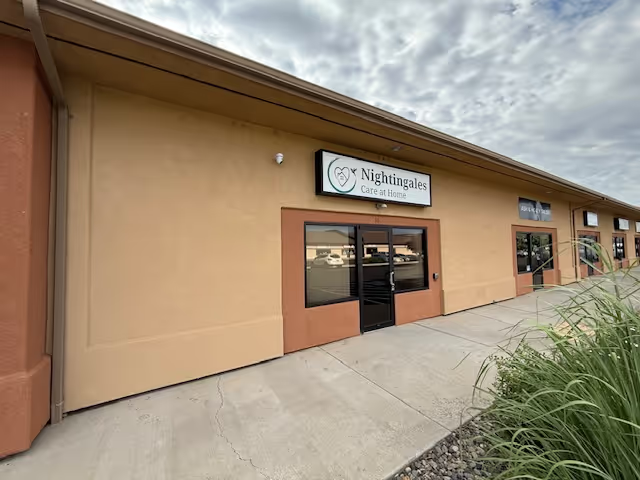
Overall impression: Reviewers express a mixed but distinctive pattern of experiences with this agency. Many families emphasize compassionate, respectful caregivers who provide attentive, patient support and meaningful advocacy for clients; those positives often lead to measurable improvements in client quality of life and notable peace of mind for families. At the same time, operational weaknesses recur across accounts and affect continuity of care and confidence in the agency.
Caregiver quality: Caregivers frequently receive praise for warmth, patience, and the ability to coordinate complex care tasks. Several reviewers named individual aides who were especially valued and who established strong relationships with clients. However, there is also consistent commentary about variable caregiver competency — examples include aides lacking specific cleaning or task knowledge and concerns about training adequacy. High caregiver turnover amplifies variability in skill and in-client familiarity.
Communication and office responsiveness: Communication experiences are polarized. Many families describe quick, helpful responses from office staff and clear two‑way communication that eases family stress. Conversely, a substantial number of families report poor office coordination, unprofessional phone conduct, and limited after‑hours responsiveness. These contrasting patterns suggest uneven internal processes for scheduling, escalation, and family communication.
Reliability and scheduling: Flexibility and last‑minute availability are important strengths cited by reviewers; the agency can accommodate schedule changes and provide short‑notice coverage at times. At the same time, recurring operational problems include cancellations without warning, missed visits, schedule changes, and no‑shows. These reliability gaps are often linked to the agency’s reported high staff turnover and inconsistent assignment practices.
Safety, incidents, and accountability: Several accounts raise serious safety and incident‑management concerns, including events that required law‑enforcement involvement and other operational escalations in client homes. There are also statements indicating issues with household‑property incidents and with how such events are handled. These items point to weaknesses in incident escalation, staff screening, and post‑incident accountability processes.
Billing and management: Families praised trustworthy, transparent interactions in many cases, but others noted billing and accountability concerns that affected trust. Workplace‑culture observations (favoritism, perceived underpayment, and unprofessional in‑office behavior) and comments about weak managerial follow‑through suggest uneven supervisory practices.
Notable patterns and practical advice: The agency produces strong clinical and relational outcomes when stable caregiver assignments and effective office coordination are in place. However, prospective clients and families should plan for variability: ask about current caregiver turnover rates, training and background‑check policies, incident‑reporting procedures, cancellation and billing protocols, and after‑hours contact lines. Requesting consistent caregiver matching and a trial period can help assess fit. For clients with heightened safety concerns or complex needs, clarifying the agency’s incident‑management and escalation procedures before engagement is advisable.