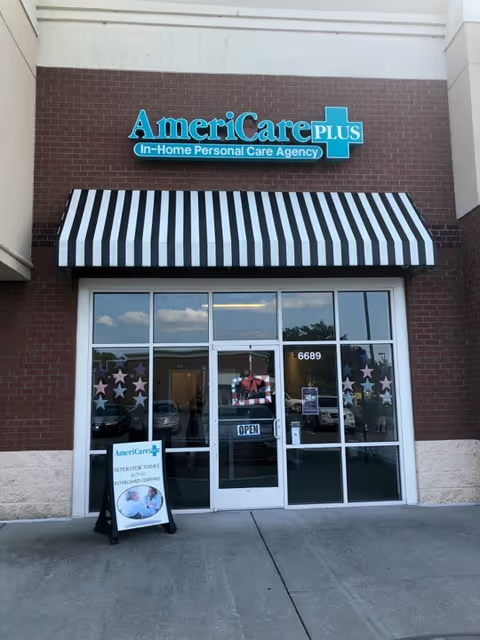
Overall impression: Reviews convey a mixed but instructive picture. Many family members and patients describe effective clinical outcomes, especially around rehabilitation and nursing, while a separate and recurrent set of operational issues undermines consistency of care. The agency demonstrates clear clinical strengths but also shows patterns of administrative and staffing weaknesses that prospective clients should consider when planning services.
Caregiver and clinical quality: Feedback repeatedly highlights attentive, compassionate caregivers and high-caliber therapy teams. Physical therapists and occupational therapists are frequently described as knowledgeable, patient-focused, and effective at providing clear exercise plans and progress-oriented feedback. Nursing staff are also described as caring and competent in clinical decision-making. These clinical strengths are most evident in post-operative and post-stroke recovery narratives where reviewers credit the teams with measurable functional improvement.
Communication and reliability: A contrasting theme is variability in office communication and visit reliability. Several reviewers praised direct caregivers for good listening and family collaboration, but others described difficulties with administrative communication, scheduling errors, and cancellations or no-shows. These operational gaps include both one-off scheduling mistakes and more persistent issues such as delayed starts after discharge. The combination of inconsistent front-office communication and missed visits has, in some instances, interfered with timely initiation of therapy.
Staffing, scheduling, and value: There are indications of staffing pressure—reviewers referenced nurse workload and burnout and described the agency as occasionally understaffed. This appears to correlate with missed shifts and scheduling instability. While many families found the care to be valuable and recommended individual clinicians, a few comments raised affordability or billing concerns. Prospective clients should evaluate available coverage, expected start timelines after discharge, and the agency’s contingency plans for coverage gaps.
Notable patterns and practical considerations: Strengths are strongest in direct caregiving and therapy — clinicians who provide clear instruction, achieve rehabilitation goals, and work collaboratively with families. Operational weaknesses center on administrative processes: scheduling, consistency of assignments, and staffing capacity. For a family prioritizing high-quality therapy and nursing, the agency appears capable; for those who require guaranteed on-time service starts and tightly managed schedules, it would be prudent to confirm staffing plans, escalation contacts, and expectations for cancellations or delays before enrollment.