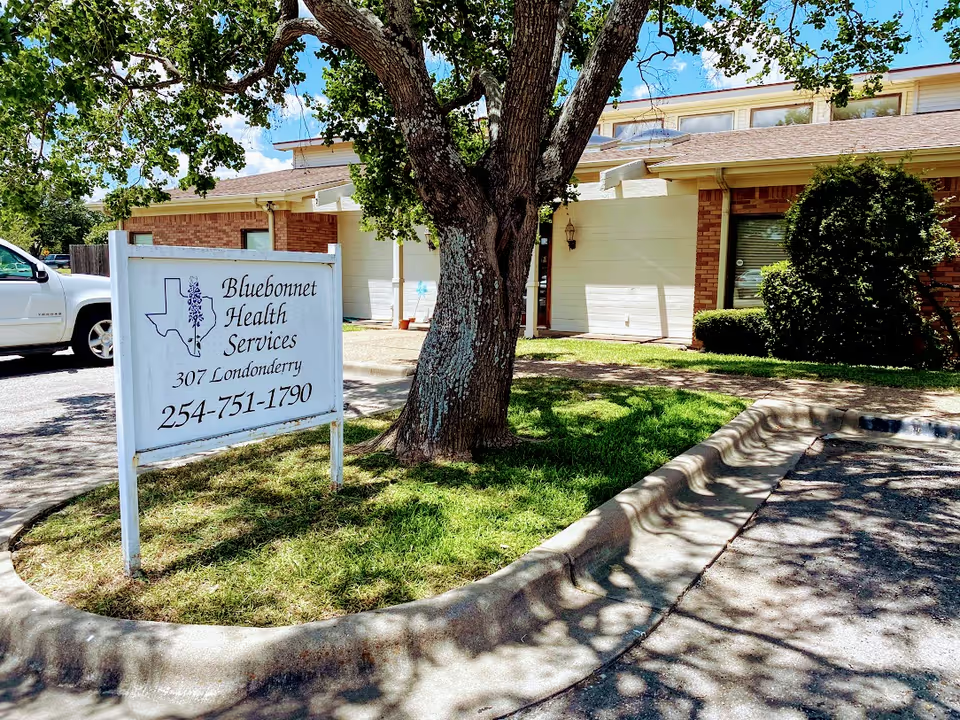
Reviews present a mixed but recognizable pattern: many families highlight high-quality, compassionate direct care while others raise serious concerns about management-level practices and specific aspects of end-of-life processes. At the caregiver level, praise centers on attentive, comfort-focused assistance, staff who answer questions, and a hospice team that coordinates care effectively. Several accounts describe nurses and aides who were compassionate and responsive, and families expressed satisfaction with prompt issue resolution and the involvement of a supportive social worker.
Conversely, there are substantive criticisms that point to variability in professionalism and communication. Some reviewers described interactions with supervisory staff—most notably a nurse manager—that they found rude or unhelpful, suggesting uneven leadership conduct. Separate concerns touch on medication-management communication and the transparency of decision-making around end-of-life choices; these items raise questions about how the agency explains treatment plans, obtains authority for decisions, and documents those conversations.
Reliability and scheduling appear generally acceptable when assessed by responsiveness: reports of prompt responses and resolution of issues indicate the agency can act quickly when problems are raised. However, the contrast between consistently positive direct-care reports and isolated accounts of insincere or manipulative conduct suggests inconsistency in caregiver performance and professional boundaries. This pattern implies that the family experience may depend significantly on individual caregivers and which supervisory channels are engaged.
Value perceptions skew positive among those who focused on bedside care and symptom comfort; these families were willing to recommend the agency. At the same time, the presence of an allegation regarding inaccurate external reporting and descriptions of pressure around legal-authority decisions indicate potential risk areas that prospective clients and families should review carefully. Those considering this provider would be advised to ask specific questions about medication protocols, decision-making authority and documentation, escalation pathways for concerns, and how the agency supervises and trains both frontline staff and managers.