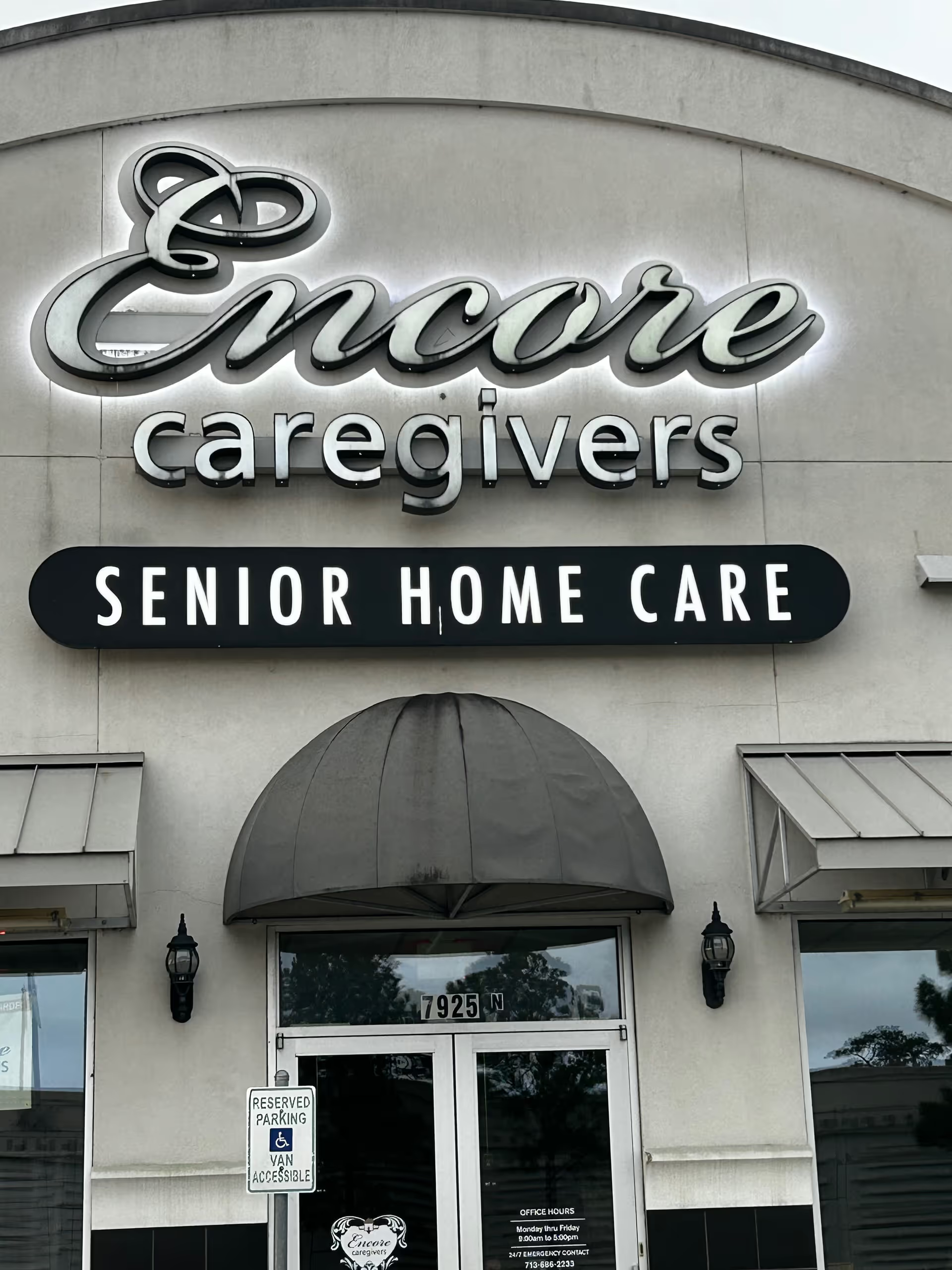
The reviews present a mixed but coherent picture: clinical caregiving is regularly praised while operational reliability and administrative communication emerge as recurring concerns. Many comments highlight compassionate, patient-focused care provided by well-trained nurses and aides, with specific positive mentions of clinical skills such as wound care and infection-prevention. Several reviewers singled out individual RNs for professionalism and effectiveness, and multiple notes emphasize bilingual staff, polite bedside manner, and a family-like approach to clients.
Clinical quality and caregiver conduct are among the agency's clearer strengths. Reviewers described nurses and aides as competent, respectful, and attentive; examples include clear pre-visit communication, prompt arrivals, and targeted clinical interventions. Training for caregivers and a patient-centered orientation are evident in comments praising thoroughness and high-quality care. These items suggest the agency has clinical depth, particularly at the RN level.
Operationally, however, a distinct pattern of administrative and scheduling weaknesses appears. Reviewers described unreliable shift coverage (including no-shows), wrong-day or confusing appointment communications, and reception-level miscoordination. There are also reports of delayed initiation of services and wait times for orders to be processed. A small subset of comments pointed to occasionally unprofessional office messaging. Taken together, these indicate an agency where clinical staff perform well but where office processes, scheduling controls, and communication protocols may need strengthening.
For prospective clients and families, the notable pattern is a separation between clinical strengths and administrative consistency: strong, skilled caregivers and nurses, paired with uneven reliability in scheduling and office communication. Value perceptions vary accordingly—many families express satisfaction with caregivers and overall care quality, while others cite frustration with timing and coordination. Confirming scheduling procedures, caregiver assignment practices, and expected start timelines with the office upfront may help align expectations with the agency's clinical strengths.