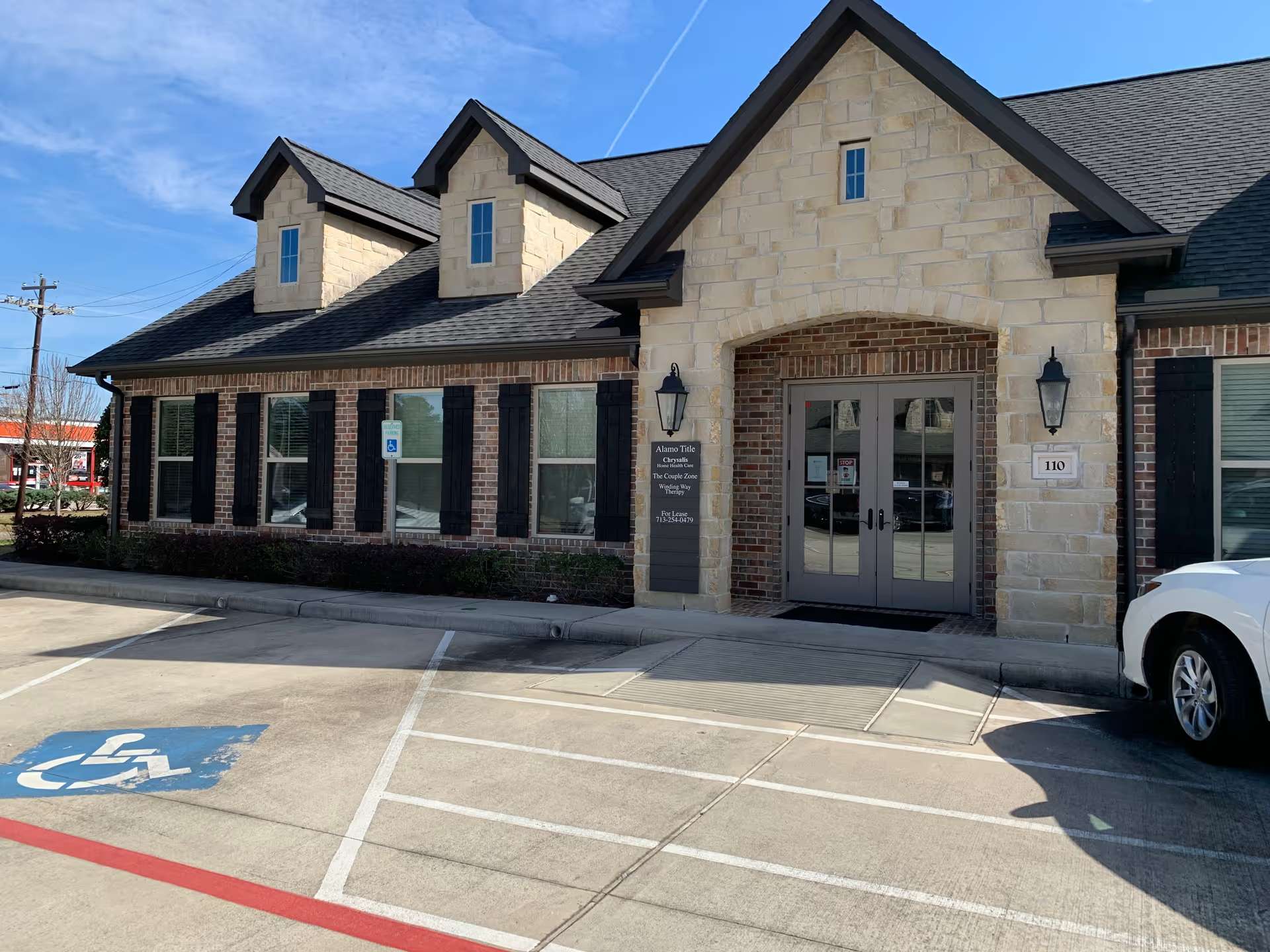
Overall impression: Feedback for Chrysalis Home Healthcare is strongly positive around front-line caregiving and the agency’s team orientation. Reviewers consistently describe caregivers as compassionate, professional, and skilled, with good bedside manner and a willingness to provide personalized, patient-centered care. Several comments single out the agency’s interdisciplinary elements — an educator resource, a chaplain, and a social worker — and families characterize the staff as supportive and community-focused. Phrases such as “goes the extra mile,” “trusted agency,” and “above and beyond for patients” reflect a perception of high-quality, mission-driven service.
Caregiver quality and management: The agency’s caregivers and clinical staff are portrayed as competent and caring. The presence of educational resources and named staff who serve as trainers or clinical support suggests an investment in staff development. Management and team culture read as collaborative and patient-focused based on descriptions of a friendly, supportive office and references to interdisciplinary roles that supplement direct care.
Communication and reliability: The most consistent operational concern is office communication. Several reviewers noted poor or inconsistent communication from the office — for example, unclear updates or delays in responsiveness — which can affect coordination between families and caregivers. While direct-care staff receive praise, these communication gaps have the potential to interfere with scheduling, shift coordination, and timely updates to families. There is not widespread commentary about missed shifts or reliability of individual caregivers, but where issues were implied they centered on information flow and administrative coordination rather than caregiver skill.
Scheduling, value, and notable patterns: Reviewers frequently describe the service as providing good value, citing efforts that exceed expectations and a community-oriented approach. Specifics about scheduling flexibility or billing practices are limited in the feedback set; where operational friction appears it is most often tied to communication and coordination rather than pricing or caregiver competence. Prospective clients may want to ask the agency about their communication protocols, single points of contact for updates, and how schedule changes are handled to ensure expectations align. In summary, Chrysalis appears to deliver strong clinical and interpersonal care, with an administrative area to monitor and clarify around office-to-family communication and coordination.