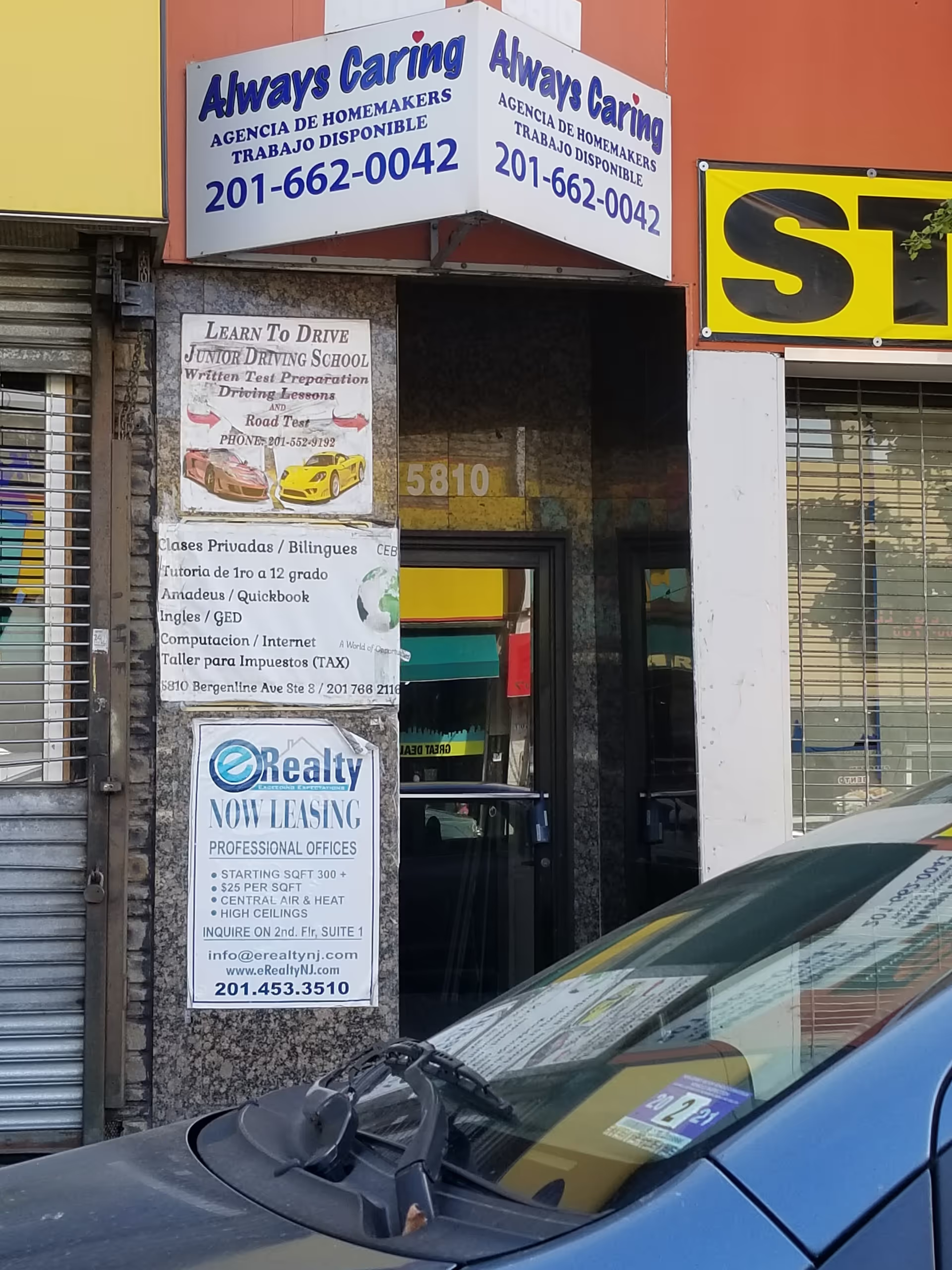
The reviews present a mixed picture of Always Caring Health Care Services. Several families describe caregivers who are warm, attentive, and communicative — caregivers characterized as compassionate, proactive, and able to explain care tasks clearly. Reviewers also called out bilingual Spanish-language staff and specific coordinators who were responsive and helpful. Those positive experiences are described as meaningful by families who felt the caregivers supported daily needs effectively.
At the same time, a recurring pattern of operational weaknesses is evident. Many reviewers described inconsistent caregiver assignments, frequent no-shows, and last-minute cancellations that created scheduling uncertainty. Multiple accounts also describe difficulty scheduling respite hours and challenges getting promised visits or therapy delivered. Those patterns suggest gaps in contingency planning and shift coverage that can leave families scrambling when an aide does not arrive.
Office communication and management were another axis of variability. Some clients praised individual coordinators for good communication, while others described unreturned calls, abrupt interactions from the billing team, and rudeness from office leadership. These communication gaps extend to billing responsiveness and follow-through on commitments, which several reviewers flagged as a source of dissatisfaction.
Caregiver professionalism was likewise mixed. Positive reviews emphasize loving, professional caregivers who provide reliable hands-on support; contrasting accounts raise concerns about caregiver conduct and clinical practice, including at least one serious incident described by a reviewer that resulted in emergency care. While such serious individual incidents are infrequent in the review set, they underscore the importance of robust clinical oversight and incident escalation processes.
Taken together, the pattern suggests an agency capable of providing high-quality, compassionate care under the right circumstances, but one that also demonstrates operational variability. Prospective clients should verify key points up front: confirm primary and backup caregiver assignments, obtain a clear scheduling and cancellation policy for respite hours, insist on a designated coordinator point of contact, clarify billing procedures, and ask how clinical incidents and staffing shortfalls are escalated and documented. Those steps can help families preserve the positive aspects (caregiver warmth, language compatibility, and individual responsiveness) while mitigating the operational risks reflected in the reviews.