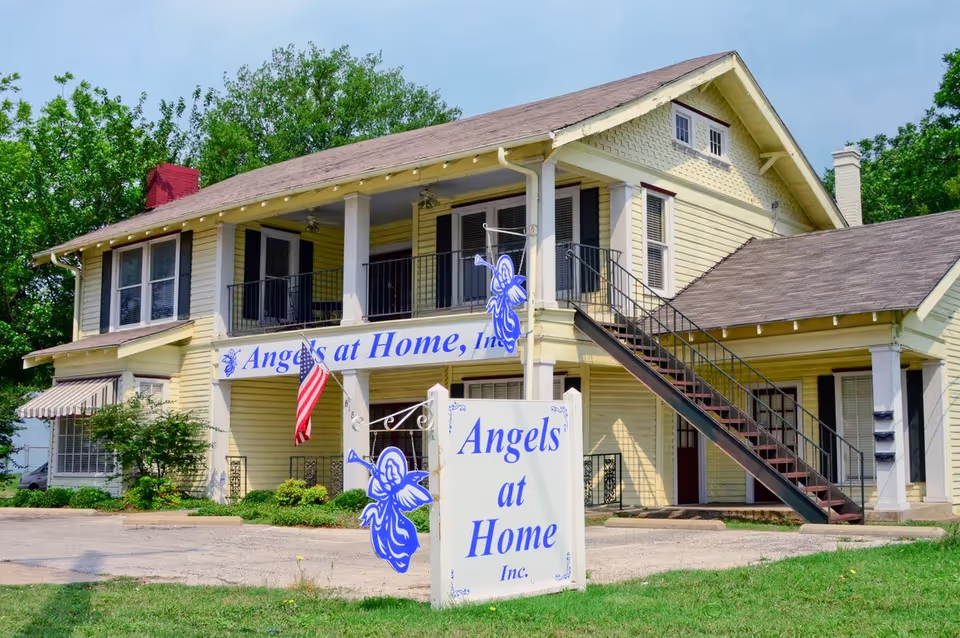
Overall impression: Reviews depict an agency that consistently emphasizes compassion, professionalism, and family-centered end-of-life care. Families and referrers highlight rapid admissions, steady communication, and a team that provides emotional support and practical care navigation during hospice and palliative episodes. The dominant theme is an attentive, comforting presence from both aides and nurses, paired with administrative responsiveness.
Caregiver quality: Caregivers are commonly described as warm, respectful, and attentive, with language indicating strong interpersonal skills and an ability to provide emotional support. Clinical staff, including nurses, receive praise for being knowledgeable and for offering clear explanations of care plans and symptom management. Reviewers frequently characterize the team approach as coordinated and patient-focused, with staff treating clients in a family-like manner and demonstrating bedside manner appropriate for end-of-life support.
Communication and reliability: Communication is a clear strength. Families note regular check-ins, prompt responses to messages (including late-night contacts), and transparent updates from the office and nursing staff. Admission and transition processes are described as smooth and timely. Reliability of shifts and caregiver availability are presented positively; reviewers repeatedly cite quick responses and an ability to address urgent needs.
Scheduling, clinical intensity, and value: Scheduling flexibility appears strong for hospice-intake and crisis-response situations, with prompt admissions and after-hours availability reported. That said, multiple comments point to a limited frequency of clinical nursing visits, which suggests the agency’s model delivers more consistent caregiver and supportive services than high-intensity skilled-nursing hours. Families express high satisfaction with the perceived value of services for palliative and end-of-life needs, but reviews provide limited information about billing practices and long-term rehabilitative care options.
Management and notable patterns: Administrative staff and team coordination are described as humble, helpful, and solution-oriented. The agency receives repeated recommendations for its hospice and palliative capabilities, including facility-based environments that are described as peaceful and well-maintained. Notable patterns include a strong emphasis on compassionate presence, effective care transitions, and responsiveness to families’ emotional needs. Areas to monitor: limited nursing-visit frequency relative to caregiver presence, the agency’s focus on palliative goals rather than intensive rehabilitation services, and potential differences in experience between in-home and facility-based settings depending on client needs.