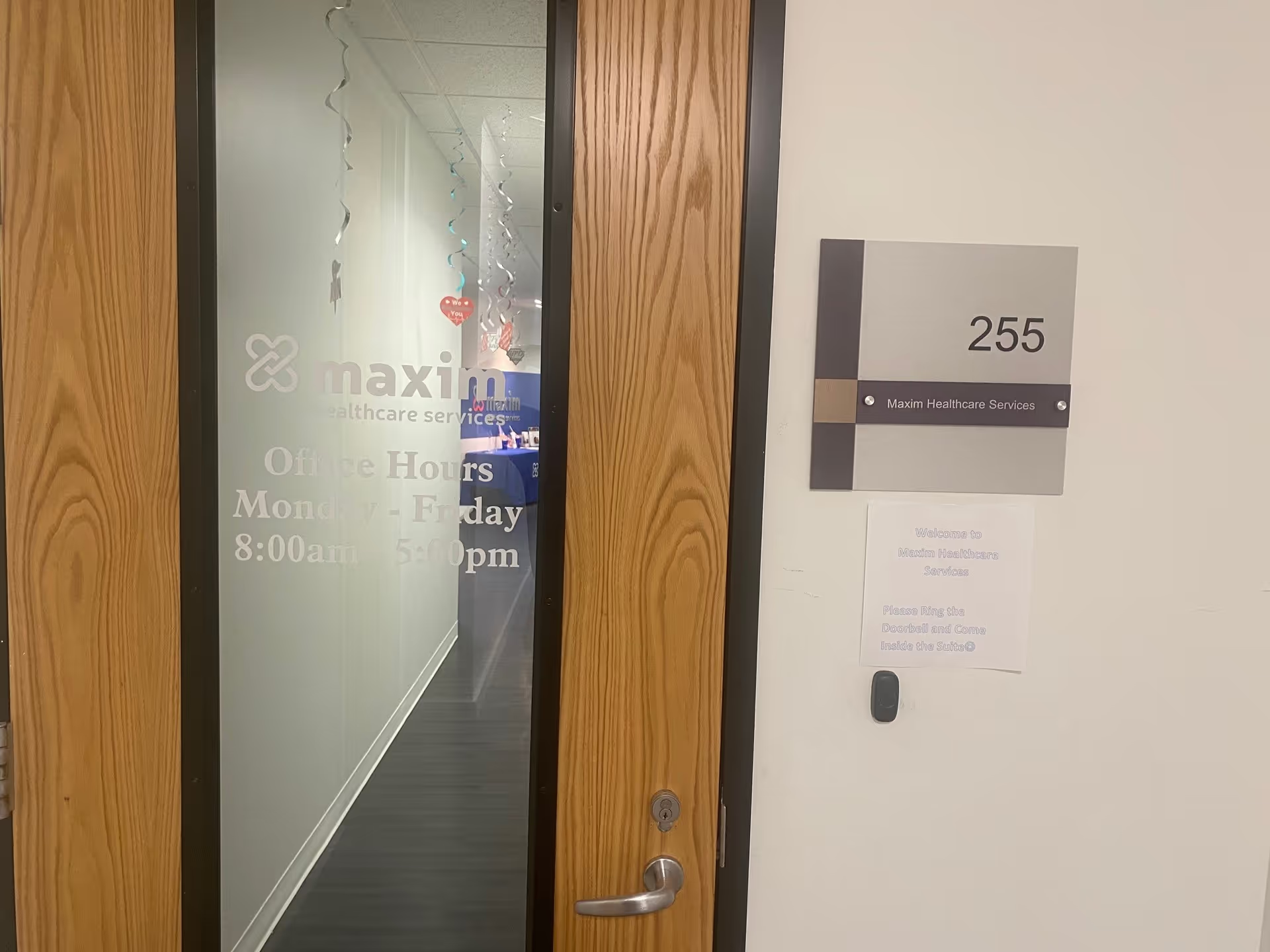
Overall impression: Reviews describe an agency that delivers strong, compassionate in‑home hospice care with repeatedly praised individual caregivers and nurses. Families emphasize the emotional and clinical support provided by skilled RNs and social workers, the availability of volunteers for respite, and an onboarding process that is straightforward and well organized. Many reviewers expressed gratitude for staff who eased the burden on family members and preserved client dignity in the final stages of life.
Caregiver quality: The dominant theme is caregivers who are warm, attentive, and clinically competent. Several reviewers named specific nurses and staff for exemplary performance and noted practical, hands‑on help that families found invaluable. Volunteer respite and pastoral supports were also singled out as meaningful additions that complemented nursing care. At the same time, a subset of reviewers described variability in caregiver conduct and bedside manner; these comments point to occasional instances where professionalism or sensitive communication fell short of expectations.
Communication and office management: Communication perceptions are mixed. Many families reported prompt, helpful responses from office and clinical staff and appreciated day‑and‑night availability. However, multiple reviewers also cited inconsistent scheduling follow‑up, missed courtesy calls, and lapses in routine updates. This suggests the agency can be responsive but is not uniformly reliable in administrative follow‑through.
Reliability and scheduling: Several reviewers praised punctuality and consistent care‑team assignments, which supported continuity and trust. Conversely, there are a limited number of accounts describing delays in arriving for critical late‑stage needs and gaps around time‑sensitive coverage. Those comments indicate that while routine shifts are generally dependable, rapid-response coverage in urgent, end‑of‑life moments may be uneven.
Value and clinical management: Families frequently framed their experience as valuable and supportive, citing competent medication and symptom management alongside emotional support. The presence of named RNs and an apparent emphasis on clinical knowledge contributed to that perception. There were no widespread billing complaints in the summaries provided; perceived value is primarily tied to emotional relief and practical clinical assistance.
Management and notable patterns: Management strengths include effective onboarding, proactive equipment support in many cases, and availability of complementary services (social work, pastoral care, volunteers). Patterns of concern cluster around administrative consistency, bereavement follow‑up, and occasional lapses in sensitivity when handling equipment or post‑death procedures. Several reviewers specifically mentioned a lack of follow‑up after a client's death, indicating an area where policy and execution may be uneven.
Bottom line: For families seeking hospice-level in‑home care, this agency demonstrates clear strengths in compassionate caregiving, skilled nursing, and supportive ancillary services. Prospective clients should expect generally good clinical care and emotional support but may want to confirm procedures for scheduling communications, after‑hours rapid response, equipment handling, and formal bereavement follow‑up to ensure those operational aspects meet their expectations.