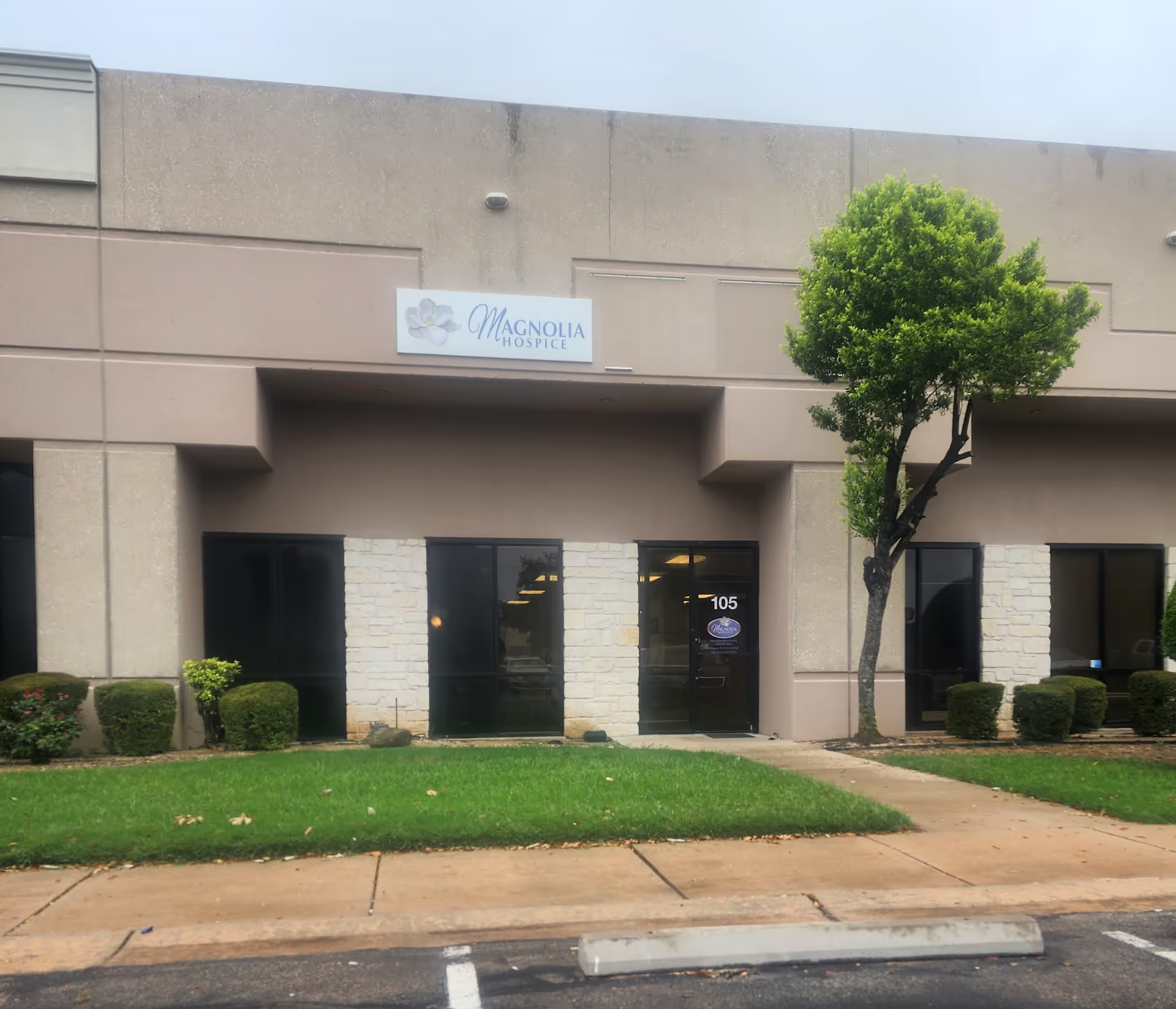
The review set presents a mixed but distinguishable pattern. On the positive side, direct-care staff receive frequent praise: caregivers are described as compassionate, respectful, and knowledgeable, with specific mentions of reliable and attentive in-home support. Clinical staff, including registered nurses, are also cited as accessible and helpful. Several reviews highlighted a strong, welcoming office environment, well-organized orientation processes, and supportive branch leadership. Educational outreach (CEU events) and staff training are repeatedly endorsed as professionally run and valuable for clinicians.
Conversely, operational and administrative weaknesses recur across the feedback. Communication between the office and clients is uneven: while some families describe timely, helpful responses and after-hours availability, others describe poor or secretive communication, unanswered phone inquiries, and rude front-desk interactions. Scheduling reliability and continuity of caregiver assignment are notable pain points — reviewers describe frequent staff changes, missed or poorly covered shifts, and abrupt transition/discharge practices that can disrupt care continuity. Relatedly, case-management follow-up is sometimes described as minimal, leaving families feeling insufficiently supported during care transitions.
These mixed signals extend to perceptions of the agency’s priorities and organization. Positive commentary frames the agency as patient-centered and employee-focused, while negative commentary characterizes parts of the operation as inefficient, profit-driven, or high-pressure around enrollment and transfers. This bifurcation is also visible in management impressions: some reviewers found branch managers professional and engaged; others experienced rude administrative interactions. Taken together, the pattern suggests competent frontline caregiving paired with variable administrative consistency.
For prospective clients and referral partners, the practical implications are clear: the agency may deliver high-quality hands-on care and useful clinical resources, but families should verify operational details up front. Recommended areas to clarify before engagement include caregiver continuity and turnover mitigation, the agency’s scheduling and backup coverage policies, case-manager contact frequency, discharge/transfer procedures, and channels for escalating service concerns. Doing so will help align expectations with the agency’s strengths and address known administrative variability.