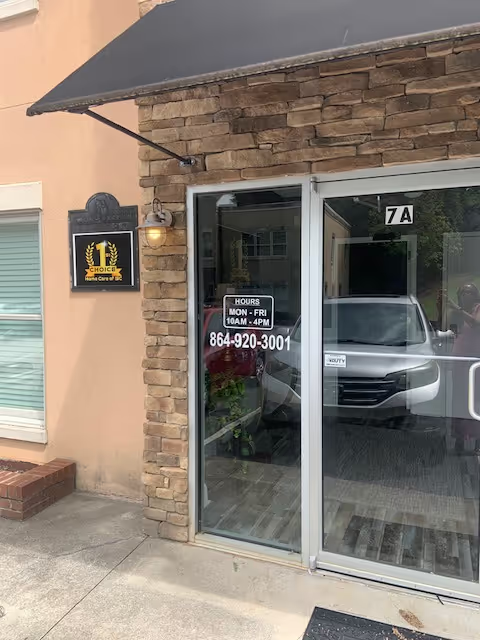
The body of reviews presents a generally favorable picture of Home Helpers Home Care of Upstate, with repeated praise for the caregivers and the agency’s responsiveness. Positive comments emphasize warm, compassionate staff who provide dignity-respecting personal care, companionship, and practical assistance (medication reminders, meals, errands, transport, light housekeeping). Families frequently mention effective matching between client needs and caregiver skills, and several accounts highlight the agency’s particular suitability for clients with cognitive impairment and for end-of-life coordination with hospice providers.
Office-level strengths are also prominent. Reviewers describe flexible scheduling options (including same-day starts and overnight coverage), clear and prompt communication with family members, and an owner/management team that is engaged and proactive about care planning. Many families report dependable, on-time shifts and caregivers who are willing to perform challenging tasks. The agency is portrayed as capable of rapid setup and as a useful resource for local referrals and coordination of outside services.
Despite these consistent positives, an important pattern of concern appears around uneven caregiver performance and responsiveness. While most accounts emphasize dependable aides, at least one substantive safety/response incident was described that involved caregiver nonresponse during an acute event and subsequent escalation to emergency and hospice care. Such accounts indicate potential weaknesses in quality-control, emergency-response protocols, or shift supervision that could produce variability in the client experience.
Related operational issues inferred from the reviews include occasional lapses in shift responsiveness or care continuity (examples include access/entry and responsiveness during a shift), which suggest the agency may have room to strengthen staff training, supervision, and emergency procedures. Finally, cost is a recurring consideration: a number of families view the service as high quality but also mention the price as a factor, indicating perceived concerns about value or affordability for some clients.
Overall, the predominant pattern is of an agency offering compassionate, flexible, and well-coordinated in-home care with strong family communication and useful specialty experience (dementia, hospice). Prospective clients should weigh those strengths against evidence of variability in caregiver reliability and the potential for gaps in emergency responsiveness, and they may wish to ask the agency about specific quality-control measures, emergency protocols, and pricing/fee transparency during intake.