
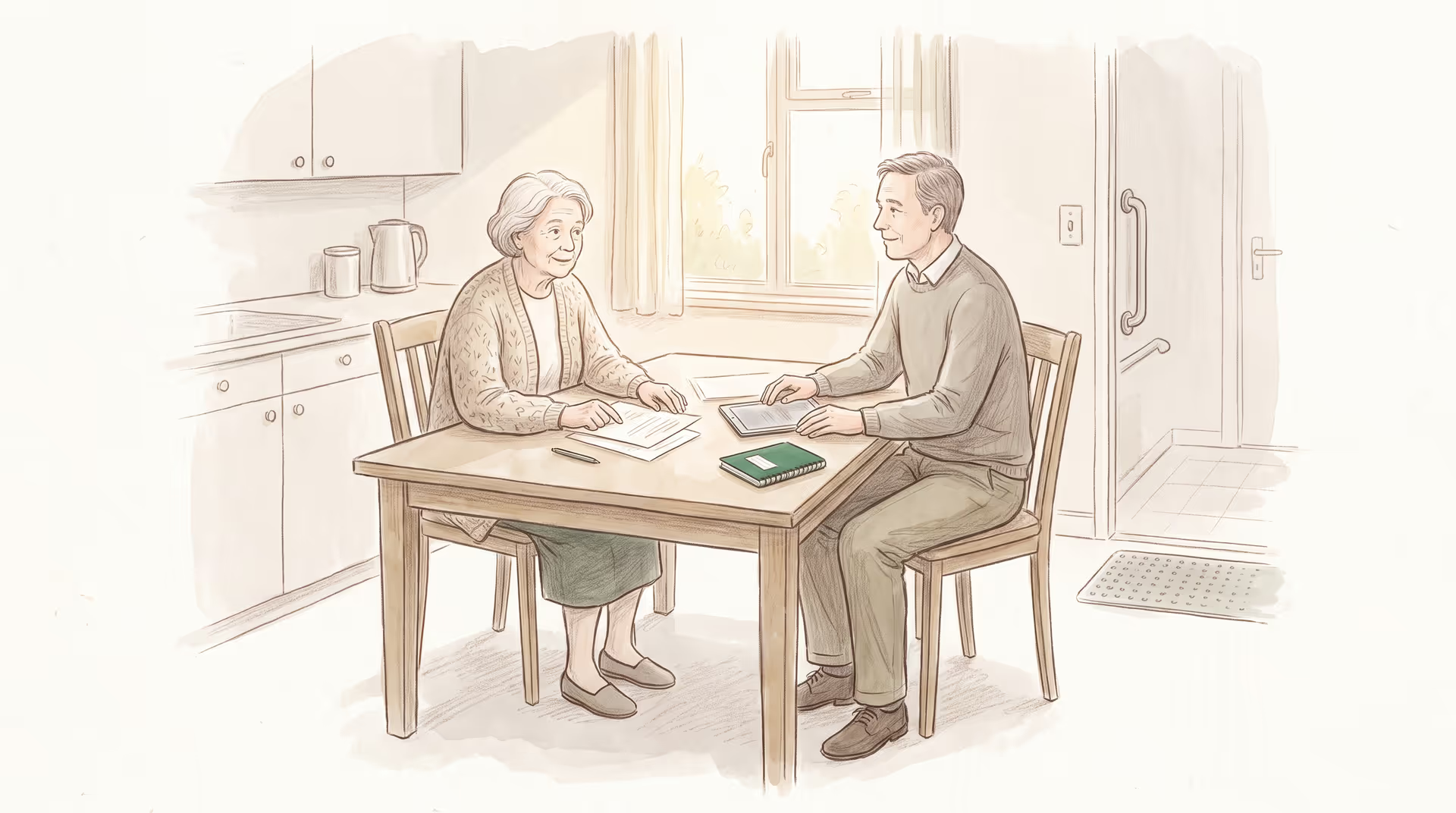
A home safety assessment checks a house for hazards that raise the risk of falls, injuries, or trouble doing daily tasks. For adult children arranging care, an assessment gives a clear plan to make your parent’s home safer. It also helps you decide whether small fixes will be enough or if bigger changes are needed.
What is a senior home safety assessment?
A senior home safety assessment is a room-by-room review done by a trained professional. The assessor looks for fall risks, poor lighting, bathroom problems, trip hazards, and things that make daily activities harder. Some assessments are short checklists you can use yourself. Others are detailed, formal evaluations done by occupational therapists, physical therapists, or certified aging-in-place specialists.
Common tools and approaches used by professionals include Home FAST, the Westmead Home Safety Assessment, and other validated checklists. Some organizations offer very detailed, multi-point assessments that cover both inside and outside areas of the home.
Why get an assessment?
Falls and home accidents are common as people age. Many organizations that study aging and safety recommend regular home reviews. An assessment:
- Finds hazards families often miss.
- Gives clear, practical changes to reduce fall risk.
- Helps keep a parent safe and independent at home longer.
- Creates documentation you can use when planning care or hiring contractors.
You do not need a fall to have an assessment. Many families schedule one proactively after a hospital stay, after noticing balance changes, or when thinking about long-term plans.
Who performs the assessment?
Professionals who do these visits include:
- Occupational therapists or physical therapists (they focus on function and movement).
- Certified Aging-in-Place Specialists (CAPS) or trained home-safety advisors.
- Aging-life care managers or case managers with home-safety training.
Some area agencies on aging or nonprofit groups offer free or low-cost assessments. Private companies may charge for in-home visits. The level of detail and the kinds of recommendations can vary with the assessor’s training.
What to expect during a visit
Most professional visits take about 60–90 minutes, though longer assessments are possible for larger homes or complex needs. Expect the assessor to:
- Walk through the whole home, inside and out.
- Watch your parent move through common tasks (walking, getting in and out of chairs, using the bathroom).
- Check lighting, stairways, flooring, and entrances.
- Look at bathroom safety, kitchen hazards, and bedroom setups.
- Note medication and vision issues that affect safety.
- Make a written list of recommended changes and tools.
- Offer referrals to trusted contractors or vendors if needed.
It helps if a family member is present. Bring a list of medications, recent falls or near-falls, and daily routines you want the assessor to see.
Common hazards and simple fixes
Assessments often find the same problems. Many fixes are low-cost and quick to do.
- Loose rugs or runner edges — remove or secure them with non-slip backing.
- Dim hallways or stairways — add brighter bulbs and night lights.
- No grab bars in bathrooms — install grab bars by showers, tubs, and toilets.
- Slippery shower floors — add non-slip strips or a shower mat.
- Cluttered walkways or stairs — clear shoes, boxes, and cords from paths.
- Missing or loose handrails — add or repair handrails on all stairs.
- High shelves or storage — move daily items to waist-to-eye level to avoid step stools.
- Poor entry lighting or uneven walkways — fix steps and add outdoor lights.
- Smoke and carbon monoxide detectors — test and replace batteries regularly.
Other suggestions may include adaptive equipment such as raised toilet seats, a shower bench, or a cane/walker recommendation after a therapist’s assessment.
Costs and who pays
Costs vary. Some area agencies and non-profits provide free or low-cost assessments. Private assessments may cost more; some companies and providers list fees in the low hundreds, depending on the report’s detail and the assessor’s credentials.
Many fixes are inexpensive. For larger home modifications, ask for multiple quotes and for references. Check whether long-term care insurance, veterans’ benefits, or local grants can help with modification costs.
How to find the right assessor
- Ask your parent’s health system for referrals to occupational therapy or home-safety services.
- Contact your Area Agency on Aging for low-cost options and CAPS referrals.
- Look for assessors who work with older adults and who use a formal checklist or validated tool.
- Ask whether the assessor will provide a written plan, and whether they can refer vetted contractors.
A good assessor explains recommendations in plain language and prioritizes changes that give the biggest safety returns.
Next steps for adult children arranging care
- Schedule an assessment before a crisis if possible.
- Be ready with medication lists and notes on mobility, vision, and memory changes.
- Ask the assessor which fixes are urgent and which can wait.
- Get a written report to share with family, caregivers, or contractors.
- Combine home changes with medical reviews: vision checks, medication reviews, and strength/balance programs.
A safety assessment is one step in a broader plan. Share the report with doctors, therapists, and any home-care team you hire.
Final thoughts
A home safety assessment gives you a practical map to reduce risk and support independence. Many hazards are easy and affordable to fix. When you arrange an assessment, you gain clear next steps and peace of mind about your parent’s daily safety. If you’re unsure where to start, contact your Area Agency on Aging or ask your parent’s healthcare team for a referral to a qualified assessor.
