
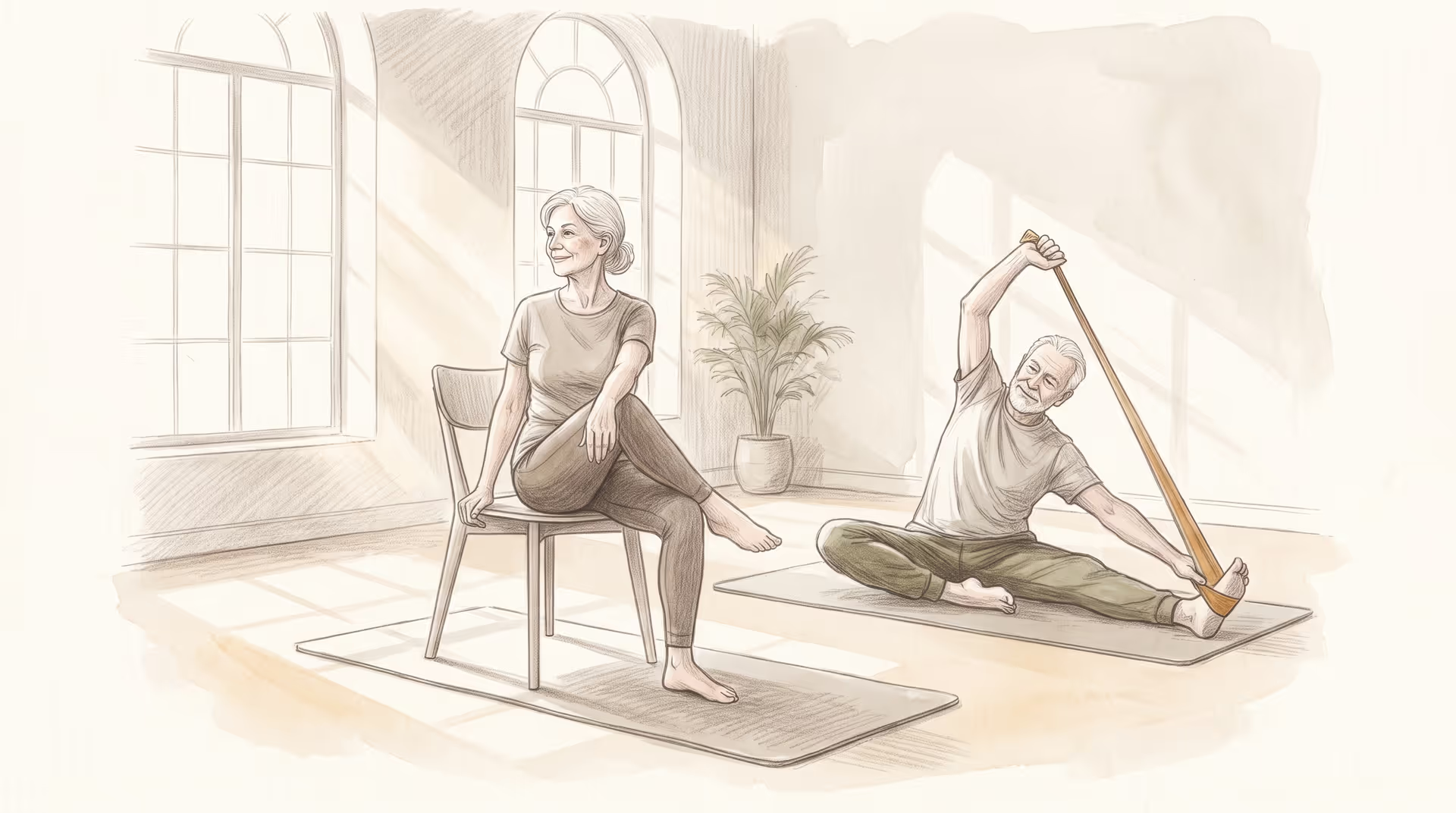
Intro Pilates is a low‑impact exercise method that many older adults find useful. It focuses on core strength, balance, and controlled movement. If you are helping an aging parent stay active at home, Pilates is worth considering. This article explains what Pilates is, the benefits for seniors, safety notes, and practical ways to start.
What is Pilates?
Pilates is a series of controlled movements invented in the early 1900s to improve strength, flexibility, and body awareness. You can do Pilates on a mat using your body weight. You can also use equipment such as a reformer that adds spring resistance. Classes range from gentle, beginner sessions to more challenging workouts. In many communities you can find classes in studios, community centers, senior programs, or online.
Why Pilates can be a good choice for seniors
Pilates is low impact. That makes it easier on joints than high‑impact exercise. It also emphasizes balance, posture, and core strength. Those things matter as people age. Here are the common benefits seen in older adults:
- Improves balance and reduces fall risk. Pilates trains the muscles that stabilize the hips, trunk, and ankles. Research shows it can help balance and the kind of movement needed in daily life. A systematic review of studies in older adults reported gains in dynamic balance and mobility after Pilates programs.
- Builds functional strength. Pilates targets the deep core and leg muscles used for standing, reaching, and walking. Studies in older adults show improvements in strength and functional capacity after regular practice.
- Supports posture and spinal support. Pilates exercises teach alignment and strengthen the muscles that hold the spine upright. Better posture can ease neck and back strain and make daily tasks easier.
- Helps joint mobility and flexibility. Pilates blends strength with controlled range of motion. That balance helps maintain mobility without overstressing joints.
- May help with back pain. Some people with chronic low back pain report improvement after months of Pilates focused on core support and controlled movement.
- Benefits mood and thinking. Pilates uses breath and concentration, which can reduce anxiety and improve mood. Some small studies suggest gains in memory and thinking with regular practice.
- May support bone health. Evidence is mixed, but Pilates that uses equipment with resistance (like a reformer) can add weight‑bearing elements that may be better for bone health than mat work alone. Even mat Pilates can help preserve function and mobility.
Sources that review older‑adult programs note consistent benefits for balance, strength, mobility, and mental health when Pilates is done regularly.
Safety — what to check first
Before your parent starts Pilates, check with their doctor. That is especially important if they have:
- Osteoporosis or low bone density
- Recent fractures or spinal compression
- Joint replacements or severe arthritis
- Recent surgery or unresolved medical issues
- Neurological conditions that affect balance
Some Pilates moves bend or twist the spine. These may need to be avoided or modified for people with fragile bones or certain spine problems. Experienced instructors who work with older adults can adapt movements and suggest safer options.
Modifications that make Pilates senior‑friendly
Pilates is very adaptable. An instructor can modify nearly every exercise. Common options include:
- Chair Pilates. Exercises are done seated or using a chair for support. This is great for limited mobility.
- Standing or wall‑supported Pilates. These versions focus on balance while keeping a hand on a wall or chair.
- Gentle or senior classes. These classes move more slowly and use smaller ranges of motion.
- Private one‑on‑one sessions. A trainer who comes to the home can tailor sessions to medical needs and mobility limits.
- Equipment‑based sessions. Reformers and other apparatus add resistance. That resistance may help strength and bone health if used safely.
If your parent has trouble getting up and down from a mat, chair or standing classes are a good alternative.
In‑home and community options
If you are arranging care at home, you have several choices:
- Hire a certified Pilates instructor for private sessions at home. Look for instructors who list experience with older adults or rehabilitation.
- Use livestream or on‑demand classes. Many programs offer chair or beginner Pilates videos suitable for seniors.
- Check SilverSneakers and local senior centers. Some plans and centers offer Pilates‑style classes aimed at older adults, including chair and standing formats.
- Combine Pilates with caregiver support. A caregiver can help set up equipment, provide spotting for balance, or do the exercises together for motivation.
How to get started — a short checklist
- Talk with the parent’s doctor to clear exercise and get any activity limits.
- Find an instructor experienced with older adults. Ask about training and ability to modify moves.
- Start slowly. One to two short sessions per week is fine to begin.
- Use props: sturdy chair, resistance band, non‑slip mat, and good footwear or grippy socks.
- Track comfort. Stop any movement that causes sharp pain, dizziness, or shortness of breath. Report concerns to the doctor.
Final thoughts
Pilates can be a safe, low‑impact way for older adults to build balance, core strength, and mobility. Research reviews show benefits for balance, strength, function, and mood when programs are tailored for seniors. It is not one‑size‑fits‑all, though. Talk to the doctor, choose an instructor who understands age‑related needs, and use chair or gentle formats if needed. With the right start, Pilates can help your parent move more confidently and stay active at home.
