
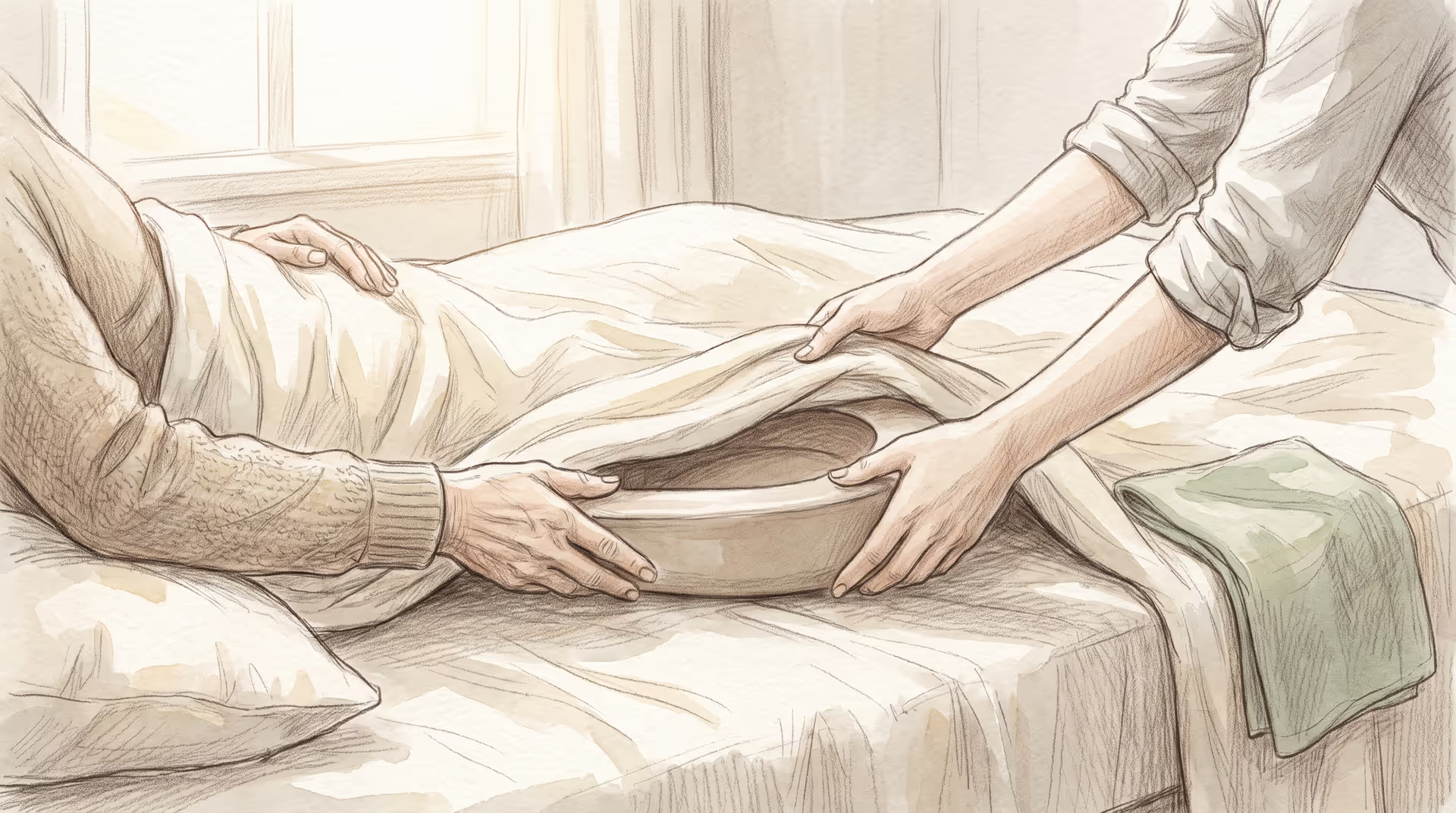
If your parent can’t get out of bed, a bedpan can help them use the toilet without moving far. This guide walks you through safe, respectful steps. It covers what you need, how to position the pan, what to do after, and when to call a nurse. Read it once to feel more confident. Then use it as a checklist the first few times.
Before you start: gather supplies and ask permission
Being prepared makes everything easier and more dignified.
Supplies to have ready:
- Bedpan (regular or shallow/fracture pan, depending on mobility)
- Disposable bed pad or waterproof underpad
- Disposable gloves
- Toilet paper and moist wipes
- A clean towel or sheet to cover for privacy
- A container or nearby toilet to empty the pan
- A trash bag for used wipes or gloves
- Disinfectant and scrub brush or a sprayer for cleaning the pan
- Hand sanitizer or soap and water for handwashing
Talk to your parent first. Say what you will do. Ask if they feel any pain. Let them know you’ll give them privacy if it’s safe to do so.
Types of bedpans and when to use them
There are two common types:
- Regular bedpan: deeper, like a small basin. Good for most bowel movements and urine.
- Fracture (shallow) pan: shallower and flatter. Easier to slide under someone who must not raise their hips.
Some bedpans use disposable liners to reduce splashing and make cleanup easier. Use what the home health provider recommends.
How to position a bedpan
Work slowly and explain each step. Keep the person covered except the area you’re working with.
Step-by-step positioning:
- Wash your hands and put on gloves.
- Place a waterproof pad under the hips to protect the bedding.
- Help the person lower their pants and underwear as needed.
- Have the person sit up if they can. If not, help them roll slightly to one side.
- Slide the bedpan gently under the buttocks. If you have a helper, one can lift the hips while the other slides the pan in.
- If you used the side roll method, press the pan against the person’s buttocks and help them roll back onto it.
- Raise the head of the bed a little if it helps them sit comfortably. Provide a pillow or support if needed.
- Cover them with a sheet for dignity and leave the room if it is safe to do so. Make sure they can reach a call bell or you can hear them.
If the person is confused or likely to move suddenly, stay close and keep talking so you can help right away.
Giving privacy and checking in
If you can leave the room, tell them when you will check back. Check often. Remove the pan soon after they finish. Leaving someone on a bedpan too long can cause skin breakdown or discomfort.
Removing and emptying the bedpan
Be gentle to avoid spills and discomfort.
How to remove the pan:
- Put on fresh gloves if needed.
- Ask the person to roll away from you or lift their hips slightly.
- Hold the bedpan steady as you help them roll or lift.
- Carefully set the pan on a nearby surface or directly carry it to the toilet.
- Help the person clean themselves with toilet paper or moist wipes. Offer assistance but let them do what they can.
Empty the pan into the toilet. Flush any disposable liners if the product allows, or throw them away per directions.
Cleaning the bedpan
Cleaning well prevents infection.
Cleaning steps:
- Rinse the pan in the toilet if possible, using a small sprayer if available.
- Wash the pan with disinfectant diluted with water, following the product instructions. A scrub brush helps remove residue.
- Rinse and dry the pan or set it aside to air-dry.
- Dispose of gloves and any used wipes. Wash your hands thoroughly when finished.
If you use disposable bedpans, follow the manufacturer’s directions for disposal.
Watch for warning signs
Call the nurse or doctor if you see:
- Blood in the urine or stool
- No urine for several hours or pain when urinating
- Severe abdominal pain or vomiting
- Confusion that’s new or much worse
- Signs of skin breakdown, redness, or sores around the buttocks
- Foul-smelling drainage, fever, or other signs of infection
If your parent cannot use a bedpan safely because they keep falling off or are too confused, ask the home health nurse about a bedside commode or catheter options.
Tips to make it easier and more comfortable
- Keep the bedpan warm by rinsing it with warm water before use. Cold plastic can be uncomfortable.
- Use a waterproof pad under the pan to protect bedding.
- Keep a towel or dry cloth nearby to quickly dry any spills.
- Position pillows for comfort and support.
- Speak calmly and offer reassurance. Small kindnesses help preserve dignity.
- Consider working with a home health aide for training the first few times.
Final note: dignity matters
Using a bedpan is often hard on both the person and the caregiver. Simple steps—asking permission, keeping the person covered, and moving slowly—make a big difference. If you feel unsure, ask a nurse to show you the motions in person. With a bit of practice, you’ll feel more comfortable helping safely and respectfully.
