
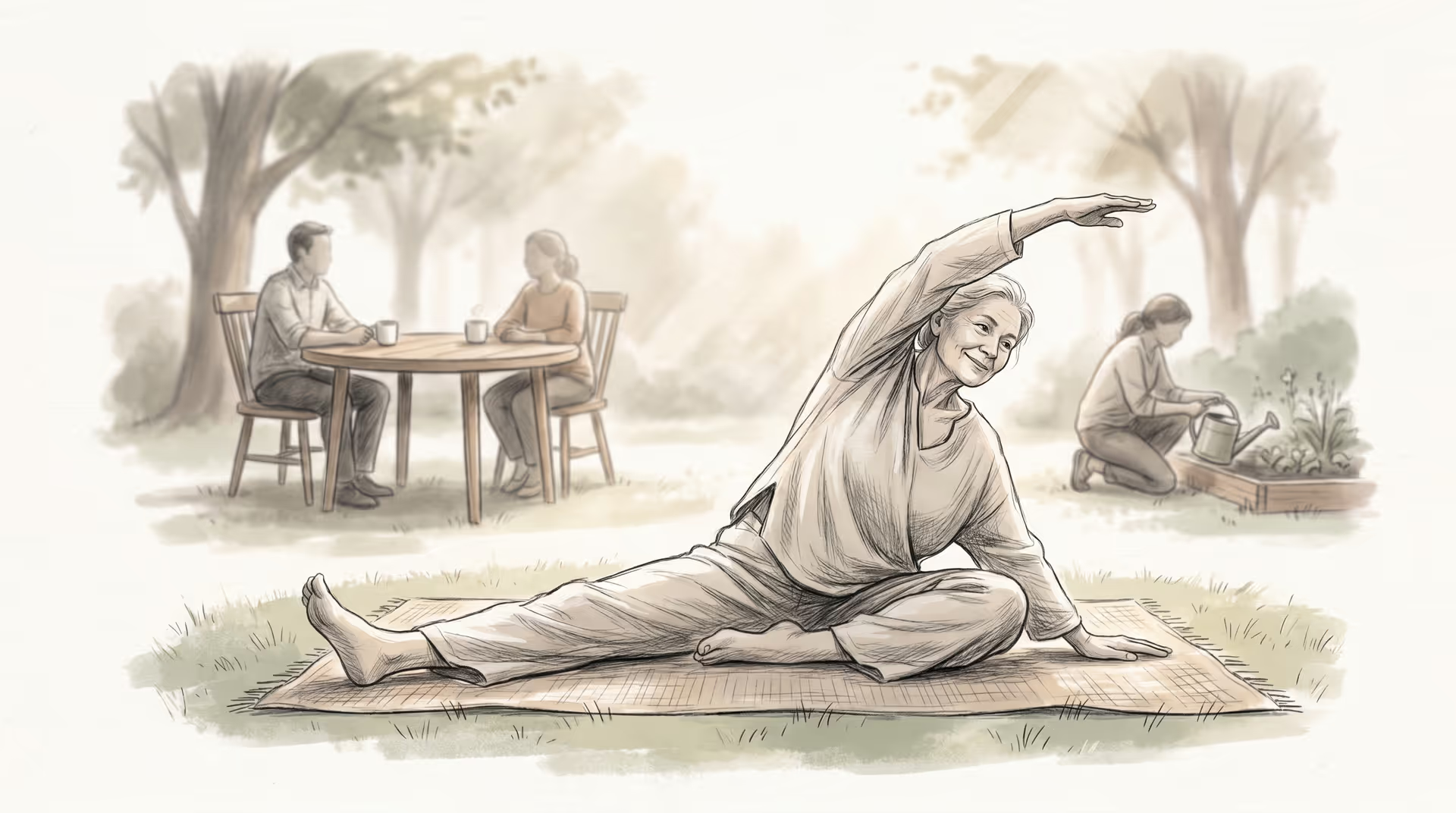
Ask most people what it means to "be healthy" in later life, and they'll point to a number: blood pressure, a step count, a cholesterol panel. Those matter. But they describe only one slice of a much larger picture. Real wellness in your 70s, 80s, and beyond is the quiet sum of how your body moves, how your mind stays curious, how connected you feel, and whether your days carry meaning.
Wellness researchers have spent decades naming the parts of that picture. The framework most senior-living and aging programs use traces back to Dr. Bill Hettler, co-founder of the National Wellness Institute, who broke whole-person health into distinct but interlocking dimensions of wellness. The exact count varies (you'll see lists of five, six, seven, or eight), but the spirit is the same: aging well is several things you tend, a little at a time.
This guide walks through six dimensions that matter most for older adults and pairs each with small daily habits you can realistically keep. No overhaul required.
Why a holistic view beats chasing one number
The dimensions reinforce each other. A daily walk (physical) doubles as a chance to chat with a neighbor (social). A weekly volunteer shift (purpose) gets you out of the house, moving, and around people. When one dimension slips, the others often follow, which is why isolation, for example, is linked to worse physical and cognitive outcomes, not just lower mood.
The National Center for Complementary and Integrative Health frames this as whole-person health: looking at the connections between body, mind, community, and environment rather than treating each in a silo. For older adults especially, that lens turns "managing decline" into something more hopeful: a life that feels good to live.
The six dimensions of wellness
Physical: the body that carries you. This is movement, sleep, nutrition, and staying ahead of chronic conditions. The goal is strength, balance, and the ability to do what you love independently for as long as possible.
Emotional: how you understand and handle your feelings. Emotional wellness means recognizing stress, grief, and worry without being ruled by them, and knowing it's normal (and treatable) when low moods linger.
Social: the people you belong to. Friendships, family ties, and casual daily contact protect both mind and body. Connection is a basic human need.
Intellectual: a mind that keeps reaching. Learning, problem-solving, and curiosity keep the brain engaged. The point is novelty and challenge.
Spiritual: your sense of meaning and peace. This may be religious faith, time in nature, meditation, or simply living by clear values. It's about feeling grounded in something larger than the day's worries.
Purpose & vocational: a reason to get up. Retirement ends a job while the human need to contribute remains. Mentoring, volunteering, hobbies pursued seriously, and caregiving all answer the question, what am I for now?
One habit per dimension, every day
Frameworks are easy to nod along to and hard to use. So here is the part competitors leave out: a plain table that turns each dimension into a single, repeatable daily habit. Pick one row to start. Add others as they stick.
| Dimension | A simple daily habit | Why it works |
|---|---|---|
| Physical | A 10 to 20 minute walk, plus two short balance holds (stand on one foot at the counter) | Builds endurance and the balance that prevents falls |
| Emotional | Name one feeling and one thing you're grateful for, out loud or on paper | Naming emotions lowers their grip; gratitude shifts focus |
| Social | Reach out to one person: a call, text, or porch hello | Daily contact is the strongest buffer against isolation |
| Intellectual | Do one "new or hard" thing: a puzzle, a chapter, a language app | Novelty and challenge keep neural connections active |
| Spiritual | Five quiet minutes: prayer, breathing, or sitting outside | Regular stillness builds calm and a sense of meaning |
| Purpose | Do one small thing for someone else, or work toward a project | Contribution creates the "reason to get up" that protects health |
Stack a few of these and you'll notice they overlap. The walk with a friend covers physical and social. The volunteer hour covers purpose, social, and physical at once. That efficiency is the whole point of thinking in dimensions.
Where to put your energy first
Start with physical, because it underwrites the rest. Movement protects your independence, your mood, and your brain. Aim for the kind of balanced routine the National Institute on Aging recommends: a mix of endurance, strength, balance, and flexibility, described in its guide to the four types of exercise. The CDC's physical activity guidelines for older adults offer a realistic weekly target. For a deeper routine you can follow at home, see our guide to the best exercises for seniors, and pair it with the everyday fuel covered in our senior nutrition guide.
Protect your social world deliberately. Connection rarely happens by accident after a spouse passes or friends move away. The NIA's tips on loneliness and social isolation are worth a read; the research linking isolation to poorer health is strong enough to treat friendship as preventive medicine.
Keep the mind working and the spirit fed. Curiosity is trainable. The NIA's overview of cognitive health and older adults is clear that mental stimulation, sleep, and social activity all feed brain health together.
Don't dismiss emotional struggles as "just aging." Persistent sadness is common, and it responds to care. The NIA's resource on mental and emotional health for older adults is a good starting point if a low mood lingers.
Reclaim purpose on purpose. Research ties a sense of purpose to longer, healthier life. The NIA encourages older adults to keep participating in activities you enjoy, not as a hobby footnote, but as a genuine pillar of healthy aging.
A note on planning ahead
The dimensions also make a useful checklist when you're evaluating where to live. The strongest senior-living communities don't just provide care; they build calendars, spaces, and staff around all six dimensions. As you weigh independence and support, it helps to be honest about which dimensions are getting harder to maintain alone. If managing the physical basics of daily life is part of the picture, our guide to activities of daily living explains how those needs are assessed.
Frequently asked questions
How many dimensions of wellness are there? There's no single official number. The classic model has six; many programs use seven or eight by adding environmental and occupational dimensions. The exact count matters far less than the habit of tending several areas of life rather than just one.
Which dimension should I focus on first? Many programs start with physical wellness, because movement and good nutrition support your mood, your brain, and your independence, which makes every other dimension easier. From there, social connection is usually the highest-leverage next step.
Isn't this just self-care with extra steps? Self-care is part of it, but the dimensions model is broader. It includes things self-care often skips (purpose, social belonging, intellectual challenge), and it's built to show how those areas reinforce one another over a lifetime.
Can you really improve wellness in your 80s or 90s? Yes. Research on exercise, social connection, and cognitive engagement consistently shows benefits at every age. Gains may come more gradually, but the dimensions respond to attention no matter when you start.
