
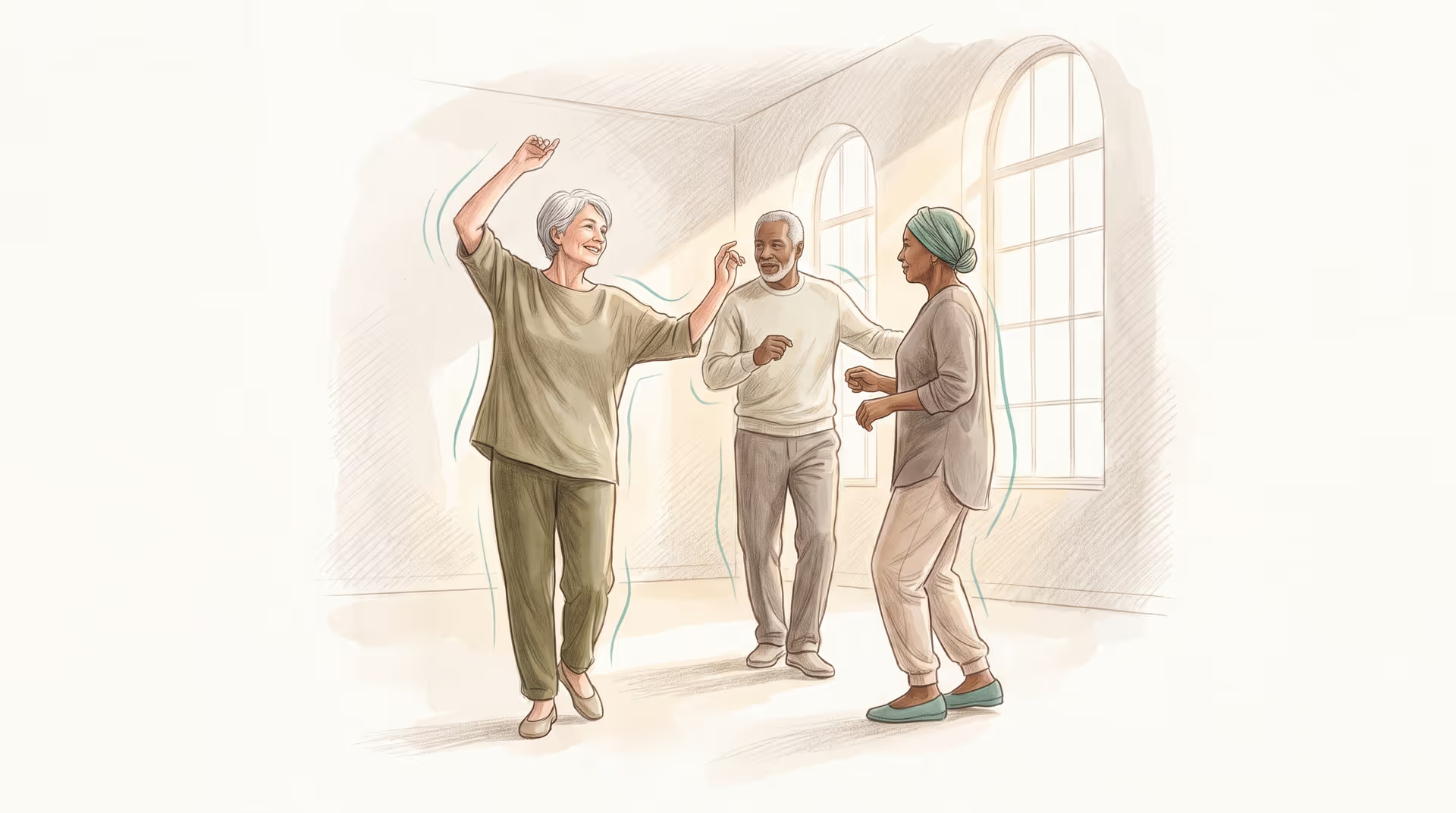
If your parent is getting older and you want a fun way to help them stay active, Zumba can be a great option. It’s a dance-based workout that is easy to adapt for different fitness levels. Many seniors enjoy Zumba because it mixes music, movement, and a social setting. Below are the main health benefits and practical tips for helping an older adult try Zumba safely.
What is Zumba (and Zumba Gold)?
Zumba is a group fitness class that blends dance moves with aerobic exercise. The music is often upbeat and inspired by Latin rhythms. The movements can be fast or slow, and people follow the instructor’s steps to the music.
Zumba Gold is a modified version made for older adults. It keeps the same rhythms and fun, but the moves are lower-impact and focus on balance, range of motion, and coordination. There are other options too, like seated Zumba and Aqua Zumba, which use water to lower joint stress while still giving a good workout.
Heart and lung health
Zumba gets people moving and raises the heart rate. That helps strengthen the heart and lungs over time. Research and fitness groups note that Zumba classes often reach the levels of effort recommended for improving cardiovascular fitness. When done regularly, Zumba can help a senior build stamina and make daily activities easier.
Balance, coordination, and fall risk
Dance involves stepping, turning, and shifting weight. Those moves challenge balance and coordination. Studies of dance programs for older adults have shown gains in balance and brain health. Better balance can lower the chance of falls, which is a big concern for aging adults. Zumba Gold especially focuses on steady, controlled movements that train balance safely.
Strength and joint health
Even though Zumba is mostly aerobic, it uses many muscle groups. The side steps, arm movements, and squats in classes help build strength over time. Zumba Gold and chair-based routines reduce impact on the joints while still working muscles. For people with arthritis or sore joints, low-impact versions let them move without harsh stress.
Flexibility and mobility
Dancing encourages a wide range of motion in the hips, shoulders, and spine. That helps maintain flexibility and makes everyday tasks like reaching or bending easier. Regular practice can help preserve mobility and posture.
Mood, social connection, and mental health
Zumba classes are social by nature. People laugh, clap, and move together. That social contact helps reduce loneliness and can boost mood. Music and movement also trigger feel-good brain chemicals. Many seniors report that a lively class lifts their spirits and helps with anxiety or low mood.
Brain function and memory
Learning dance steps and moving to a beat challenges the brain. That kind of mental work — remembering sequences, coordinating left-right movements, and matching steps to music — helps cognitive function. Some research shows that dance can support neuroplasticity and memory in older adults.
Pain relief and quality of life
When done safely and over time, dance programs have been linked to reduced pain and better daily functioning. Zumba’s mix of movement and social support can improve overall quality of life. People often say they feel stronger, more confident, and more able to do daily tasks.
Who should try Zumba?
Zumba can work for many older adults. Zumba Gold, seated classes, and Aqua Zumba make it possible for people with lower fitness levels or joint problems to participate. Still, it’s important to check with a doctor first. If your parent has heart disease, uncontrolled high blood pressure, severe balance problems, recent surgeries, or other serious conditions, get medical clearance before starting a new exercise class.
Safety tips and useful modifications
- Talk to the doctor first. Ask about any limits or warning signs to watch for.
- Start slow. Try one class a week at first. Build up frequency as endurance improves.
- Choose the right class. Look for Zumba Gold, chair-based classes, or instructors who work with seniors.
- Use a chair for support. Many moves can be done seated or next to a chair for balance.
- Wear proper shoes. Supportive, flat shoes reduce slip and ankle strain.
- Hydrate and rest. Make sure your parent drinks water and takes breaks as needed.
- Mind the floor. Non-slip surfaces and clear space reduce fall risk.
- Consider Aqua Zumba. Pool classes cut joint stress and are gentle on knees and hips.
- Have a caregiver or friend attend. A familiar face can help with confidence and safety.
How to get started
Check local senior centers, community centers, YMCAs, and parks for Zumba Gold classes. Many places offer trial classes or drop-in sessions. Some instructors run online or DVD classes that you can do at home. If mobility or transport is an issue, look for in-home trainers or invite a certified instructor to run a small group at home. Your parent may prefer to try a short, low-intensity class first to see how it feels.
Final thoughts
Zumba is more than dancing. It’s a full-body activity that can help seniors stay stronger, steadier, and more connected. The music and group energy make exercise feel less like a chore. With a few safety checks and the right modifications, many older adults can enjoy Zumba’s health benefits. If you’re arranging care or activities for a parent, Zumba could be a joyful way to add movement and social time to their week.
