
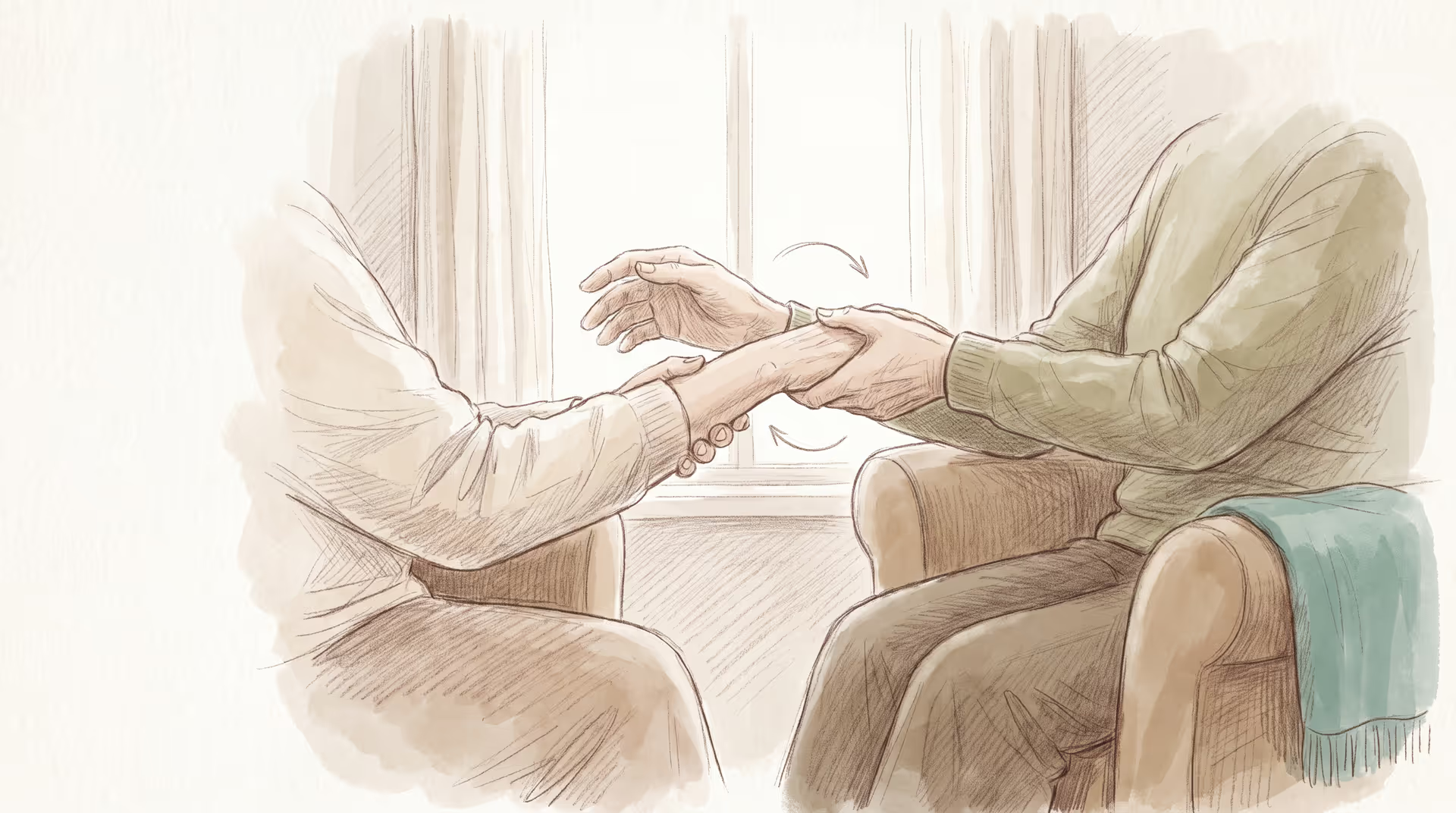
If your parent has limited movement after a stroke, surgery, or illness, passive range of motion (PROM) exercises can help. PROM means you move their joints for them. The person does not need to try. These exercises are safe and useful when someone cannot move on their own. Below you will find why PROM helps, safety rules, and step‑by‑step moves caregivers can do at home. Always check with the person’s doctor or physical therapist before starting.
Why PROM matters
PROM keeps joints flexible. It helps keep muscles and tendons from shortening into painful contractures. PROM also improves blood flow and can lower the risk of pressure sores. For people who are bed bound, it can help reduce swelling and keep the joints and cartilage healthier. Early PROM — even in the first days after a stroke or injury — can support better recovery. PROM is often part of a plan that includes active therapy when the person is able.
Safety first: what to check before you start
- Get approval from the doctor or a physical/occupational therapist. They can show you the right moves for the person’s needs.
- Position the person comfortably with good body alignment.
- Use proper body mechanics. Bend your knees and keep your back straight when lifting or supporting a limb.
- Support the joint above and below the area you move. Hold the limb gently but securely.
- Move slowly and smoothly. Do not force a joint past its comfortable range.
- Ask the person if they feel pain. If they cannot speak, watch for facial grimace, tensing, or increased heart rate.
- Stop and call the therapist or doctor if you see new swelling, redness, warmth, fever, sudden pain, or numbness.
- Do 10 repetitions of each motion, unless the therapist gives different instructions. Repeat the routine two to three times a day as advised.
How to do each movement (general tips)
- Move in a straight line from the start to the end position. Use slow, gentle motions.
- Support the limb so the joint moves evenly. For example, hold the wrist and the forearm when moving the wrist.
- Keep fingers, toes, and toes in a neutral position when possible.
- Stretch until you feel a gentle resistance. You should not cause sharp pain.
- For increased muscle tone or spasticity, gentle continuous stretching against the tight area may help relax the muscle. Ask the therapist for specific technique.
Upper body PROM exercises
Hand and fingers
- Hold the base of the fingers and the palm. Gently straighten each finger, then bend them into a fist. Repeat for all fingers.
- Place palms together and gently push with the stronger hand to open the other hand. Then bend the fingers into a fist.
Wrist
- Support the forearm with one hand and hold the hand with the other. Gently bend the wrist forward (flexion) and backward (extension). Also move the wrist side to side (radial and ulnar deviation).
Elbow and forearm
- Support the upper arm and the wrist. Bend the elbow so the hand moves toward the shoulder (flexion). Straighten the elbow (extension).
- Rotate the forearm so the palm faces up (supination) and then down (pronation). Support the elbow and wrist when you turn.
Shoulder
- For shoulder flexion, hold the wrist and upper arm. Lift the arm forward and up toward the ear.
- For shoulder abduction, move the arm out to the side and up.
- For horizontal adduction, move the arm across the chest.
- For internal and external rotation, hold the elbow at the side and turn the forearm inward and outward.
Tabletop and cane stretches (for shoulder reach)
- With the person seated, place their hands on a table. Gently slide both hands forward to stretch the shoulders. Use a towel under the hands if they stick to the surface.
- If approved by a therapist, hold a lightweight cane or dowel with both hands. Use the stronger arm to help raise or rotate the weaker arm in a wide but gentle arc.
Lower body PROM exercises
Hip and knee
- With the person lying down, support the knee and ankle. Bend the knee and hip together, bringing the foot toward the hip (knee/hip flexion). Then straighten the leg.
- For hip abduction, hold the heel and knee. Move the leg out to the side, keeping the knee straight.
Ankle and foot
- Support the heel and the foot. Move the foot up toward the shin (dorsiflexion) and point it away (plantarflexion).
- Move the ankle side to side for inversion and eversion.
Toes
- Hold the toes gently. Bend them down and then straighten them.
Tips to make PROM easier and safer
- Ask a therapist to teach you the exercises and watch you do them. They can correct your technique.
- Use pillows to support limbs and improve comfort.
- Move small joints first, then larger joints. For example, do fingers, then wrist, then elbow, then shoulder.
- Keep a short log. Note time, exercises done, and any pain or unusual signs. Share it with the therapist.
- If the person has high muscle tone or spasticity, move slowly and provide steady pressure. Sudden quick moves can trigger spasm.
- Be patient. PROM is not a quick fix. It helps when done regularly and safely.
When PROM is the right choice
PROM is appropriate for people who cannot move a joint on their own. That includes those who are very weak, paralyzed, confused, or bed bound. It is also used when a medical team decides active therapy is not safe yet. Even long‑term, PROM can prevent stiffness and other complications and improve comfort.
Small things matter
PROM can prevent problems that come with long periods of immobility. These include joint stiffness, pressure sores, swelling, and loss of muscle length. It also keeps the person more comfortable and may help with later progress in active therapy.
If you are caring for a parent at home, PROM is a practical, helpful way to support them each day. Start with guidance from a therapist. Work slowly and safely. And remember: your hands and attention make a real difference.
