
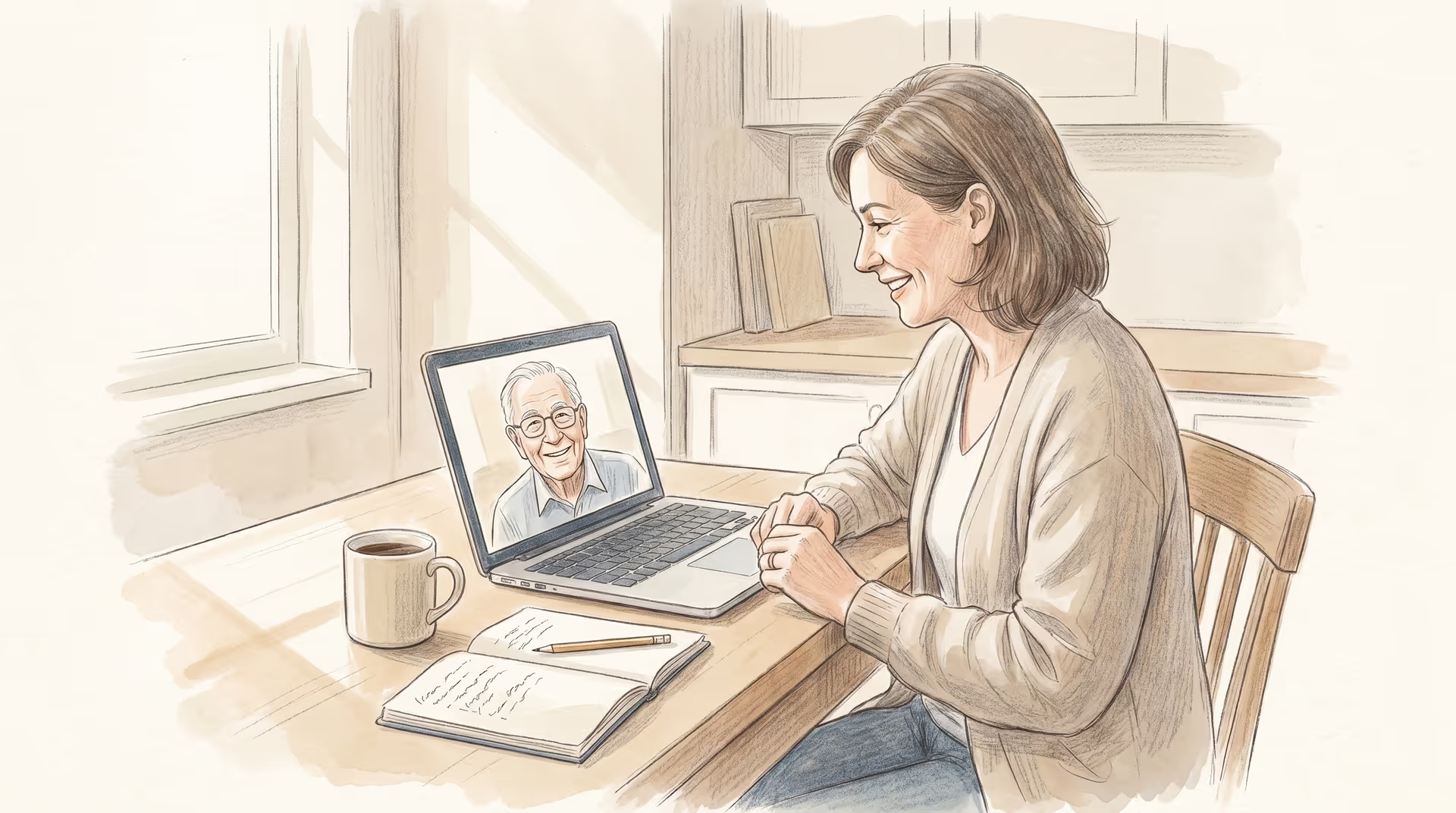
Caring for an aging parent is hard enough up close. Doing it from another city (or another time zone) adds a layer of distance that can feel like helplessness. You can't drop by to check the fridge, sit in on a doctor's appointment, or notice that the stairs have gotten harder. But "far away" does not mean "powerless." Some of the most important caregiving work (coordinating care, managing finances and medical information, and building a reliable local network) is often done remotely, by phone, email, and a well-organized binder.
If you're the family member who lives the furthest away, you may already be the long-distance caregiver, even if no one has called it that. The U.S. National Institute on Aging defines it simply: anyone caring for someone who lives an hour or more away. That role comes with a practical playbook of its own.
Start by getting organized
Distance rewards preparation. The single most useful thing you can do early is gather information before you need it, so a 2 a.m. phone call doesn't catch you scrambling for a doctor's name or an insurance number.
Two things make every other task easier:
- Written permission to access medical and financial information comes first. Without a signed HIPAA authorization, a doctor's office often can't legally talk to you. The same is true for banks and insurers without proper authority. Sorting this out while your parent is well (alongside documents like a durable power of attorney and advance directive) saves enormous frustration later. The NIA's checklist for getting affairs in order is an excellent starting point.
- One central place for the essentials comes next. A shared document or binder with physicians, pharmacies, neighbors, the Medicare number, insurance details, medications, and account logins means anyone in the family can act fast in a crisis.
What you can set up from afar: a checklist
Most families discover they can do far more remotely than they expected. Here's a starting checklist of what to put in place from a distance:
- Signed HIPAA authorization so doctors can share updates with you
- Durable power of attorney (financial) and healthcare proxy in place
- Advance directive / living will documented and shared with the care team
- A current medication list: drugs, doses, prescribing doctors, pharmacy
- Auto-pay and online banking set up for recurring bills
- A shared digital calendar for appointments, visits, and who's covering what
- Contact list of doctors, pharmacy, neighbors, and the local primary caregiver
- Telehealth access configured so you can join virtual visits
- A medical alert system or check-in service if your parent lives alone
- A relationship with the local Area Agency on Aging for backup resources
You won't set all of this up in a weekend, and you don't need to. Pick the two or three that matter most for your parent's situation and start there.
Manage money and medical information remotely
Finances and health records are where long-distance caregivers often add the most value, precisely because so much of it can be handled digitally. With the right authority in place, you can:
- Set up auto-pay for rent, utilities, and insurance so nothing lapses
- Monitor accounts for unusual activity; older adults are frequent targets of financial scams
- Order medications, supplies, and durable medical equipment online
- Keep a running medication list and flag interactions to the care team
- Attend telehealth appointments by video and take notes, which often reveals more than a secondhand summary
A quiet but powerful move: ask to be the family member who tracks the medical calendar. Knowing what's scheduled, what was said, and what's next keeps you genuinely informed instead of relying on "everything's fine."
Build a local support network
You can't be there in five minutes, so your job is to assemble the people who can. A strong local network helps you manage care steadily instead of lurching from emergency to emergency.
| Who | How they help |
|---|---|
| Neighbors & friends | Eyes on the ground: a quick check-in, a noticed change, a ride |
| Area Agency on Aging | Local programs, meal delivery, transportation, and respite referrals |
| Geriatric care manager | A paid professional who coordinates care and reports back to you |
| Home care aides | Hands-on help with bathing, meals, medication reminders |
| Faith or community groups | Regular social contact and informal check-ins |
The free Eldercare Locator, a service of the U.S. Administration on Aging, connects you to your parent's local Area Agency on Aging, a primary entry point for community services in their town. If a move to a community is on the horizon, our guides on how to start your senior living search and personal care for seniors can help you weigh the options from a distance.
Support the primary caregiver
In most families, one person (often the sibling who lives nearby) carries the daily load. Long-distance caregivers sometimes underestimate this, and the resulting resentment is one of the most common sources of family conflict. If that's you on the far end, treat the local caregiver as your most important teammate.
Concrete ways to lighten their load from afar:
- Take ownership of remote tasks: bills, insurance calls, research, appointment scheduling
- Cover the cost of services that buy them time, like a cleaning service or respite care
- Schedule a regular check-in call so they're not the only one paying attention
- Give them a real break. Plan a visit timed so the local caregiver can take a vacation
If your family is juggling kids and aging parents at once, our guide on the sandwich generation speaks directly to that squeeze.
Make your visits count
When you only see your parent a few times a year, visits do double duty: connection and assessment. Resist the urge to pack the schedule with errands. Instead, build in unhurried time, and use part of the visit to quietly evaluate how things really are.
While you're there, look for the things that don't come through on a phone call:
- Is there fresh, unexpired food in the kitchen? Are meals being eaten?
- Any unopened mail, unpaid bills, or signs of confusion with money?
- Is the home safe: loose rugs, poor lighting, trouble with stairs?
- Has your parent lost weight, stopped activities, or seemed more withdrawn?
- Do you spot expired or duplicate medications?
Meeting the doctors, neighbors, and aides in person during a visit also strengthens the network you rely on the rest of the year. And don't forget to enjoy the time together. Caregiving is the reason for the trip, but it shouldn't crowd out everything else.
Take care of yourself, too
Distance carries its own weight: guilt for not being there, anxiety between phone calls, the mental load of coordinating from afar. That strain is real, and ignoring it helps no one. Build in your own support: a caregiver support group, even an online one, connects you with people who understand the particular ache of caregiving from far away. Looking after yourself is what lets you keep showing up over the long haul.
Frequently asked questions
What counts as long-distance caregiving? Generally, caring for someone who lives an hour or more away, far enough that you can't easily respond in person to daily needs or emergencies.
How can I help if I can't be there? A great deal: managing bills and insurance, coordinating doctors, attending telehealth visits, organizing documents, hiring and overseeing local help, and supporting the family member who is nearby.
Should I consider a geriatric care manager? If no reliable local network exists or needs are complex, yes. A care manager is a paid professional who assesses the situation, arranges services, and reports back to you, which is often a real help when you're far away.
How do I keep family from arguing about care? Define roles clearly, share information through one central place everyone can see, and make sure the nearby caregiver isn't carrying the load alone.
The bottom line
Long-distance caregiving is coordination work, and coordination doesn't require proximity. Get the paperwork and information organized early, set up what you can remotely, build a dependable local network, support the caregiver on the ground, and make your visits count. Distance changes how you help, and you can still help a great deal.
