Concordia Hospice of Washington Donnell House receives consistent praise for the quality of direct caregiving. Families commonly describe caregivers and nurses as compassionate, respectful, and attentive; specific strengths include effective pain management, skillful nursing care, warmth from aides (several families named staff such as Jamie and an on-call supervisor Amber), and provision of bereavement support. Multiple accounts also highlight timely delivery of necessary equipment and medications, and successful coordination of hospital discharge and home transitions.
At the same time, a pattern of operational weaknesses appears across the feedback. The most frequently described issues relate to scheduling and coverage: inconsistent caregiver assignments, missed shifts, and difficulties with scheduling or late changes have diminished confidence for some families. Administratively, reviewers identified gaps in routine communication — relatives having to chase updates, unclear information-sharing, and uneven responsiveness from the office during nonstandard hours.
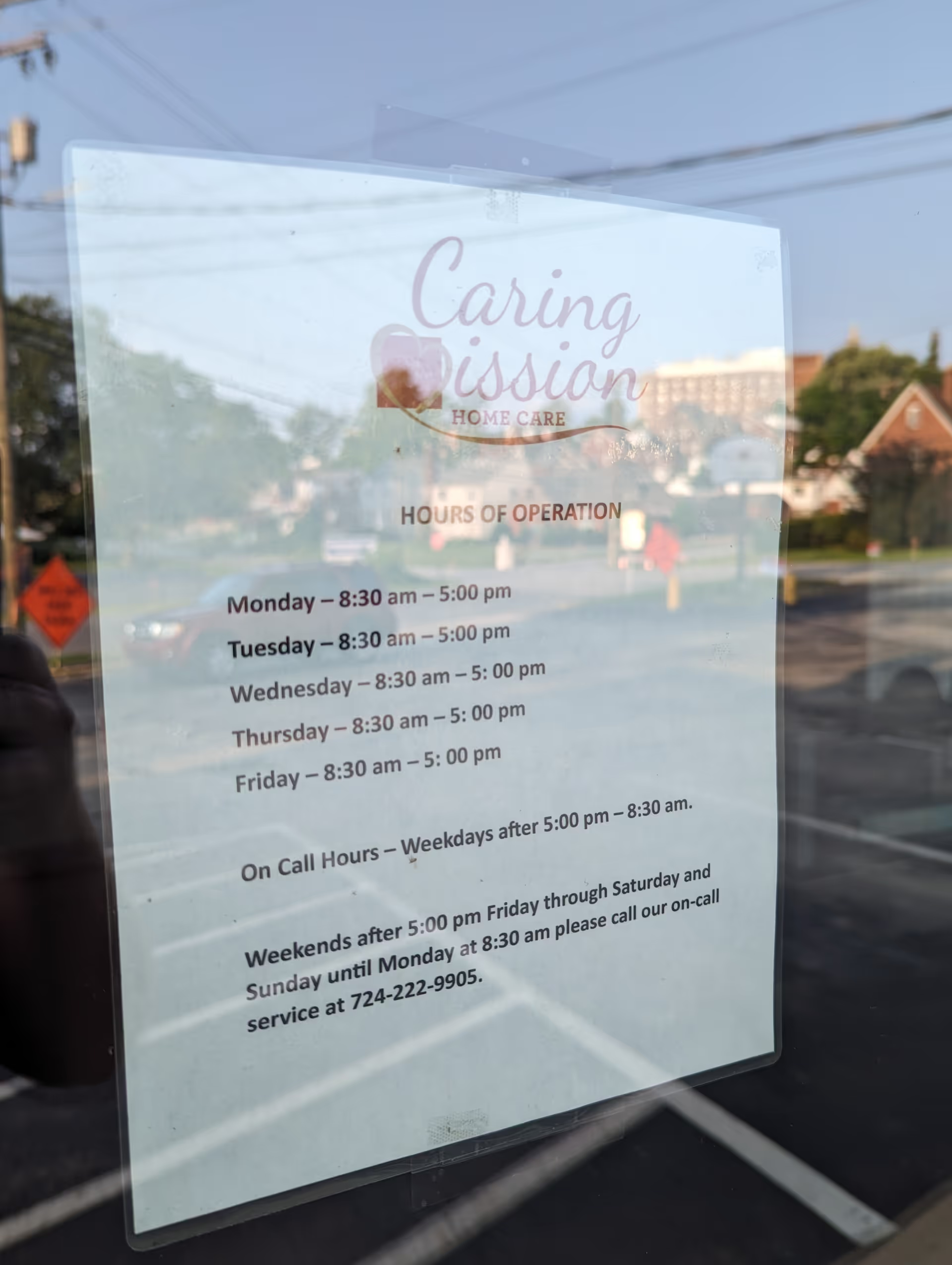
After-hours and crisis responsiveness is a recurring concern. While the agency’s on-call structure receives positive mentions, there are several instances where families experienced delayed or no response during critical moments. These accounts point to an underlying need for clearer escalation protocols and more reliable crisis coverage. Relatedly, limited local staffing and reliance on nonlocal coverage were cited as contributing factors to both scheduling instability and reduced responsiveness.
There is a clear contrast in end-of-life experiences: some families emphasize dignified, above-and-beyond care and a comforting facility environment, while others raise concerns about restricted visitation and communication failures during final hours. These are serious matters for prospective clients to address directly with the agency, as they relate to policies and contingency planning rather than individual caregiver behavior alone.
Overall value perception is mixed but leans positive: many families expressed gratitude for the hands-on care, emotional support, and smooth transitions that occurred. However, variability in administrative consistency and after-hours reliability suggests that experiences can differ depending on staffing and timing. Prospective clients should ask targeted questions about local staffing levels, contingency plans for missed shifts, the agency’s after-hours escalation procedures, visitation policies during end-of-life care, and expected timelines for equipment delivery to ensure alignment with their needs.