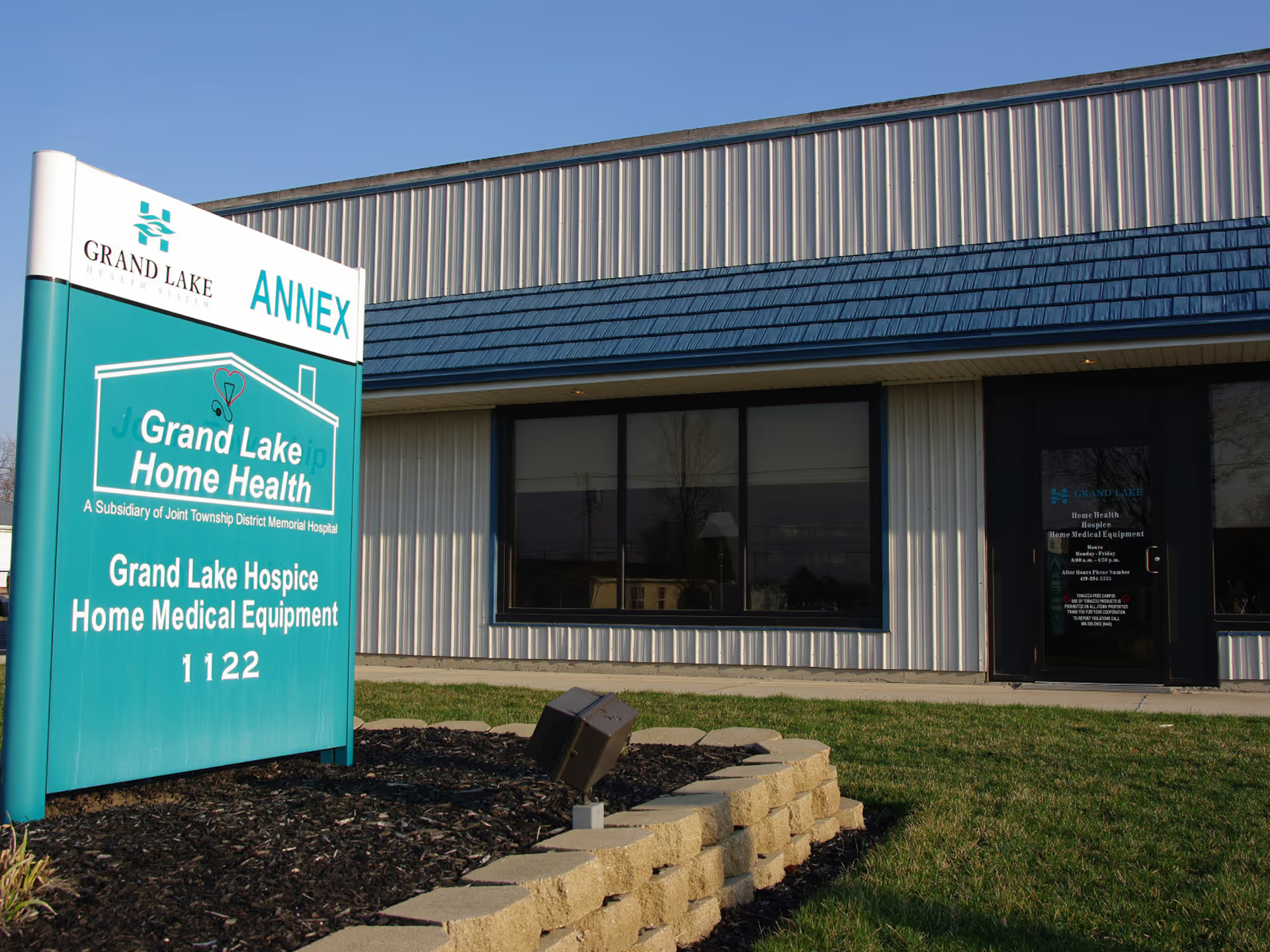
The reviews present a largely favorable view of the facility environment and many of the staff, with consistent praise for cleanliness, food quality, and a welcoming atmosphere. Multiple comments emphasize a well-maintained building, pleasant common areas, and small amenities such as coffee and snacks. Management receives positive notices for responsiveness and timely resolution of issues, and several remarks highlight good family communication channels.
Caregiver quality appears mixed but leans positive overall. Numerous accounts describe compassionate, attentive staff who go above and beyond and provide patient-focused care; one caregiver was singled out as an exemplar of responsiveness and kindness. At the same time, there are indications of inconsistent caregiver conduct and at least one instance of failure to follow instructions, which suggests variability in training or oversight. Care-plan adherence is an operational area to monitor; the underlying concern is that expectations set by families are not always consistently met by every staff member.
Communication and management were described in largely favorable terms: welcoming front-line staff, engaged managers, and effective resolution of problems when they are raised. Conversely, there are shortcomings in routine office communication that can complicate day-to-day coordination between families and caregivers. These gaps include delayed information flow and unclear follow-up in some instances.
Reliability and scheduling show a pattern of occasional punctuality issues and coverage shortfalls. Review comments refer to delays and a sense of understaffing, which can translate into late arrivals or pressure on existing staff. Staffing levels and scheduling practices therefore appear to be important operational constraints affecting the consistency of service delivery.
Value and organizational priorities are a point of divergence. While many families express gratitude for compassionate care and are satisfied with the overall environment, at least one comment characterizes the operation as prioritizing financial considerations over individualized attention. This perceptual concern connects to the staffing and scheduling observations above: resource allocation decisions may be affecting front-line service consistency.
For prospective clients and families: consider touring the facility to assess cleanliness and dining options, ask about caregiver continuity and staff-to-client ratios, request the agency's policies on shift coverage and late arrivals, and clarify how care-plan instructions are communicated and monitored. These focused questions can help determine whether the facility’s strengths—clean environment, engaged managers, and many compassionate caregivers—align with your expectations for reliable, consistent care.