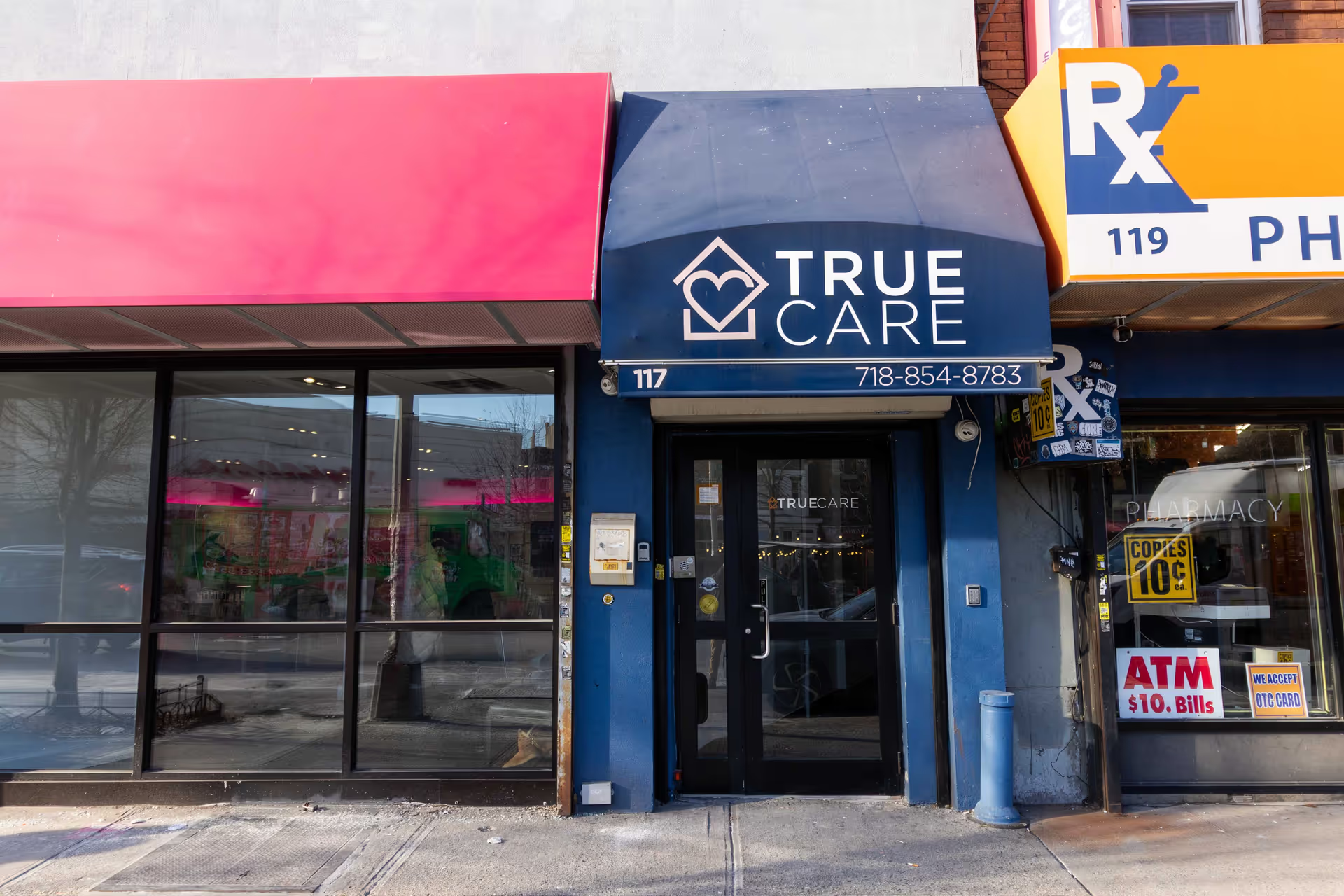
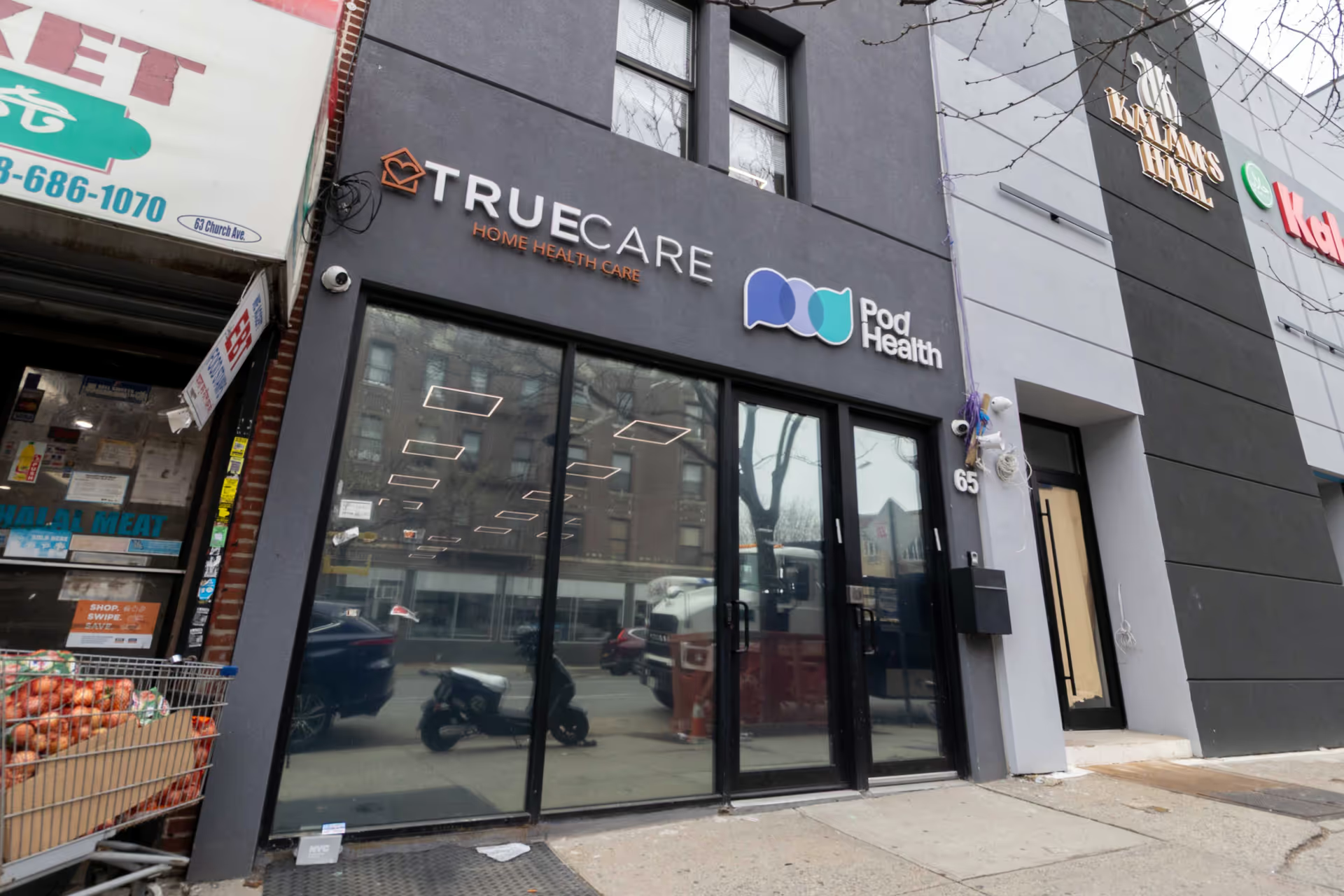
Feedback for True Care Home Care - Kensington is polarized: many items praise the agency’s onboarding, training, and several individual staff members, while operational and consistency issues recur across comments. The strongest, most consistent positives relate to orientation and in-service training (often delivered bilingually), plus a number of caregivers and coordinators who draw high praise for compassion, attentiveness, and professionalism. Specific instructors and aides are cited as standouts, and the agency’s experience with CDPAP and long-term client relationships is an advantage for some families.
Caregiver quality is uneven. Families describe a mix of high-quality, engaged aides and aides who appear undertrained or poorly supervised. Concerns center on care-plan adherence, limited clinical skill follow-through, language barriers that interfere with communication, and in-shift conduct that undermines confidence in care (examples include inattentiveness, not following instructions, or conduct that creates safety risk). At the same time, several reviewers emphasize caregivers who provide individualized activities, strong rapport with clients, and dependable long-term service.
Office communication and management present a clear operational pattern. Many comments describe difficulty reaching coordinators, long hold times, delayed or unresponsive scheduling communication, and inconsistent case-worker attitudes. That said, some coordinators and supervisors receive repeated praise for responsiveness and problem-solving, indicating variability in performance across staff or offices. Families also indicate limited or unsatisfactory processes for resolving grievances or addressing serious incidents promptly and transparently.
Reliability and scheduling are recurring pain points. Frequent attendant changes, late starts, no-shows, and limited backup coverage—especially on weekends or Fridays—are cited as creating gaps in care and requiring family intervention. Mis-scheduling and unclear shift confirmations contribute to distrust. Prospective clients should verify backup staffing practices, weekend coverage, and protocols for last-minute absences before engaging services.
Billing and perceived value are mixed. Concerns include opaque billing or authorization processes, high charges relative to expectations, and specific CDPAP-related billing frustrations. These financial issues prompted some families to seek alternative, lower-cost private aides. Transparency around invoicing, cancellation policies, and Medicaid/authorization handling appears to be an area for improvement.
Training and orientation represent a genuine strength: sessions are often described as thorough, well-organized, and bilingual, with helpful materials and instructors who explain duties and regulations clearly. This foundation is a positive indicator, but reviewers indicate that classroom training does not always translate into consistent field performance.
Overall, True Care Home Care - Kensington may be a suitable option when you can secure a recommended caregiver or coordinator and when bilingual orientation or CDPAP experience is important. However, the agency exhibits operational weaknesses that can affect day-to-day reliability and safety perceptions. Recommended due diligence for prospective clients includes asking about caregiver vetting and ongoing supervision, confirming language-match availability, clarifying billing and authorization procedures, and obtaining written guarantees about backup staffing and incident-resolution protocols.