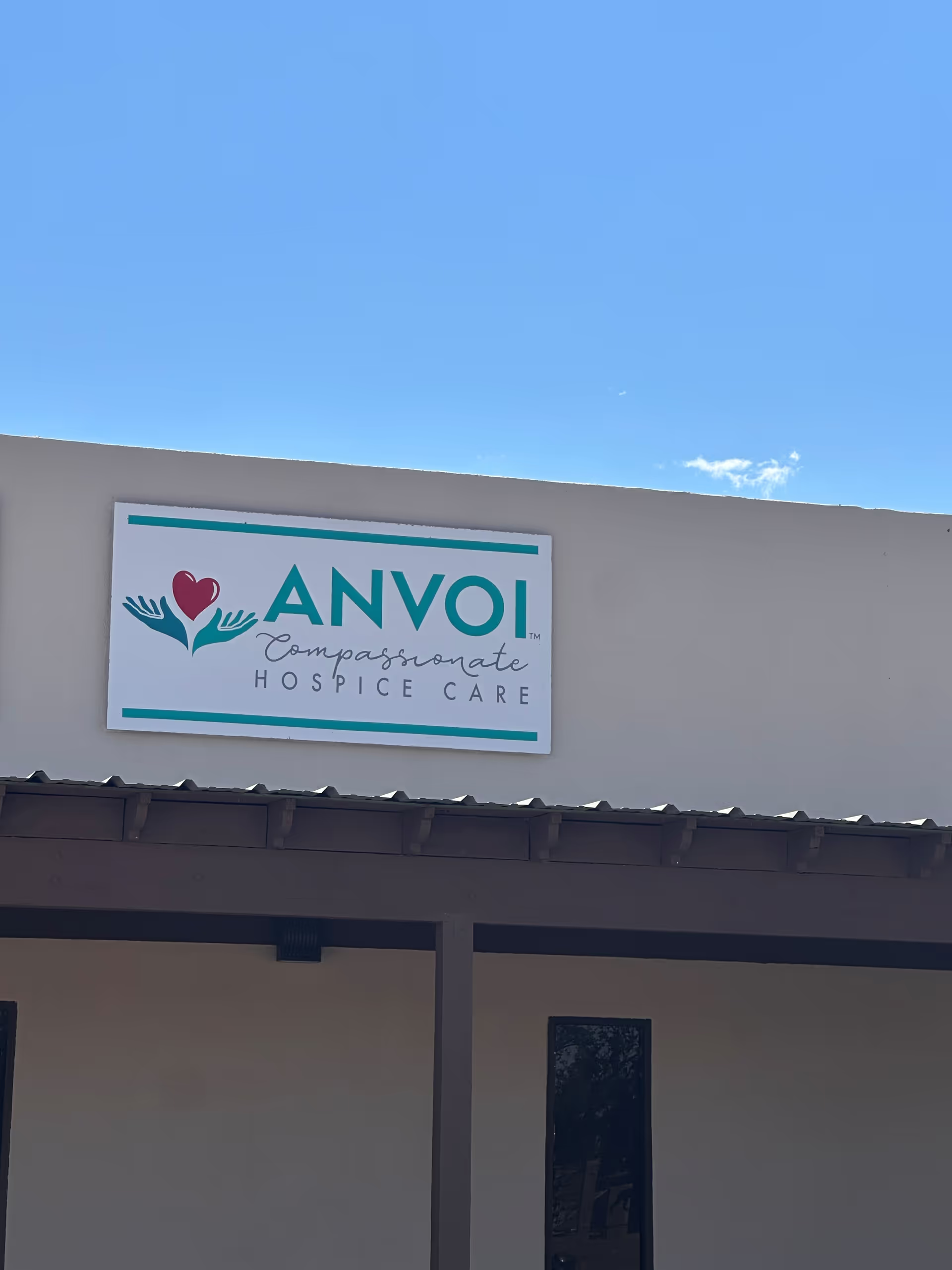
The reviews for this in-home senior care agency present a mixed picture: many families describe compassionate, clinically capable staff and positive rehabilitation outcomes, while a distinct set of operational issues recurs across other accounts. Positive comments frequently highlight attentive caregivers, effective nursing and physical-therapy services, and staff members who support families through difficult transitions. Several reviewers specifically praised helpful office personnel and individual clinicians whose responsiveness and hands-on problem solving improved client comfort and recovery.
Caregiver quality appears variable. On the positive side, reviewers describe warm, respectful aides and skilled nurses who deliver supportive, family-centered care and help clients regain strength after events such as strokes. Conversely, other accounts describe inconsistent caregiver professionalism, conduct concerns, and uneven adherence to care instructions. These contrasting impressions suggest that client experiences are strongly influenced by individual caregiver assignments and that quality control is inconsistent across the staff roster.
Office communication and coordination are frequent sources of frustration. While some families experienced clear, accommodating scheduling and an outstanding administrator, others reported delayed or missing callbacks, unclear information, and difficulty arranging conference calls with clinical staff. These communication gaps extend to case-management handoffs and coordination with primary-care providers, producing confusion about schedules, plan changes, and how doctor orders are being implemented.
Reliability and scheduling flexibility are other notable patterns. Positive reviews describe reliable nurse visits and consistent therapy teams; negative reviews emphasize missed hours, no-shows, limited after-hours options, and difficulty obtaining timely replacements when a caregiver cannot attend. Staffing shortages and inconsistent shift coverage were raised as operational weaknesses that affected continuity of care and family confidence.
Value and billing concerns appear in multiple accounts. Some clients found the services well worth the cost given the clinical support and compassionate care. Others experienced billing disagreements, perceived overcharging on initial visits, or unclear invoicing, indicating a need for clearer billing policies and more transparent dispute resolution processes.
Management and safety patterns warrant attention. Several reviewers commended specific administrative personnel and individual clinicians for professionalism and effectiveness. At the same time, there are recurring agency-level concerns: gaps in enforcing care-plan adherence, timekeeping and visit-productivity practices that undermine perceived value, and isolated household-safety or property-incident reports that suggest room for stronger oversight of in-home environments.
For families evaluating this agency, the critical considerations are staff consistency and office responsiveness. If continuity with particular caregivers and reliable scheduling are priorities, ask about guaranteed caregiver assignments, contingency plans for missed shifts, protocols for implementing physician orders, and written billing policies. If possible, request references for the specific nurses or aides who would be assigned and clarify escalation pathways for any concerns. These steps can help align expectations with the agency’s strengths while mitigating the operational weaknesses reflected in the reviews.