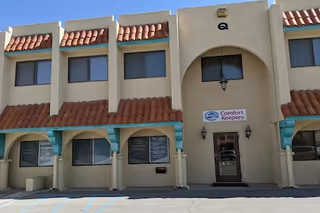
Overall impression: Reviews describe a hospice agency with many strengths at the point of direct care and family support, offset by recurring operational and communication weaknesses. Caregiving teams—nurses, CNAs, social workers, and chaplains—are frequently praised for compassion, attentiveness, and strong emotional/spiritual support during end-of-life care. Several reviewers highlighted rapid intake, 24/7 on-call availability, clear explanations about care plans, and staff who advocate for patient comfort and family needs.
Caregiver quality: Direct-care staff receive consistently positive comments for bedside manner, patient comfort focus, and willingness to go beyond basic duties. Multiple families named individual nurses and chaplains as particularly helpful, and many described the team as knowledgeable, reassuring, and effective at pain management. That pattern suggests the agency maintains a roster of caregiving personnel who can provide high-quality, family-centered hospice care.
Office communication and coordination: Reviewers present a mixed picture. While many families report responsive, helpful coordination and prompt follow-up, others describe hours-long waits for return calls, inconsistent messages between nurses, and delays during intake. These accounts point to variable office responsiveness and information flow: when the administrative and clinical coordination works well, families experience smooth care transitions; when it does not, families face frustrating delays and confusion.
Reliability of shifts and scheduling flexibility: Numerous reviews praise rapid responses to scheduling needs and reliable on-call support. Conversely, some reviews note unreliable outreach, delayed setups, and mismatched or inconsistent caregiver assignments. This indicates that shift coverage and caregiver continuity can be strong in many cases but are not uniformly consistent across all clients.
Clinical safety and management: A subset of reviews raises significant clinical concerns — examples include medication-management errors and perceptions of inconsistent clinical judgment or deficient physician follow-up. These are framed as operational patterns rather than isolated praise-worthy interactions. Combined with reports of restricted access to clinical records in a few cases and occasional failure to meet promised services, these items point to areas where clinical governance and record transparency could be strengthened.
Billing and value: Many families value the agency's comfort-focused hospice services and 24/7 availability. However, reviewers also raise concerns about billing transparency, specifically after-hours fees and unclear charges. Prospective clients should ask for clear, written explanations of fee structures and how after-hours calls or visits are billed.
Management and escalation: Leadership and helpful directors receive positive mention in several reviews, but there are also comments about defensive management responses and limited escalation resolution in specific cases. This suggests variability in how the agency handles complaints or complex clinical issues; families may benefit from confirming escalation pathways and expected timelines for problem resolution.
Notable patterns and practical advice: The dominant strengths are compassionate direct care, spiritual support, and rapid initial responsiveness. The dominant operational weaknesses are inconsistent nurse professionalism, communication/coordination gaps, and occasional clinical or medication-management lapses. For prospective clients and families: verify caregiver assignment practices, ask about continuity plans for shifts, request written billing and after-hours fee policies, and confirm how clinical records and physician follow-up will be shared. These steps can help maximize the agency’s strong caregiving capabilities while mitigating the operational risks noted in some reviews.