Caregiver quality is a clear strength in the set of summaries. Multiple entries highlight caregivers as friendly, professional, dedicated and, in at least one case, described as "amazing." Families noted flexibility around scheduling and instances of efficient, timely in-home service. These points suggest that at the caregiver level — the people providing direct care in the home — the agency can deliver respectful, competent interactions and adaptable scheduling when operational conditions allow.
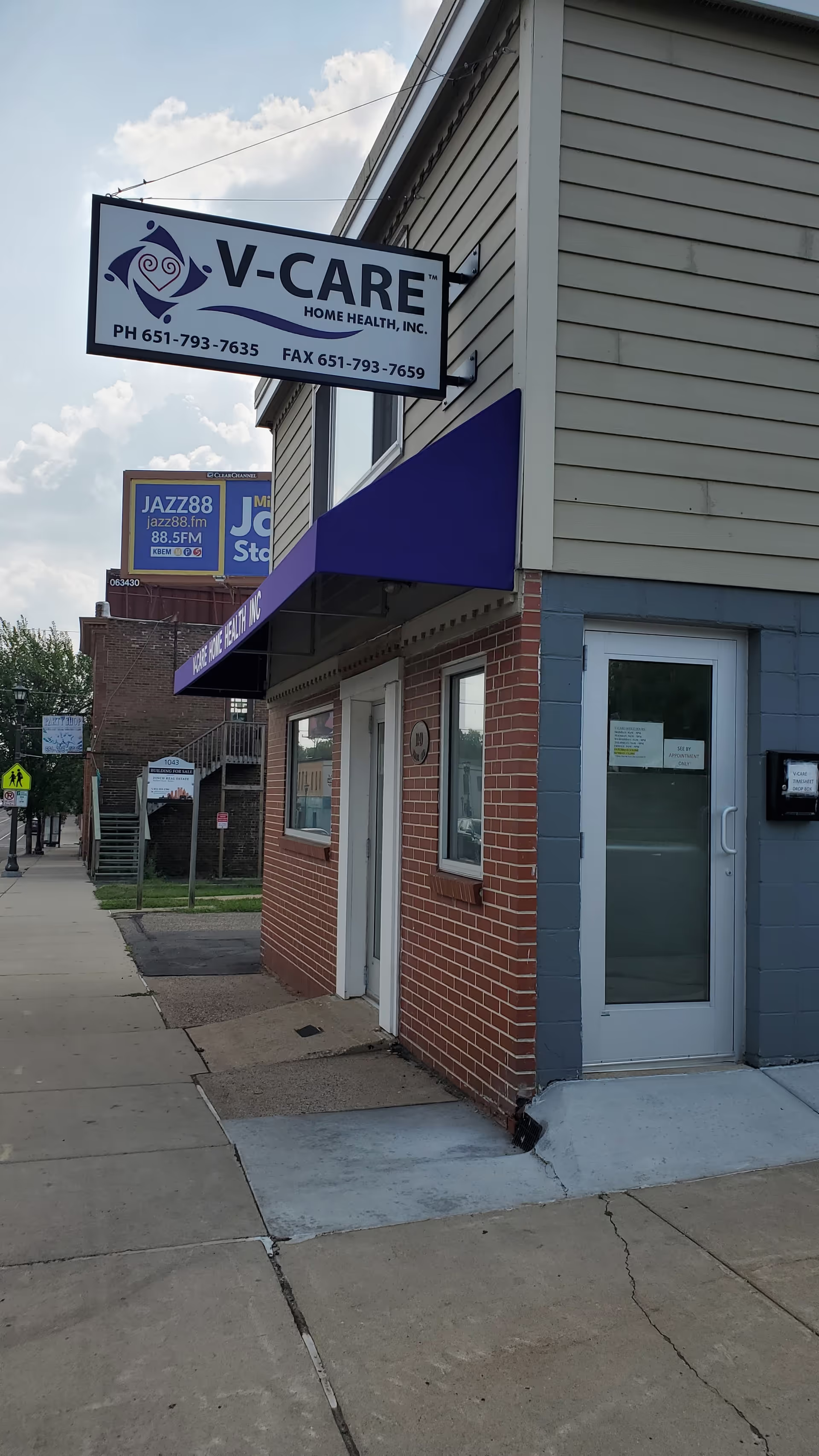
By contrast, administrative and logistical aspects of care coordination appear to be significant pain points. Reviews describe repeated problems with reaching the office by phone, closed or unresponsive offices, and confusing or inaccurate directions in public listings and maps. Those communication breakdowns have translated into real service failures: missed appointments, locked entrances at the destination, rescheduled fingerprinting or visits, and problems related to building access such as nonfunctional elevators. These issues reflect weaknesses in front-desk/office operations and site-access coordination rather than the bedside performance of caregivers.
Reliability of scheduled visits is an overarching pattern that prospective clients should consider. The combination of poor phone responsiveness, inaccurate directions, and site-access failures has produced no-shows or visits that could not be completed despite caregiver arrival. Scheduling flexibility is noted as a positive in some summaries, but it sits alongside repeated examples of rescheduling and travel-time inefficiencies. Operational consistency — confirming entry procedures, verifying building access, and day-of appointment confirmation — appears uneven.
There is little information in these summaries about billing or perceived value for cost, so conclusions on financial transparency or overall value cannot be confidently drawn. From a management perspective, the agency would benefit most from strengthening office communication protocols, improving public-facing location/directions data, and establishing reliable site-access procedures (including elevator coordination and locked-entry contingencies). In practical terms, families considering this agency may find high-quality individual caregivers, but should proactively verify appointment-day logistics and entry instructions to reduce the risk of missed or incomplete visits.