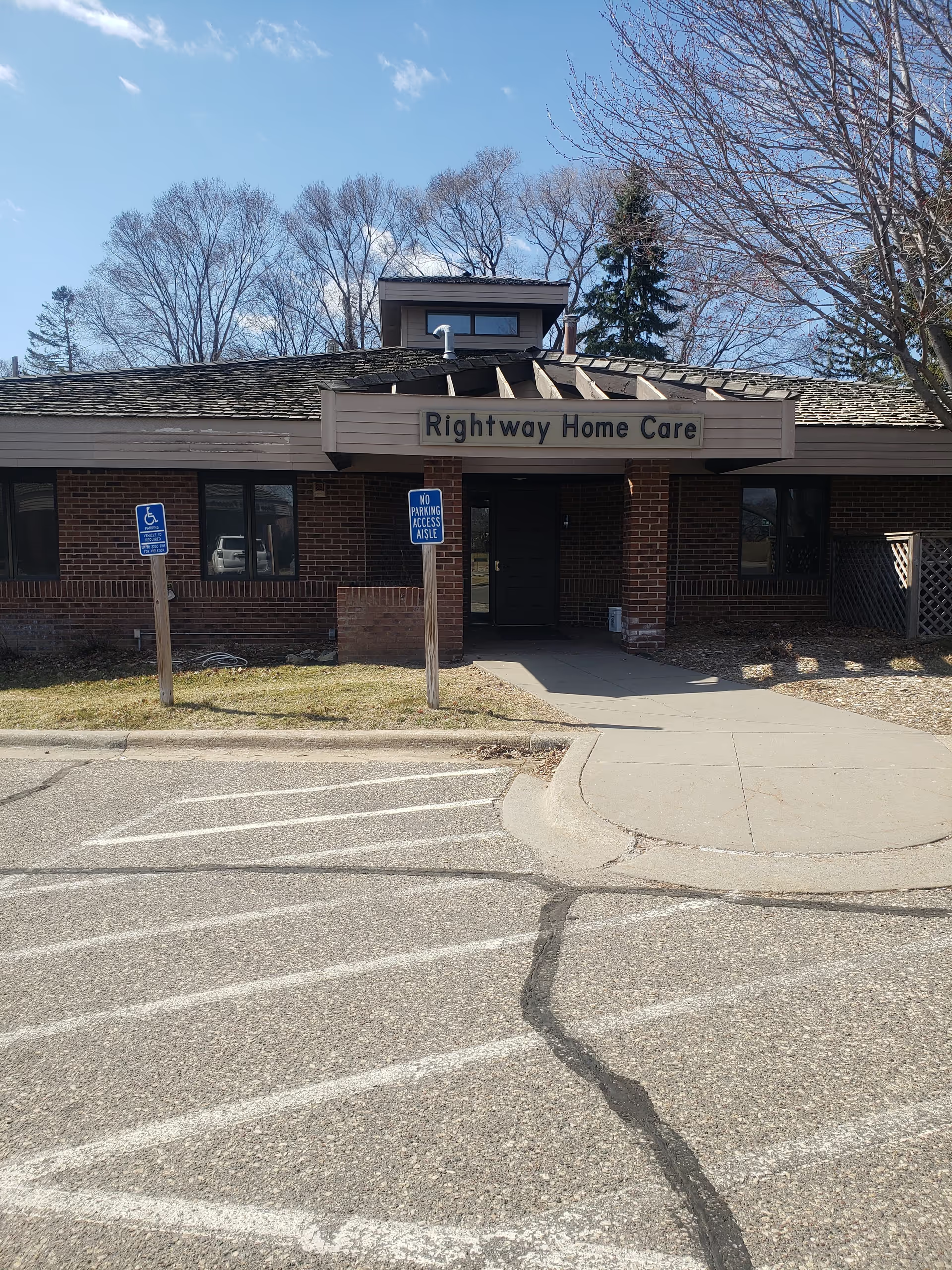
Across the collected summaries, the agency demonstrates clear strengths in clinical nursing, compassionate direct care, and a range of ancillary services. Several families praised skilled nurses—particularly for wound care—and noted effective coordination with outside wound-care specialists. Care managers and certain clinicians were described as professional and attentive, and specialized services such as music therapy and chaplaincy were highlighted as meaningful additions. When staffing and supervisory resources were applied, reviewers described respectful, patient-centered care and useful after-hours nursing access.
At the same time, a consistent operational pattern emerges around reliability and communication. Many families encountered inconsistent caregiver assignments, frequent changes of aides, and instances of missed or shortened visits. These reliability issues were often accompanied by office communication problems: difficulty reaching staff, delayed callbacks, and a perception that supervisory follow-up was uneven. Several summaries described problematic care transitions (for example, hospital handoffs or post–discharge coordination), which amplified the impact of staffing lapses.
Clinical and safety-related concerns appear in multiple areas. Reviewers raised issues around medication administration and recordkeeping, inconsistent clinical oversight, and some examples where care tasks were not completed as expected. While some of these cases were escalated and resolved by supervisors, others point to gaps in training, handoff processes, and supervisory monitoring. End-of-life care was another area of concern for some families; these summaries indicate a need for clearer protocols and communication around hospice coordination and last-stage care.
Billing and value were recurring themes. Several families described billing inaccuracies, charges for services they felt were not delivered, and complexity around refunds or post-discharge billing. The service was also frequently characterized as costly, with price increases and out-of-pocket expenses contributing to dissatisfaction. Administrative issues extended to payroll and other back-office processing in a few accounts, affecting staff and creating operational friction.
In practical terms for prospective clients: the agency can provide high-quality clinical nursing and compassionate personal care when staffing and supervision are stable. However, families should evaluate local staffing reliability, ask detailed questions about medication protocols and supervisory oversight, and seek clear, written billing and cancellation policies before enrollment. For higher-risk situations—complex medication regimens, recent hospital discharge, or end-of-life needs—families should confirm specific care plans, escalation pathways, and who will provide oversight to mitigate the operational weaknesses noted in these summaries.