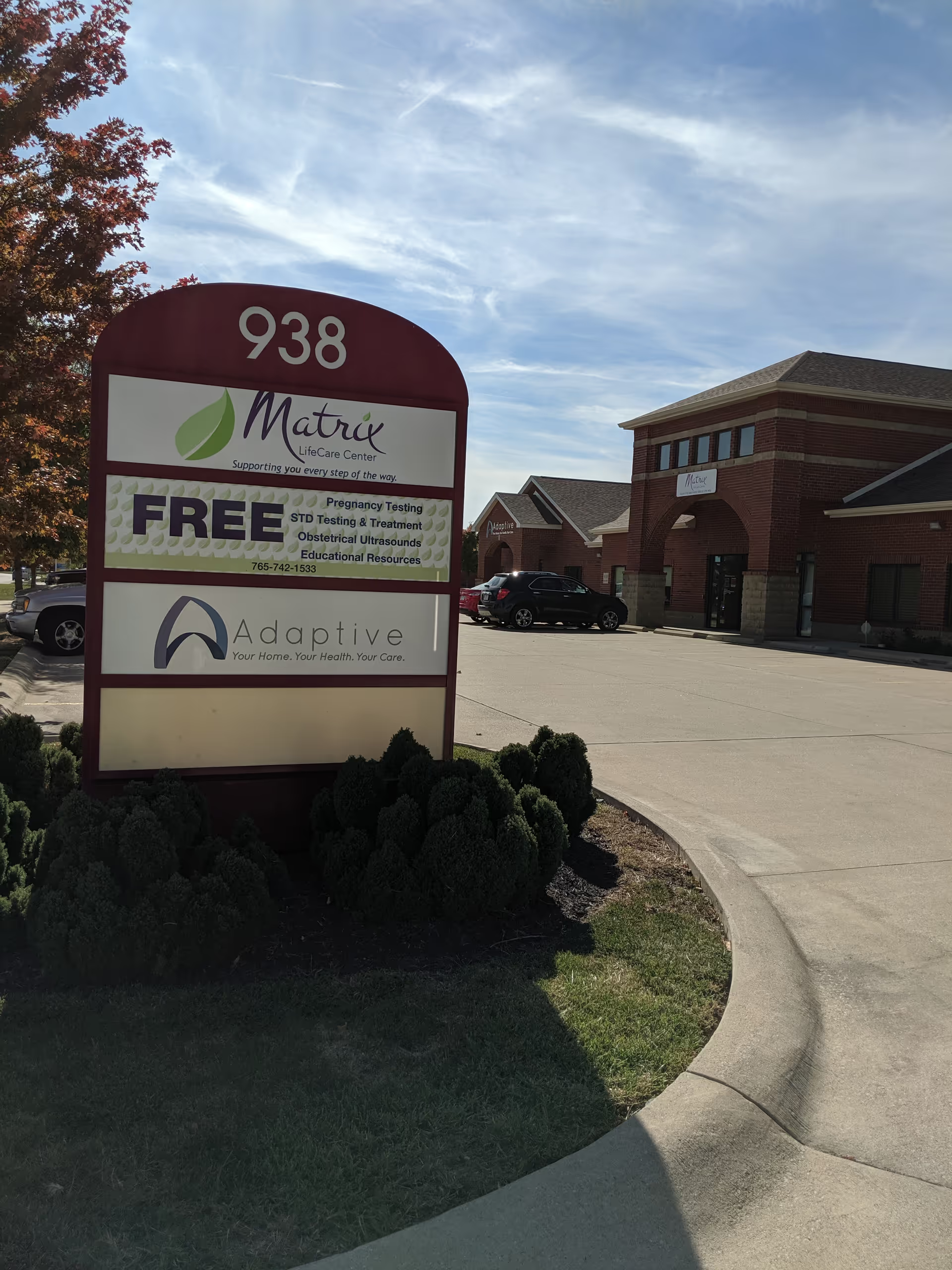
Overall impression: The collected reviews portray an agency with a clear strength in direct caregiving and family-facing communication. Many families describe caregivers who are compassionate, attentive, and punctual; individual caregivers are characterized as comforting and trustworthy and are credited with improving clients' day-to-day quality of life and providing peace of mind to family members. The agency is also commonly described as helpful with medical appointments, daily activities, and a range of home-care tasks.
Office communication and management: Office staff are frequently described as professional, responsive, and easy to work with. Reviewers commonly highlight clear communication, prompt responses to questions, and a willingness to address issues when they arise. These attributes appear to contribute to positive impressions of overall service coordination.
Reliability and scheduling: Several reviews emphasize reliable, on-time caregivers and flexibility in scheduling, including availability of vacation coverage. These operational strengths are repeatedly cited as practical benefits for families needing consistent in-home support. At the same time, the presence of negative reviews indicates that continuity and coverage can vary; prospective clients should verify backup staffing plans and expectations for shift coverage.
Value and escalation: Many reviewers state that the service delivers good value and rapid responses. There is little direct commentary about billing or pricing in the dataset provided; however, the existence of a small number of strongly negative reviews suggests that families should ask about the agency's complaint-escalation process, quality oversight, and how management handles service shortfalls.
Notable patterns and recommendations: The dominant pattern is of a caregiver-focused operation with strong interpersonal skills and responsive office support. Counterbalancing this are indications of inconsistent service quality in a minority of experiences, which point to potential gaps in quality control, case management, or caregiver assignment continuity. For prospective clients, recommended due diligence includes confirming caregiver matching procedures, written care plans, backup/contingency staffing, and the agency's formal process for resolving escalated issues. These steps can help capitalize on the agency's caregiving strengths while minimizing the risk of uneven service outcomes.