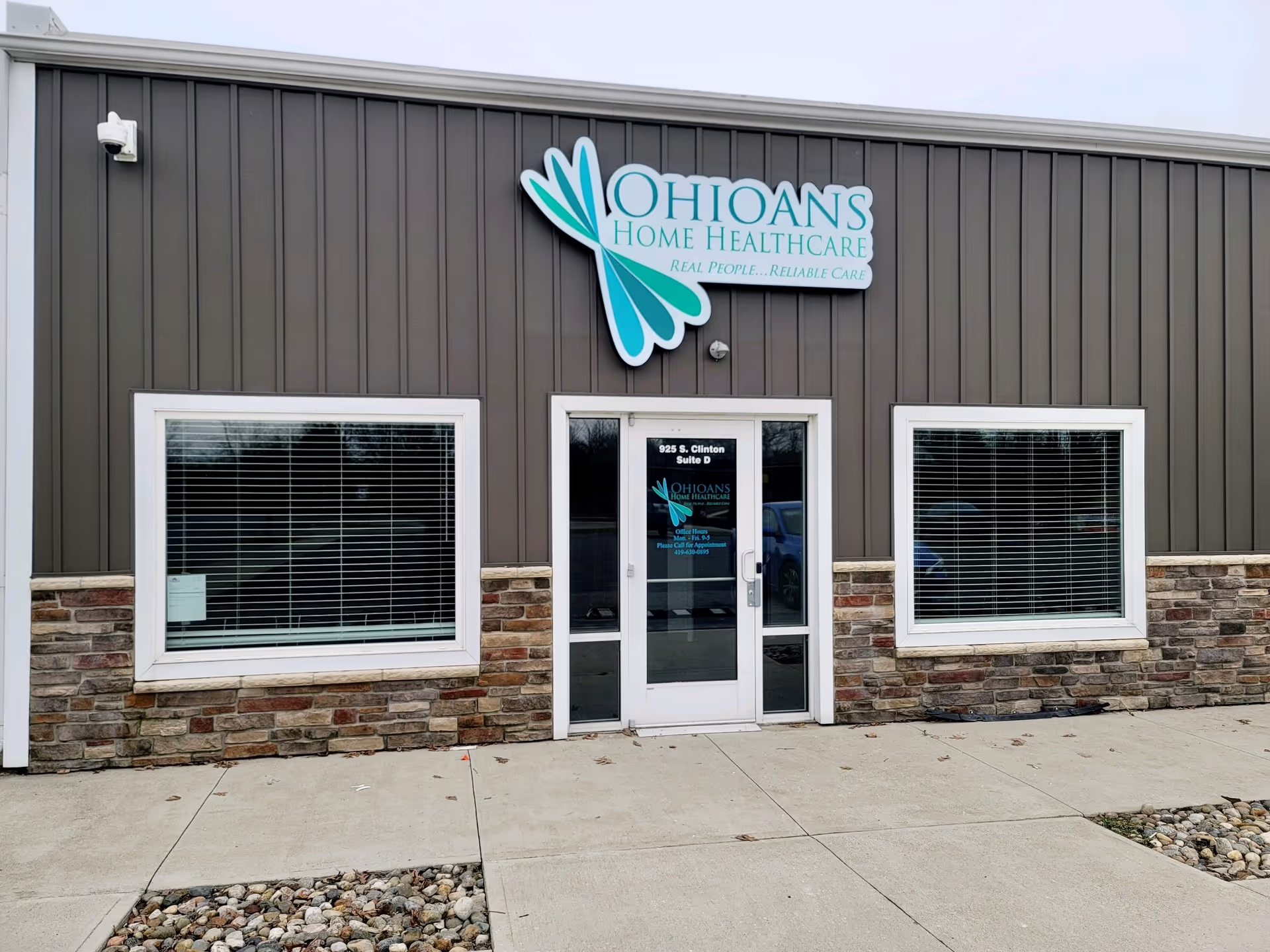
The reviews indicate a clear split between the direct caregiving experience and the agency's administrative performance. Caregivers are consistently described in favorable terms: attentive, warm, courteous and capable of building sustained, personalized relationships with clients. Several comments reference long tenures and specific caregivers who were appreciated for their dedication and day-to-day reliability. Families praising the service highlight punctuality, respectful aides, prompt handling of issues during shifts, and a generally positive impact on clients' quality of life.
In contrast, the agency's office-level operations emerge as a recurrent source of concern. Reviewers describe slow or inadequate call-back practices, poor day-to-day communication from the office, and a lack of timely responsiveness when questions or schedule changes arise. Scheduling reliability is also a consistent theme: lapses in shift coverage, cancellations, and promises that were not fulfilled have affected some families' experiences. These patterns point to weaknesses in administrative processes for staffing and client communications rather than to caregiver conduct during shifts.
Training and management follow-through appear uneven. Some reviewers describe caregivers as well prepared and compassionate, while others cite shortcomings in training and an impersonal feel after staffing rotations. There are also comments suggesting the agency has limited capacity or willingness to accept complex clinical needs — for example, cases involving wound care — which prospective clients should clarify in advance. A few reviews raise concerns about billing or the perception of value, indicating that families should review cancellation and payment policies carefully.
Finally, there is an allegation involving owner communications that contributed to family turmoil in at least one account. This is a serious, individual claim that stands apart from the recurring operational criticisms; prospective clients may wish to ask the agency directly about leadership practices and dispute-resolution mechanisms. Overall, the pattern is one of broadly capable, compassionate caregivers supported by an office operation that would benefit from stronger communication protocols, clearer clinical-scope guidelines, and improved scheduling and billing processes. Families considering this agency should verify caregiver continuity, clarify clinical limitations (especially for wound or complex-care needs), and obtain written information on scheduling and cancellation policies before contracting services.