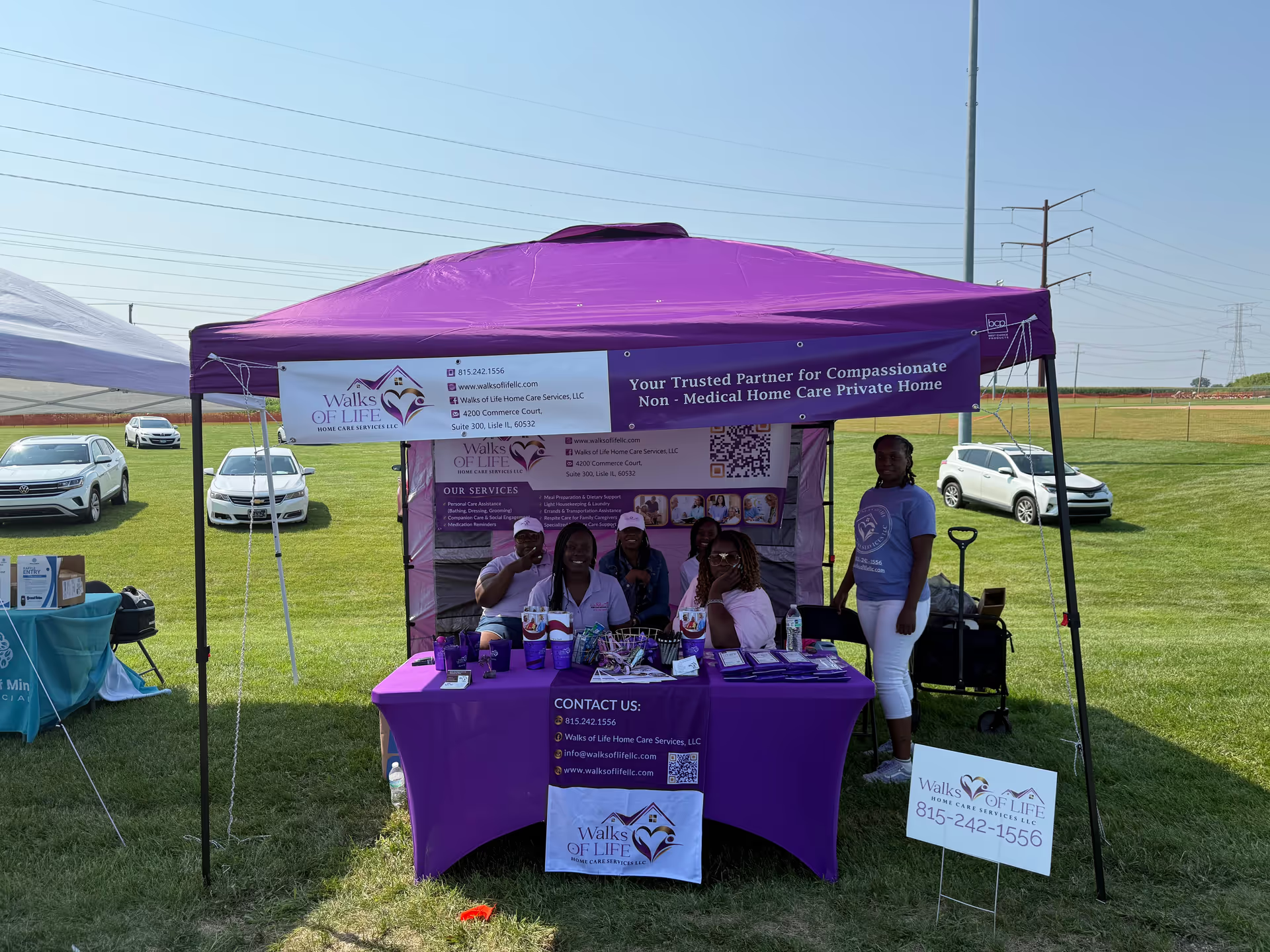
Review summaries for Compassion Care Staffing emphasize consistently positive experiences with frontline caregivers and office staff. Caregiver quality is described as compassionate, warm, and respectful; families characterize the staff as attentive, skilled, and client-centered. Several comments highlight a thorough intake process intended to match caregiver skills and personality to client needs, and a number of summaries describe caregivers as treating clients like family and going above and beyond routine duties.
Office communication and management receive favorable mention across the summaries. Descriptions such as responsive, accommodating, and professional suggest an accessible office team that coordinates care and supports family members. The agency’s women-owned leadership was noted explicitly in one summary and contributes to an impression of engaged, personable management. Staffing services are described as efficient, and reviewers express satisfaction with the agency’s responsiveness and overall service coordination.
Reliability and scheduling are presented as strengths: reviewers reference reliable 24-hour coverage, consistent staffing, and a sense of safety and trust while receiving in-home care. That said, the summaries focus on positive outcomes without detailing operational contingencies. Prospective clients should confirm continuity-of-care practices (for example, primary caregiver assignments, backup coverage, and shift-change procedures) during intake to ensure the level of consistency desired for long-term or round-the-clock care.
Value and billing are not discussed in depth in the available summaries. While families express high satisfaction with the quality of care, there is limited commentary about pricing, contract terms, cancellation policies, or billing transparency. This absence suggests that prospective clients should request written estimates, sample service agreements, and explanations of billing practices to evaluate cost and value relative to other providers.
A few informational gaps are notable across the summaries. There is little explicit detail about clinical oversight (such as registered nurse supervision, caregiver certification levels, or training curricula) and about advanced clinical services (for example, medication management protocols or specialized nursing interventions). Similarly, the summaries do not emphasize the use of digital tools for scheduling, care notes, or family communication. These are not negative findings about care quality per se, but practical areas to clarify with the agency during the decision process.
Overall, the pattern in these review summaries indicates an agency with strong relational care—compassionate, professional caregivers and a responsive office—backed by positive family experiences. For prospective clients, the agency’s strengths appear to be interpersonal quality and dependable shift coverage; recommended next steps are to confirm clinical oversight, request clear billing and contract information, and validate service-area and scheduling details to ensure a good operational fit for specific care needs.