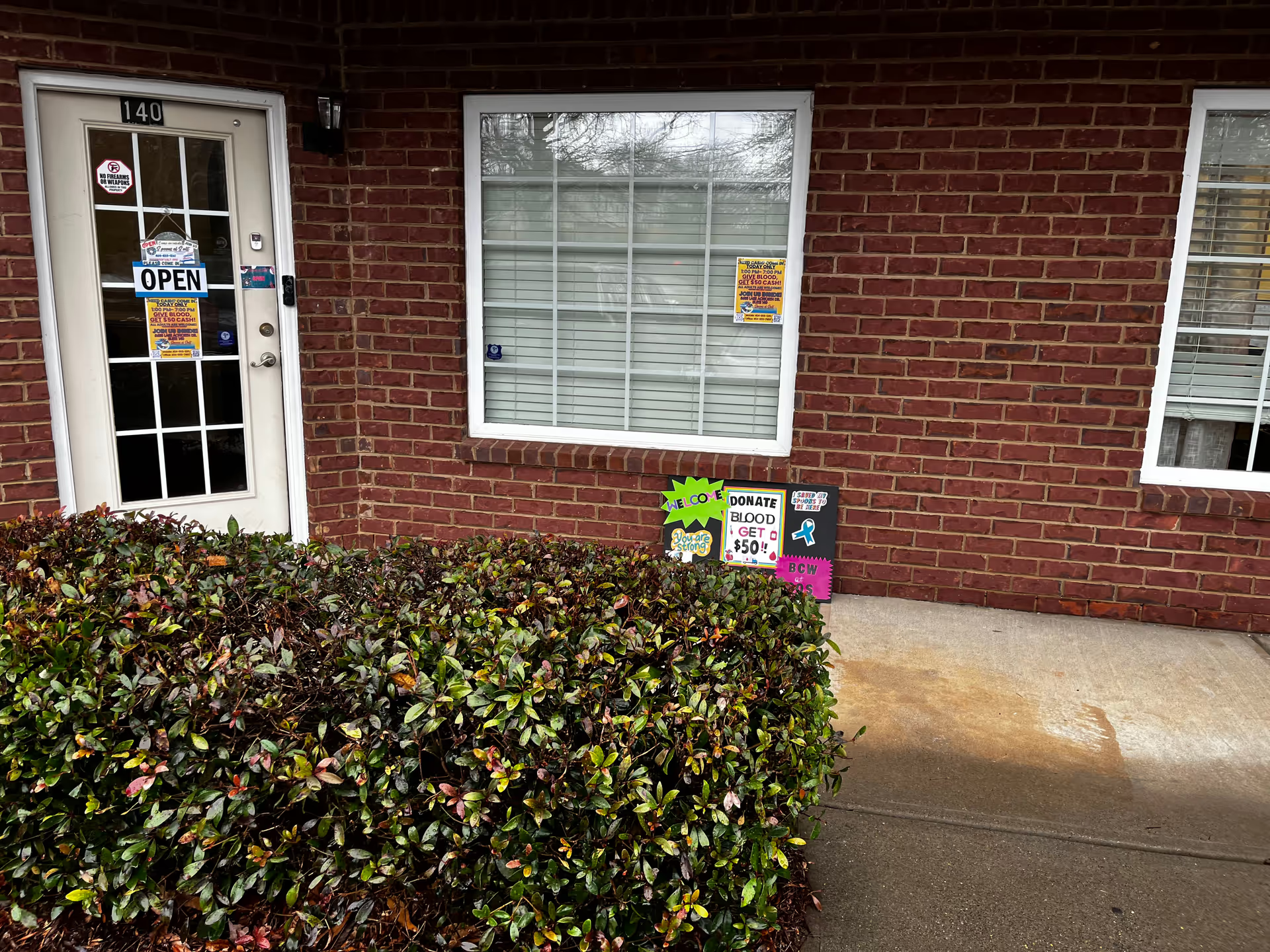
Willowbrook Hospice elicits a mix of strongly positive impressions and discrete operational concerns. Many families describe the agency's in-home hospice team as compassionate, patient-centered, and clinically capable; reviewers commonly praise individualized safety and comfort planning, respectful dignity-preserving care, and staff who provide emotional support to patients and families. Clinical staff, including hospice nurses and aides, are frequently characterized as skilled and attentive, and the agency's ability to coordinate with rehabilitation and other clinical teams is noted as a strength.
Caregiver quality emerges as a central strength but with variability. Numerous comments highlight aides and CNAs who go "above and beyond," provide calm, gentle care, and make families feel like part of a caregiving team. At the same time, a set of reviews describe inconsistent caregiver performance and lapses in professionalism. These accounts translate into operational concerns about training, supervision, and conduct expectations. Separately, a subset of reviewers raised issues around medication and pain-management oversight; when clinical symptom control is critical, families should seek clarity on the agency's medication protocols and escalation pathways.
Office communication, reliability, and scheduling are similarly double-edged. Positive feedback emphasizes responsive office staff, flexible scheduling, and 24/7 availability, with staff who accommodate changing family needs. Conversely, other reviews point to communication and follow-through gaps, scheduling errors, and unreliable shift coverage. These patterns suggest variability in how well the agency implements its on-call and backup plans under pressure.
From a management and value perspective, many families feel they received high-value, compassionate end-of-life care and supportive bereavement guidance. However, recurring operational themes—training and supervision gaps, inconsistent follow-through, and concerns about medication oversight—indicate areas where agency systems may not always match family expectations. There are also allegations of serious caregiver conduct incidents; prospective clients should treat such claims as significant and request documentation of background checks, staff training, incident resolution policies, and any regulatory or quality reports.
Recommendation for prospective clients: verify caregiver matching and continuity, ask for written medication-management and escalation protocols, confirm backup-shift and no-show procedures, and clarify the agency's grievance and incident-reporting process. Doing so will help preserve the strong elements many families experience while reducing exposure to the operational inconsistencies raised in some reviews.