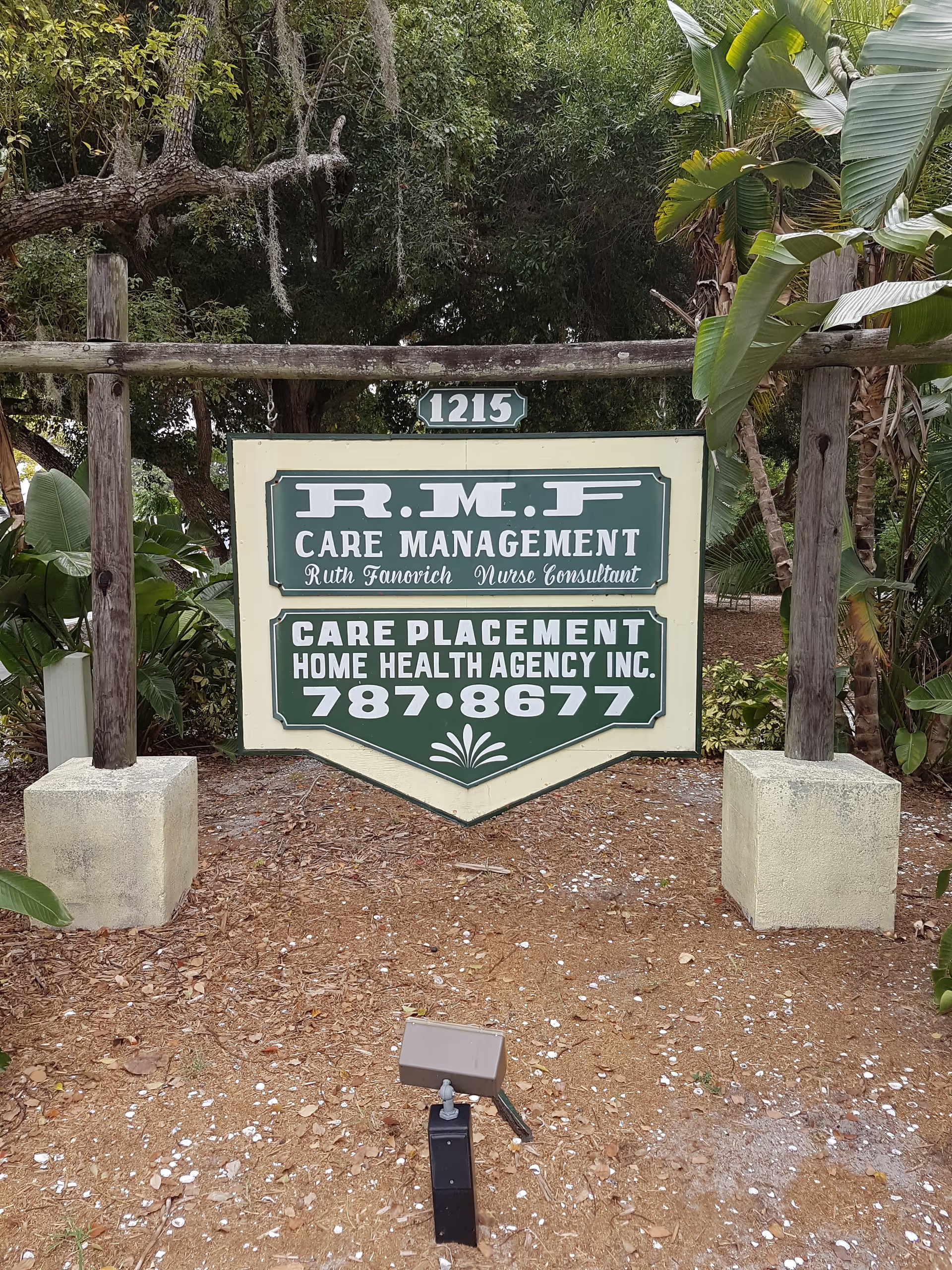
The reviews present a mixed but distinct pattern. Many comments highlight a warm, personable team and an organized office: families use words such as friendly, helpful, down-to-earth, and express gratitude for the assistance they received. The agency’s front desk and receptionist are singled out positively, and reviewers describe the company as neat and well organized. Pricing and perceived value are also mentioned as strengths, and there is a suggestion that staff compensation is competitive, which can support workforce stability.
On caregiver quality there is a clear split. Several reviewers describe caregivers as caring and pleasant, producing high levels of client appreciation. Counterbalancing that, there are statements indicating variability in care and instances where caregiver conduct fell short of expectations. Those descriptions point to inconsistent caregiving quality and specific professionalism concerns rather than a uniformly poor or uniformly excellent caregiving standard.
Communication and clinical coordination emerge as notable areas of concern. Positive impressions of the reception and administrative organization coexist with reports of poor incident communication and problematic phone interactions. In particular, reviewers indicated that explanations about health incidents were sometimes inadequate and that escalation to medical providers or appropriate follow-up did not occur as expected. These observations suggest deficiencies in how the agency documents, communicates, and escalates health-related events to families and clinicians.
Reliability and scheduling are not the dominant themes, but the agency’s organizational strengths imply functional administrative processes. At the same time, the communication and clinical-follow-through issues suggest gaps in management oversight — for example, ensuring that caregivers consistently follow protocols for reporting changes in condition or arranging medical follow-up.
Value and management: reviewers generally perceive the agency as offering fair fees and acceptable value, and the note about staff being well paid may indicate investment in personnel. However, perceived value is tempered by concerns about occasional lapses in professionalism and clinical coordination; that combination suggests that while the agency has operational strengths, quality-control and escalation procedures may need reinforcement.
For prospective clients and families: the agency appears to deliver friendly, helpful caregiving supported by an organized office and reasonable pricing. At the same time, families should clarify expectations around incident reporting, medical escalation, and staff supervisory practices before committing. Asking about formal procedures for documenting incidents, notifying families, and arranging medical appointments — and requesting examples of caregiver training and supervision — would help determine whether the agency’s strengths align with a particular client’s clinical and communication needs.