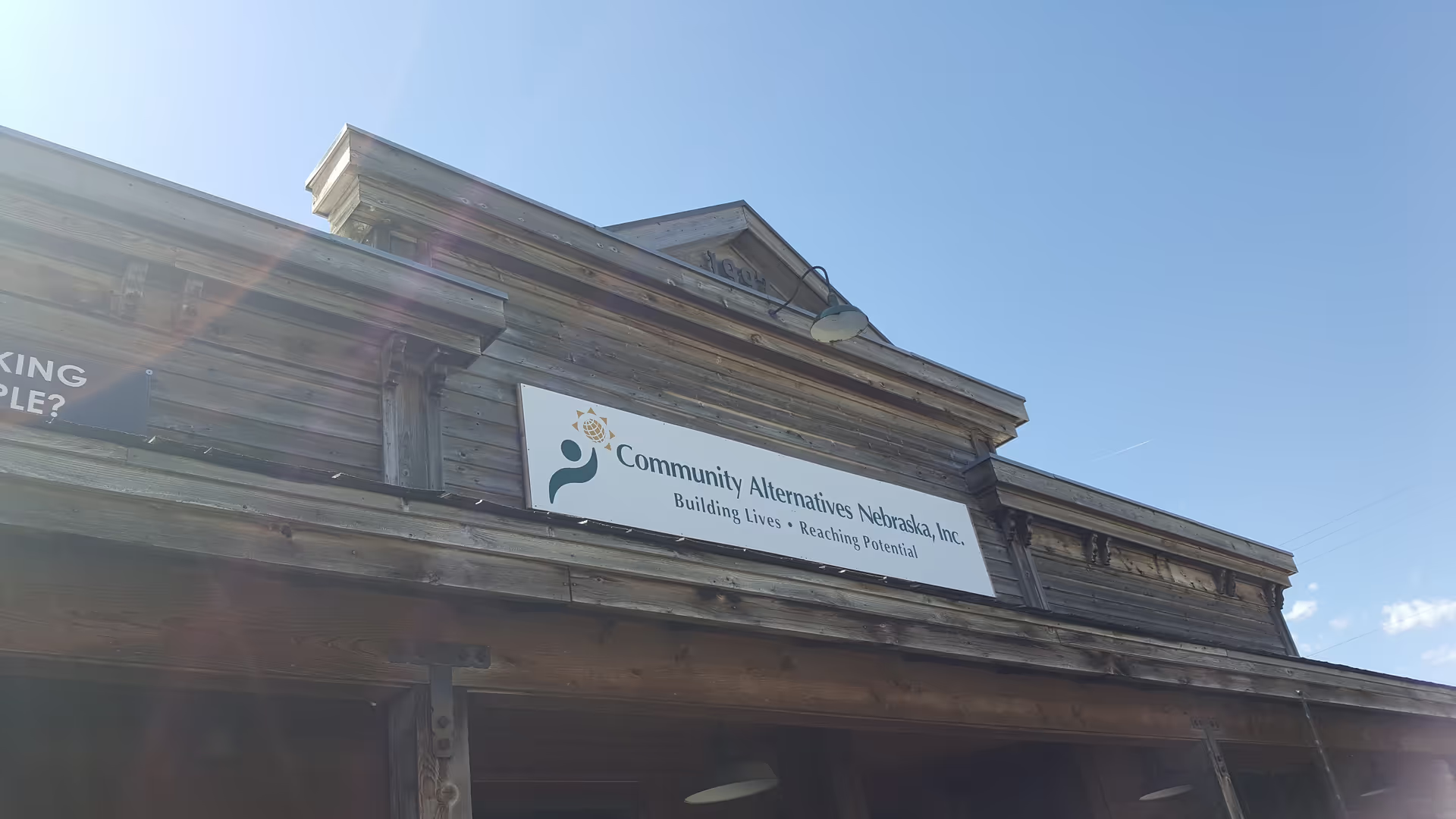
Across the reviews, families consistently identify the agency's core clinical strengths: caregivers, nurses and therapists who provide compassionate bedside attention, dignified end-of-life support, and therapies (music and animal) that many found calming. The in-home model and supportive volunteer programs frequently enabled family-centered passing and opportunities for meaningful rituals, including veteran memorials and coordinated funeral-arrangement assistance. Several families also praised the agency's physical environment and front-office staff for being welcoming and facilitative of family visits.
At the same time, reviewers describe notable variability in operational consistency. While many accounts describe attentive, skilled clinicians, others recount uneven caregiver quality and professionalism, indicating that the experience can depend heavily on individual staff. Similarly, reliability of shift coverage and presence is uneven in multiple accounts — examples include missed follow-up after discharge and caregivers not arriving as expected. These patterns point to staffing and scheduling weaknesses rather than isolated clinical skill gaps.
Communication and coordination emerge as recurring areas of concern. Several families reported slow or unresponsive office communication, unclear updates, or delays coordinating with external services such as funeral homes; a subset of reviews specifically called out insufficient post-death follow-up and a lack of administrative closure. Conversely, other families experienced clear, timely updates and helpful front-desk support, suggesting inconsistency in how the agency's office functions perform across cases.
Management and care coordination appear to be mixed. Some reviewers praised strong care coordination and helpful social-work and therapy teams, while others described problematic administrative interactions and volunteer-management issues that affected family experience. There are also perceptions among some families that organizational priorities sometimes overshadow individualized attention, a concern that can affect perceived value even when clinical care is described positively.
For prospective clients and families: the agency demonstrates clear strengths in compassionate, clinically competent end-of-life care, meaningful volunteer programs, and support for family-centered rituals. However, prepare to ask specific questions about staffing consistency, who will be assigned as primary caregivers, how after-hours communication is handled, and what procedures are in place for post-death follow-up and coordination with external providers. These operational details appear to be the strongest determinants of whether a family’s experience is uniformly positive or uneven.