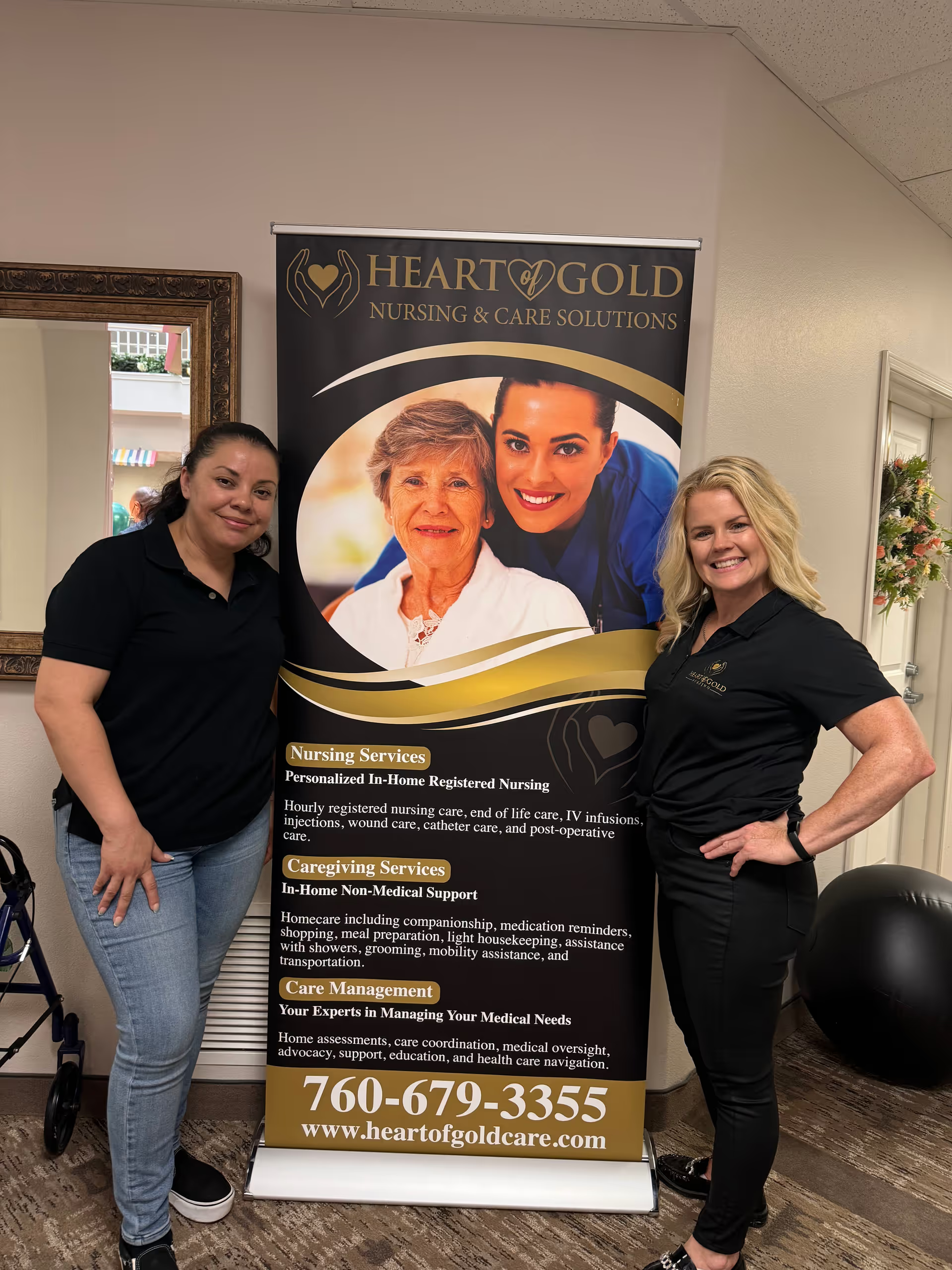
The overall tenor of the reviews is strongly positive, emphasizing a small, locally rooted agency that delivers personalized in-home care. Reviewers consistently highlight warm, engaged caregivers who arrive on time, provide companionship and activities, and assist with daily living tasks. Several family accounts credit the agency with enabling a client to remain at home during recovery and describe the care as life-changing or priceless.
Caregiver quality is described in concrete ways: caregivers are characterized as compassionate, patient, and engaging, with examples of activity programming (exercise, painting, social visits) and practical supports such as meal preparation. Reviewers also single out specific care managers and supervisors for their hands-on involvement, knowledge, and rapport with clients and families. That combination of relationship-driven care and practical skill is a recurring strength in the feedback.
Office communication and care management receive repeated praise. Families describe care managers as easy to reach, responsive, and proactive in coordinating with physicians and prescriptions. Review notes indicate thorough health checks and a sense of safety and confidence in the agency’s supervision. Those elements suggest a strong case management model with active clinical and logistical follow-through.
Reliability and scheduling flexibility are other prominent themes: reviewers note rapid initiation of services, dependable on-time attendance, and availability that approaches around-the-clock coverage when needed. The agency is also framed as family-centered, providing respite and break time for partners or caregivers while maintaining continuity of care for the client.
Value is conveyed qualitatively rather than quantitatively: reviewers call the services indispensable and emphasize the emotional and practical relief provided by the staff. The reviews do not systematically address pricing or billing details, so prospective clients should ask for clear fee and billing explanations when evaluating cost versus perceived value.
Notable patterns and caveats: praise frequently references particular individuals by name, which underscores strong individual relationships and effective care management but also implies a dependence on key staff. Prospective clients should confirm backup staffing and continuity plans should those individuals be unavailable. Similarly, the personalized, small-agency model appears to drive the quality described, but it may indicate capacity limits for very large or rapidly expanding care needs. Asking about contingency plans for high-intensity or long-duration coverage and requesting written policies on caregiver replacement and billing will help families match expectations to operational realities.