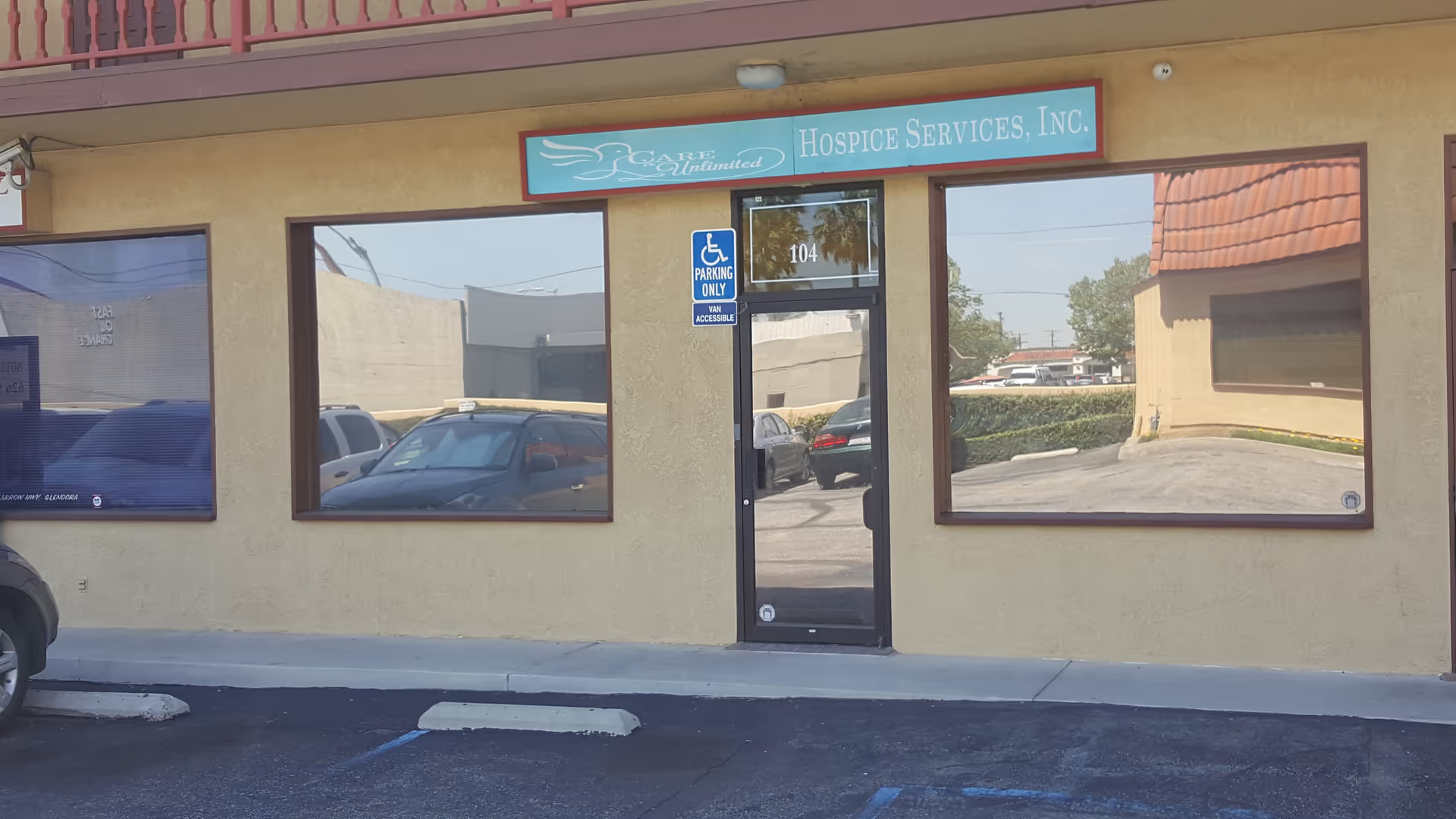
Across the submitted summaries, clinical front-line staff (caregivers, RNs, PTs/OTs and social workers) receive strong, consistent praise. Reviewers commonly highlight compassionate interpersonal care, effective bedside manner, and clinically competent nursing and therapy interventions. Occupational and physical therapy are frequently described as technically skilled and outcome-focused, with specific notes of rapid pain relief, improved mobility, and practical guidance on safe transfers and exercises. Nurses and therapists are also credited with attentive wound and device (e.g., nephrostomy) management and with providing clear, useful education to patients and families.
Positive accounts emphasize supervisory oversight and person-centered touches: proactive supervisors, social-work assistance for discharge or hospice navigation, chaplain availability, and clinicians who provide frequent updates and build trust with families. Several summaries describe individual clinicians who went beyond routine duties (extended visits, life-saving encouragement, active coordination for rehab placement), indicating that the agency can deliver high-value, relationship-centered clinical care when those staff are involved.
Counterbalancing these strengths are repeated operational concerns centered on the administrative side of the business. Office communication and referral follow-through are described as inconsistent; families cite difficulty getting timely responses, repeated callbacks, misfiled paperwork, and lack of follow-up after requests. Scheduling reliability is another recurring issue, with misseds or delayed shifts and difficulties coordinating start times. Related clinical-safety concerns appear in a few summaries, specifically involving medication-management and transfer-safety protocols—these warrant direct verification with the agency before care begins.
Billing and intake processes are additional pain points: reviewers note limited payment-method flexibility and questions about billing clarity. Administrative professionalism and record-keeping are described as uneven, which contributes to frustration even when clinical staff are strong. For prospective clients and families, the pattern suggests that clinical quality at the point of care is often high, but that outcomes and family experience are heavily influenced by administrative performance. Practical next steps when evaluating this agency include confirming payer acceptance and billing policies up front, asking for written scheduling commitments, requesting the names and contact information for primary clinicians and supervisors, and discussing the agency's medication-management and transfer-safety procedures before services start.