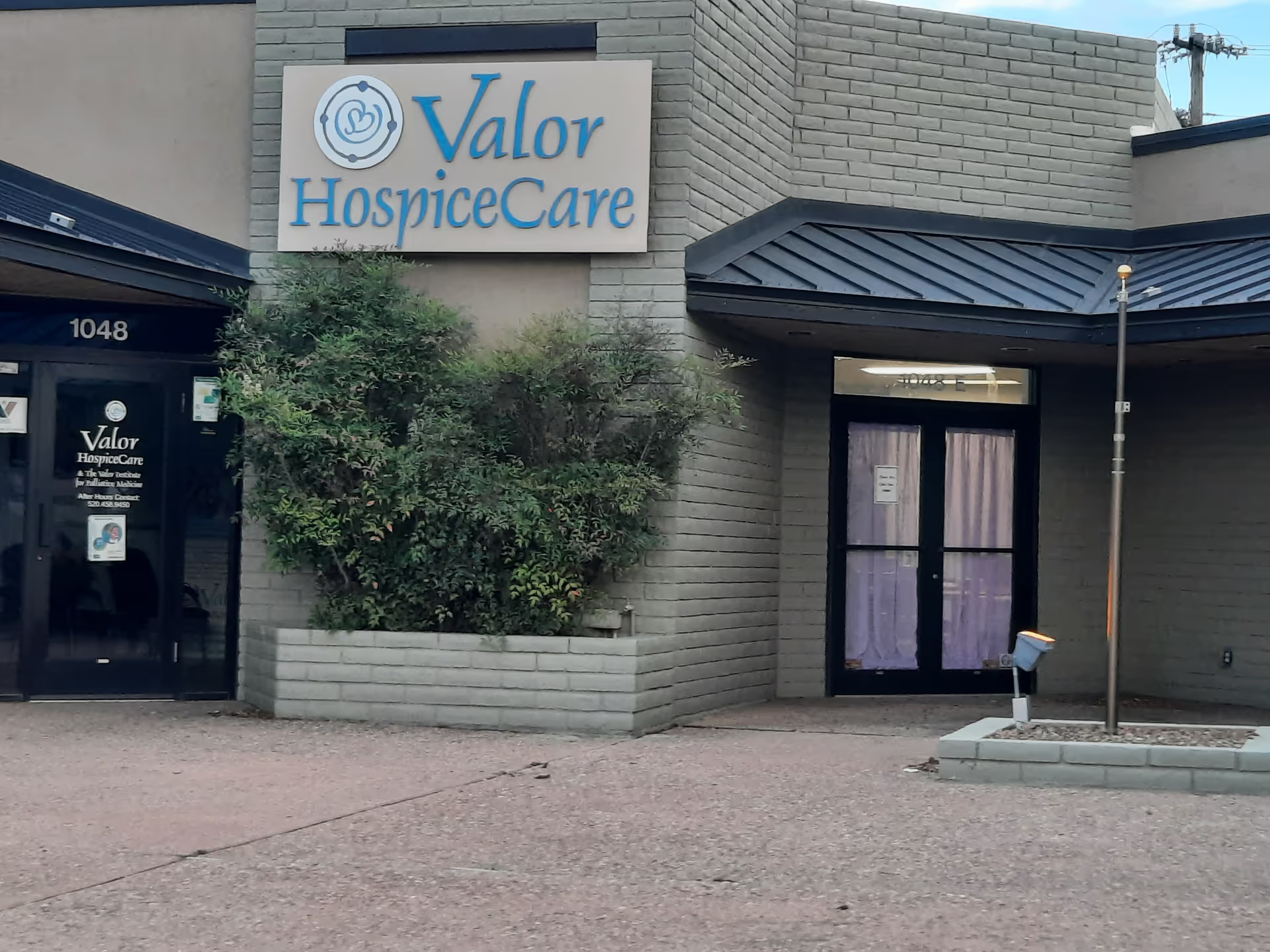
Overall impression: Review summaries for Casa de la Paz Hospice — LHC Group emphasize consistently strong interpersonal care and clinical support, with many families describing compassionate, attentive caregivers and nurses who provide comfort and dignity during end-of-life care. Praise centers on hands-on caregivers who build rapport, skilled nursing that offers clinical expertise and reassurance, and an interdisciplinary approach that includes social work and chaplain services. Several families noted smooth admissions and quick scheduling when time was limited, and many described a clear intake process and responsive after-hours communication.
Caregiver quality: The prevailing pattern is one of caregivers who are patient, gentle, and relationship-focused. Reviewers named individual caregivers and nurses as sources of comfort, and frequently mentioned that clients looked forward to visits and personal-care interactions. Nursing staff are frequently described as competent and supportive; social work and bereavement services are highlighted as valuable adjuncts that add practical and emotional support to families.
Office communication and reliability: Communication is generally characterized as clear and responsive, including night coverage and post-admission follow-up. Families commonly reported that the agency provided timely updates and made the admission process straightforward. At the same time, a subset of accounts describe communication or coordination breakdowns—for example, instances where families perceived inadequate follow-through from office staff or where expectations set at intake were not consistently maintained. These indicate variability in administrative execution rather than a uniformly poor communication system.
Scheduling and shift reliability: Many reviewers reported quick scheduling and flexible admissions, particularly in urgent end-of-life contexts. Caregivers and nurses were often described as reliable and consistent, contributing to family peace of mind. However, the record is not universally uniform: summaries include references to lapses in service consistency and occasional performance variability across cases, suggesting the agency may perform strongly in most situations but less reliably in others.
Value and management: Families frequently framed the service as providing high perceived value through emotional support, dignity-preserving care, and practical advocacy on behalf of the patient. Positive comments about management tend to focus on supportive staff and coordinated interdisciplinary care. Conversely, several serious criticisms reflect management-level issues such as inconsistent oversight, insufficient follow-through after critical events, and conflicts over honoring family end-of-life preferences. A few families chose to transition to alternative providers following these concerns, which highlights the importance of verifying alignment on care goals during intake and maintaining ongoing oversight.
Notable patterns and guidance for prospective clients: The dominant pattern is strong, compassionate bedside care augmented by nursing and social-work resources that families find meaningful. Prospective clients should expect generally responsive communication, flexible admissions, and a team-oriented approach. At the same time, it would be prudent for families to confirm care plans and escalation pathways with the office, clarify expectations about end-of-life decisions, and establish preferred communication contacts to reduce the risk of coordination lapses. Taken together, the reviews portray an agency that delivers substantial clinical and emotional support for many families while exhibiting some variability in operational consistency and oversight.