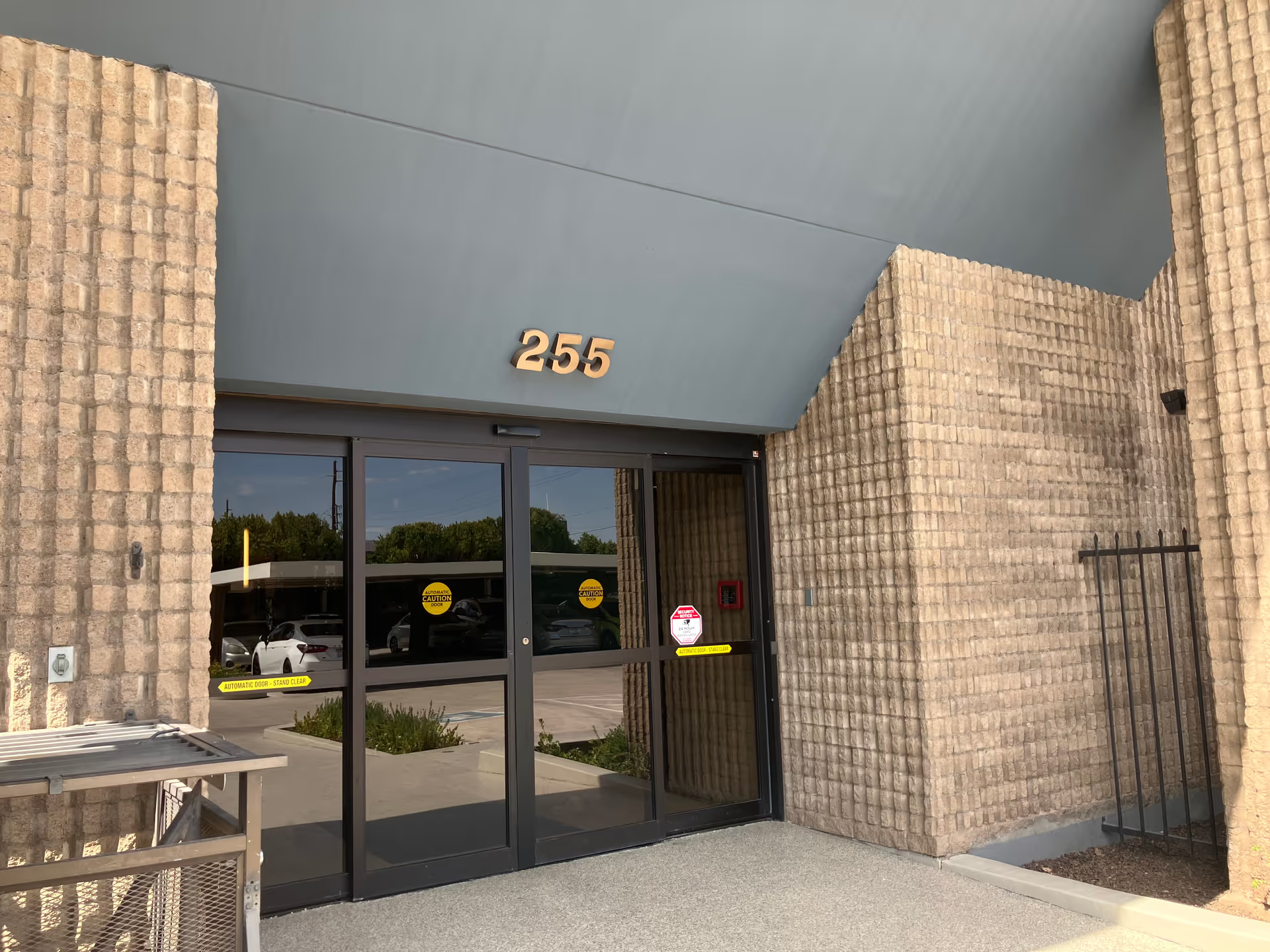
Reviews indicate a clear split between the caregiving staff and the agency's operational functions. Caregivers are consistently described in positive terms: compassionate, professional, and supportive, with families valuing the emotional support and continuity provided by long-term assignments. For bedside, direct-care tasks and family communication at the point of care, the agency receives repeated praise for dignity, comfort orientation, and hands-on attention.
At the agency level, several operational concerns recur. Multiple comments point to weaknesses in administrative transparency and documentation practices, including at least one set of allegations regarding falsified records; these raise trust and oversight questions. Families also describe billing and insurance-handling concerns, suggesting a need for clearer explanations of charges and authorizations. Office communication and care coordination are described as inconsistent, with reports of limited follow-through after escalations and difficulty getting timely managerial responses.
Clinical limitations are another pattern. Reviewers note instances where in-home symptom control and complex clinical management appeared insufficient, leading to emergency-department use and repeated external care episodes. These accounts, together with mentions of medication errors and safety-related incidents, suggest opportunity for stronger clinical escalation pathways, medication-safety protocols, and clearer staffing oversight to reduce risk and improve continuity.
Staffing and scheduling practices are also a point of concern: reviews reference unstable shift coverage, staff disappearance or late follow-up, and management actions perceived as heavy-handed toward employees. The agency does not offer an inpatient or on-site respite facility, which some families saw as a gap when higher-acuity symptom control was required.
In summary, prospective clients are likely to find compassionate and skilled caregivers at the bedside, but should weigh that strength against reported administrative and clinical coordination shortcomings. When evaluating this agency, consider asking specific questions about documentation practices and oversight, medication-safety protocols, escalation pathways for uncontrolled symptoms, staffing contingency plans, and billing/insurance explanations to assess whether the agency’s operational systems meet your family’s needs.