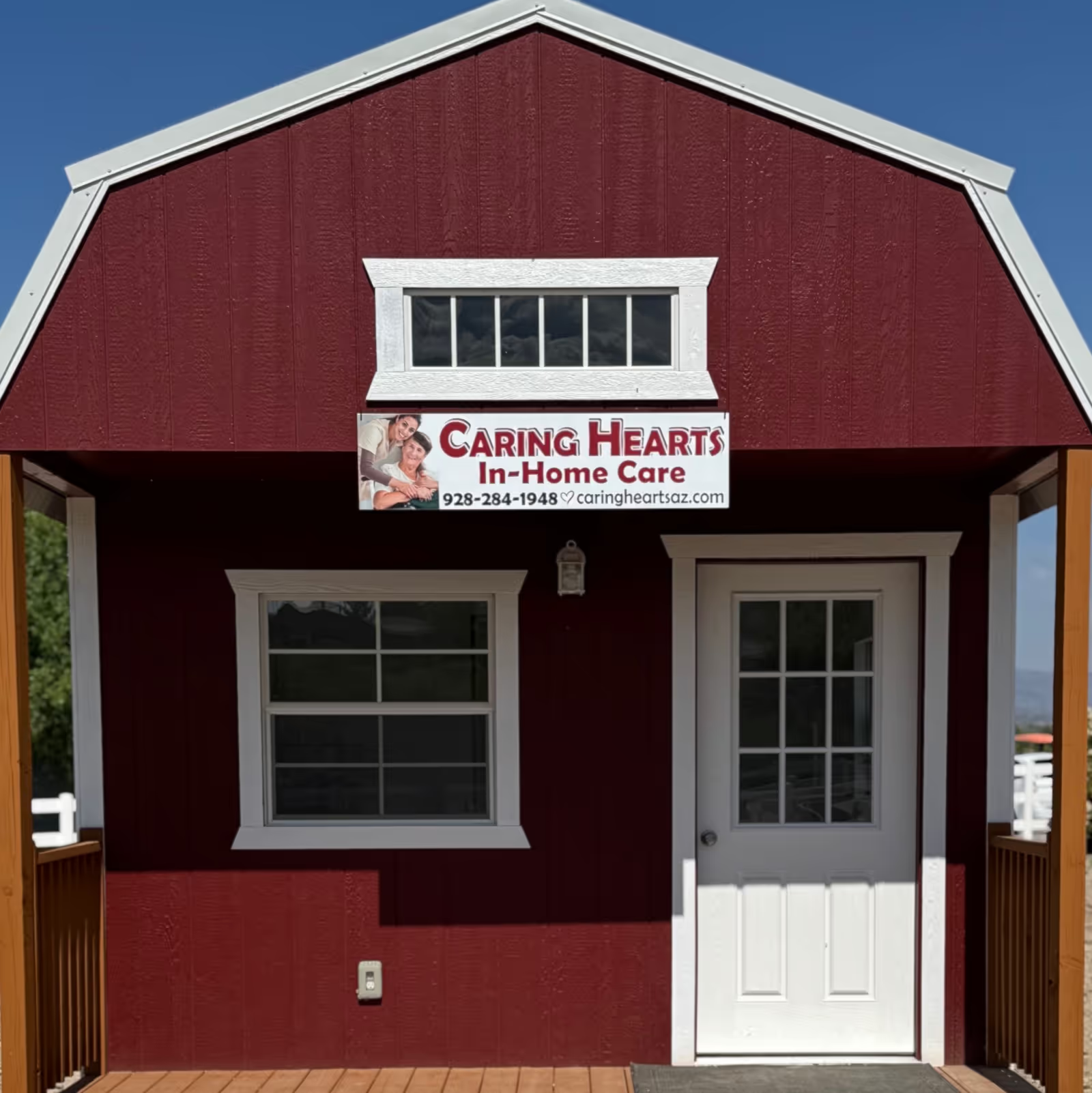
The review set presents a mixed but clear pattern: many families emphasize strong, compassionate direct care and an office team that can be responsive and flexible, while other accounts point to operational weaknesses that affect reliability and safety. Positives cluster around the quality of individual caregivers — reviewers frequently praise caregivers as attentive, kind, and person-centered, and several named caregivers received particular recognition for supportive end-of-life presence, patience, and helpfulness. The agency also offers a broad scope of nonmedical in-home supports (cleaning, meal preparation, shopping, pet care) and can assist with mobility transfers using equipment such as Hoyer lifts.
At the same time, a recurring theme is variability in caregiver experience and professionalism. Some families described inexperienced or poorly matched aides and noted that initial performance could decline over time. Relatedly, reviewers described gaps in initial care assessment and care-plan follow-through, suggesting the agency’s intake and supervision processes may not always produce consistent, individualized plans.
Office communication and scheduling reliability are other dividing lines. Many reviewers report helpful, on-top-of-it office staff who are responsive to questions and flexible with hours; others describe frequent caregiver changes, missed shifts, last-minute coverage gaps, and inconsistent customer-service responsiveness. Those operational shortcomings undermined continuity of care for some families and, in at least one account, contributed to a serious safety-related concern involving medication handling and a breach of agreement — an allegation that highlights the importance of robust medication-safety protocols and contract enforcement.
Management strengths include local ownership, community ties, and long-tenured staff when continuity is maintained. The service is also noted for being budget-friendly, which families view as good value when paired with dependable caregivers. The noticeable pattern is of high variability: excellent outcomes where caregiver matching, supervision, and communication work well; operational and safety risks where those systems are less consistent.
For prospective clients and families: confirm caregiver screening and training standards, ask how care assessments are conducted and updated, request written care plans and contract terms, and clarify backup-staffing or contingency procedures for missed shifts. Also inquire about the agency’s medication-management protocols and how the office documents and resolves lapses in coverage or contract commitments. These steps can help maximize the agency’s strengths while mitigating the operational weaknesses reflected in the reviews.